Ants Could Help Solve the Superbug Crisis and Transform How We Use Antibiotics
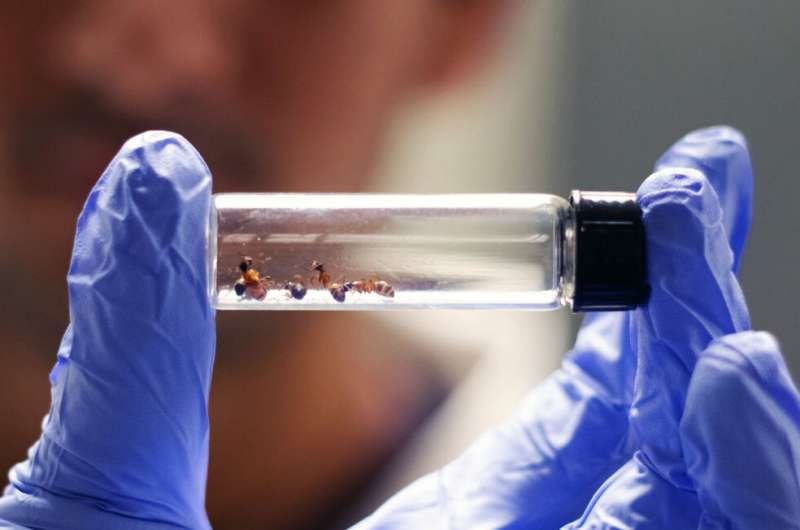
Scientists searching for new ways to fight drug-resistant infections may not need to look inside high-tech laboratories alone. According to new research from Auburn University, some of the most promising clues might be crawling right beneath our feet. A team led by entomologist Clint Penick has discovered that common ants produce powerful antimicrobial compounds that can kill dangerous human pathogens, including an emerging hospital superbug. Even more intriguing is how ants manage to use these natural antibiotics for millions of years without triggering widespread resistance.
The findings suggest that ants could play an important role in shaping the future of human medicine, especially as antibiotic resistance continues to rise globally.
Why Antibiotic Resistance Is a Growing Problem
Antibiotics have been one of the most important medical breakthroughs in human history. However, humans have relied on them for less than a century, and already many bacteria and fungi have evolved ways to survive these drugs. This has led to the rise of so-called superbugs, pathogens that resist multiple treatments and are extremely difficult to control.
One reason resistance spreads so quickly is that many antibiotics are broad-spectrum, meaning they kill a wide range of microbes rather than a single target. While this can be useful in emergencies, it also wipes out harmless or beneficial microbes and encourages resistant genes to spread through microbial communities.
This is where ants offer a fascinating contrast.
Ants Have Been Using Antibiotics for Millions of Years
Ants live in dense colonies where disease could easily spread. Yet they have thrived for tens of millions of years without experiencing the kind of resistance problems humans face today. Researchers wanted to understand how ants pull this off.
The Auburn University team studied six ant species, all commonly found in the Southeastern United States. These weren’t exotic rainforest insects but familiar ants that live in backyards, parks, and even college campuses. Some of them are widely considered pests, including fire ants, which turned out to be particularly interesting.
By examining chemical extracts taken from the ants, the researchers explored how these insects defend themselves against bacteria and fungi in their environment.
Ants Don’t Rely on Just One Antibiotic
One of the main questions researchers tested was whether ants depend on a single antimicrobial compound or multiple ones. The results were clear: ants produce several different classes of antimicrobial chemicals.
When scientists used different solvents to extract compounds from the ants, they found that various extracts showed antimicrobial activity. This indicates that ants have a diverse chemical toolkit, not a one-size-fits-all solution.
This approach mirrors how doctors sometimes rotate antibiotics when a treatment stops working. By switching between different compounds, ants may reduce the chances that microbes adapt to any single one.
This chemical diversity helps explain how ants maintain effective defenses over evolutionary timescales.
Targeted Antimicrobials Instead of Chemical Carpet Bombing
The second major discovery was even more relevant to modern medicine. The researchers found evidence that ant antimicrobial compounds are targeted, meaning they affect specific types of microbes rather than killing everything indiscriminately.
Some ant compounds were more effective against fungi, while others targeted gram-negative bacteria or gram-positive bacteria. This kind of specificity is something medical researchers are actively trying to achieve today.
Targeted antibiotics reduce collateral damage to beneficial microbes and may slow the spread of resistance genes. Ants appear to have evolved this strategy naturally, long before humans even understood microbes existed.
Ant Extracts Killed a Dangerous Human Superbug
One of the most striking findings from the study was that nearly all the ant species tested were able to kill Candida auris, a serious emerging fungal pathogen.
Candida auris is a drug-resistant yeast that has caused outbreaks in hospitals worldwide. It can survive on surfaces, spread easily in healthcare settings, and is resistant to many antifungal medications. Treatment options are limited, making it a major public health concern.
While the study did not focus exclusively on Candida auris, the fact that ant extracts were highly effective against it highlights the medical potential of these natural compounds.
Fire Ants and Other Overlooked Species
Interestingly, some of the strongest antimicrobial effects came from ants people usually try to eliminate. Fire ants, often seen as aggressive pests, turned out to be a particularly rich source of powerful antimicrobial compounds.
This challenges the assumption that medically valuable organisms must be rare or exotic. Instead, it suggests that everyday species may hold untapped chemical resources with real-world importance.
Who Conducted the Research
The study was led by Clint Penick, Assistant Professor of Entomology at Auburn University. The research team also included Katy Chon, a graduate student from Kennesaw State University, and Darmon Kahvazadeh, a graduate research assistant in Auburn’s entomology and plant pathology programs.
Their work was published in the Biological Journal of the Linnean Society in 2025 and also appeared earlier as a preprint on bioRxiv.
What This Means for Future Medicine
The researchers emphasize that ants themselves are not a ready-made cure. However, studying how ants use antimicrobial compounds could inform better antibiotic strategies for humans.
Future research will focus on identifying the exact chemical structures of these ant-produced compounds and understanding how ants deploy them within their colonies. Scientists are particularly interested in whether these chemicals can inspire new drugs or guide how existing antibiotics are used.
Instead of simply killing everything, future treatments may aim to be more precise, mirroring the targeted strategies ants have used successfully for millions of years.
Ants as an Untapped Resource
Ants are among the most successful organisms on Earth, found in nearly every environment and forming complex societies that rival human cities in density. Their long evolutionary history has forced them to develop efficient disease-control systems without relying on modern science.
This research adds to a growing body of evidence that nature is one of the best chemists, and that solutions to modern problems may already exist in unexpected places.
As antibiotic resistance continues to threaten global health, looking to ants could help scientists rethink how medicines are developed, deployed, and preserved for the long term.
Research Paper Reference
Dual strategies in ant antimicrobial defences: evidence for chemical diversity and microbial specificity
Biological Journal of the Linnean Society (2025)
https://academic.oup.com/biolinnean/article/146/4/blaf123/8362186