How Highlighting Immigrants’ Efforts Can Reduce Anti-Immigration Attitudes During Elections
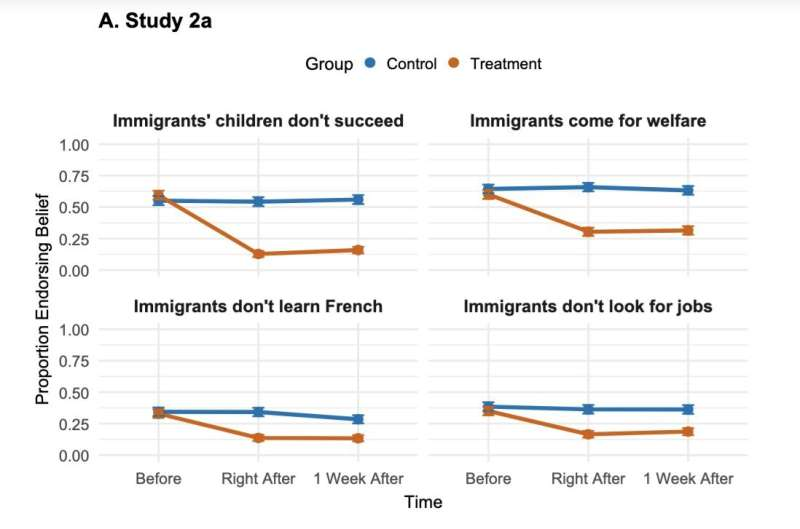
A new study published in PNAS Nexus offers detailed evidence that the way immigration is discussed can meaningfully shape public opinion. Conducted during the highly charged 2024 French and European Parliament elections, the research shows that emphasizing immigrants’ efforts to work, learn the local language, and improve their lives can significantly reduce negative beliefs about immigration and slightly lower opposition to immigration itself.
The study was led by Amine Sijilmassi and colleagues, who set out to examine a long-standing issue in immigration debates: widespread misperceptions about immigrants’ motivations, behaviors, and willingness to integrate. Rather than focusing on economic statistics alone, the researchers tested whether highlighting what they call “deservingness cues” could shift attitudes in a more durable way.
What Researchers Mean by “Deservingness”
In public opinion research, deservingness refers to the idea that people judge whether certain groups are worthy of support based on perceived effort, cooperation, and contribution to society. In the context of immigration, these judgments often include assumptions about whether immigrants want to work, whether they try to learn the host country’s language, whether they seek employment actively, and whether their children are likely to succeed socially and economically.
The researchers focused on correcting common misperceptions in these areas. Many voters overestimate immigrant dependence on welfare or underestimate immigrants’ motivation to integrate. The study tested whether providing accurate, factual information about these efforts could reduce hostility toward immigration.
Three Studies Conducted in Real Political Contexts
The research consisted of three separate but connected studies, all conducted in France and all designed to mirror real-world political conditions rather than abstract laboratory settings.
The first study involved 480 participants who were asked to evaluate fictional immigrant profiles. These profiles varied in terms of education, employment status, and integration efforts. Immigrants who were described as actively seeking work, learning French, and supporting their children’s education were consistently rated more favorably. Importantly, this positive evaluation held even when the immigrants were portrayed as economically disadvantaged, suggesting that effort mattered more than status.
The second and third studies were longitudinal experiments conducted around major elections. One took place during the 2024 European Parliament elections and included 1,506 participants. The other occurred during the 2024 French parliamentary elections, with 1,255 participants.
In these studies, participants were surveyed at three key moments: before the intervention, immediately after receiving information, and one week later. Some participants received accurate information correcting misperceptions about immigrants’ behavior and integration efforts, while others did not.
Large Reductions in Misperceptions About Immigration
The results were striking when it came to beliefs. Participants who received corrective information showed substantial reductions in negative or false beliefs about immigrants. The probability of endorsing common misperceptions dropped by 20 to 38 percentage points, depending on the specific belief being measured.
These included beliefs about immigrants’ willingness to work, their motivation to learn French, and their commitment to contributing to society. Even more notably, these effects persisted one week later, suggesting that the intervention did more than produce a temporary reaction.
This persistence is especially important because many previous studies have found that factual corrections often fade quickly or are rejected outright when they clash with strong political identities. In this case, the information appeared to stick.
Modest but Meaningful Changes in Immigration Attitudes
While belief changes were substantial, changes in overall attitudes toward immigration were more modest, but still statistically significant. Participants exposed to deservingness information showed a 3–5% reduction in opposition to immigration on standard attitude scales.
In practical terms, this means fewer respondents strongly opposed immigration policies after receiving the information. While the shift was not dramatic, it was consistent across multiple measures and election contexts.
The authors emphasize that even small shifts in attitudes can matter in politically polarized environments, especially when applied at scale through media, campaigns, or public communication strategies.
Limited Effects on Voting Behavior
When it came to actual voting behavior, the effects were much smaller and less consistent. Some analyses suggested minor changes, while others showed no clear impact. This aligns with broader political science research showing that voting choices are harder to change than beliefs or general attitudes, particularly during election periods when party loyalty and identity are strong.
The researchers caution against expecting messaging interventions alone to reshape electoral outcomes. Instead, they frame the findings as evidence that beliefs and perceptions are more flexible than often assumed, even if voting behavior remains relatively stable.
Why This Study Stands Out
One of the most important aspects of this research is its real-world timing. Conducting the studies during national and European elections meant participants were already exposed to intense political messaging, media coverage, and debate about immigration. The fact that the intervention still worked under these conditions strengthens the findings considerably.
Another key takeaway is that the effects were consistent across political ideologies. The reduction in misperceptions did not depend heavily on whether participants identified as left-leaning, centrist, or right-leaning. This suggests that deservingness-based communication may be one of the few approaches capable of cutting across ideological divides.
How This Fits Into Broader Immigration Research
For years, researchers have shown that the public often overestimates the size of immigrant populations, misunderstands their economic impact, and assumes low levels of integration. Traditional approaches that rely solely on statistics about taxes, jobs, or crime have produced mixed results.
This study adds to a growing body of evidence suggesting that how information is framed matters just as much as the facts themselves. By focusing on effort, cooperation, and shared social norms, deservingness cues tap into moral and social judgments that strongly influence opinion.
However, the authors also acknowledge a key ethical tension. Emphasizing deservingness risks implying that only certain immigrants are worthy of acceptance. The researchers note that their findings should be used carefully, as a complement to broader discussions about rights, equality, and structural factors shaping migration.
What This Means for Public Communication
From a practical standpoint, the study suggests that journalists, policymakers, educators, and advocacy groups may be more effective if they highlight immigrants’ everyday efforts to integrate and contribute. This does not mean ignoring economic realities or policy debates, but rather grounding them in accurate representations of immigrant behavior.
At a time when immigration remains one of the most divisive political issues in Europe and beyond, the research offers a cautiously optimistic message: misperceptions can be corrected, and doing so can make public attitudes slightly less hostile, even during elections.
Research Paper Reference
Information about immigrants’ deservingness reduces misperceptions and opposition to immigration – PNAS Nexus (2025):
https://academic.oup.com/pnasnexus/article/4/12/pgaf349