Hunting Pressure Is Pushing Female Turkeys to Produce More Daughters, New Research Reveals
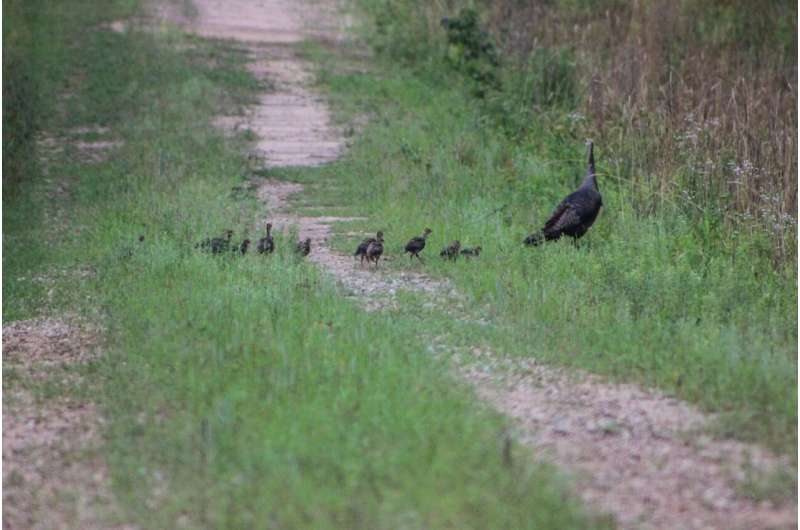
New scientific research suggests that hunting pressure may be quietly reshaping wild turkey populations in the southeastern United States — not just by reducing the number of adult males, but by influencing the sex of the next generation itself. According to a study led by researchers from the University of Georgia, female wild turkeys living in areas with active hunting are significantly more likely to give birth to female offspring than male ones. This discovery raises important questions about long-term population balance, wildlife management, and how animals adapt to human-driven environmental pressures.
At the center of this research is the idea that female turkeys are not passive participants in reproduction. Instead, they may be responding — biologically and behaviorally — to changes in their environment, particularly the selective removal of males through hunting.
What the Study Looked At
The research team monitored hundreds of wild turkeys across multiple states, including Georgia, South Carolina, and Louisiana, over a period of three years. These locations were carefully chosen to represent both hunted and non-hunted environments, allowing scientists to compare survival rates, mating patterns, nesting success, and offspring sex ratios under different conditions.
Male and female turkeys were tracked using GPS technology, and researchers closely observed nesting behavior and offspring outcomes. To accurately determine the sex of turkey poults, the team used molecular analysis of eggshell membranes, a precise method that avoids the guesswork often associated with visual identification at early life stages.
A Clear Pattern Emerges
The findings were striking. In areas where spring turkey hunting was allowed, male survival rates dropped sharply. Only about 50% of male turkeys survived the breeding season in hunted areas, compared to around 83% survival in locations without hunting pressure.
At the same time, offspring sex ratios shifted noticeably. In non-hunted areas, turkey reproduction followed the expected 50–50 split between males and females. But in hunted areas, females were approximately 23% more likely to produce daughters. In some cases, nearly two-thirds of all offspring were female, a substantial deviation from natural expectations.
This consistent pattern across multiple sites suggests the trend is not random. Instead, it points to an adaptive response tied to hunting activity.
Why Would Female Turkeys Favor Daughters?
One leading explanation involves male quality and availability. Wild turkeys have a mating system in which dominant males — typically larger, stronger, and more experienced — are more successful at attracting females. Unfortunately for turkeys, these same traits make dominant males prime targets for hunters, especially early in the breeding season.
When these high-quality males are removed, females are left with fewer and often less desirable mating options. Producing male offspring under these conditions may be less advantageous, since those males might struggle to compete or reproduce successfully in the future.
From an evolutionary perspective, producing daughters could be a safer reproductive investment, as females are generally more likely to survive and reproduce even in disrupted populations.
The Role of Stress and Hormones
Another important factor explored in the study is maternal stress. Hunting typically coincides with the laying and early nesting period, a sensitive time for female turkeys. The presence of hunters, repeated disturbances, and the sudden disappearance of mating partners may elevate stress levels in females.
In birds, stress hormones are known to influence egg development, including the likelihood of producing male or female embryos. Elevated stress hormones may tilt the balance toward female offspring, a phenomenon observed in other bird species as well.
The researchers suggest that female turkeys may be biologically responding to signals of increased male mortality, adjusting offspring sex ratios accordingly.
Long-Term Implications for Turkey Populations
While producing more females might seem beneficial in the short term, the long-term consequences could be concerning. A sustained shortage of males could lead to reduced mating opportunities, delayed breeding, and overall declines in population growth.
Male turkeys play a crucial role beyond reproduction alone. Their presence influences breeding timing, nesting success, and genetic diversity. If fewer males are available year after year, populations could become more vulnerable to environmental changes, disease, and further human pressure.
This research adds a new layer to concerns already raised by wildlife agencies about declining turkey numbers in parts of the United States.
What This Means for Hunting and Wildlife Management
The findings do not argue against hunting, but they do highlight the importance of carefully managing hunting seasons and harvest strategies. Spring hunting, in particular, overlaps with peak breeding activity and disproportionately affects dominant males.
Wildlife managers may need to consider adjusting season timing, bag limits, or harvest regulations to reduce unintended effects on reproduction. Understanding how hunting pressure shapes not just adult populations but future generations is key to maintaining sustainable turkey numbers.
How Turkeys Compare to Other Birds
Sex ratio adjustment is not unique to turkeys. Many bird species have shown the ability to bias offspring sex based on environmental conditions. This behavior aligns with well-established evolutionary theories suggesting that parents invest in the offspring most likely to succeed under current conditions.
What makes this study stand out is the scale and consistency of the findings across multiple states and years, as well as the clear link to human activity rather than natural environmental variation.
A Closer Look at Wild Turkey Biology
Wild turkeys are highly intelligent birds with complex social structures. Females often observe males over several days before mating, and they are keenly aware of changes in their social environment. The repeated loss of males during breeding season is not something they ignore.
Turkeys also have relatively slow reproductive rates, typically producing one clutch per year. This makes population balance especially sensitive to changes in survival and reproduction.
Why This Research Matters
This study challenges the assumption that wildlife populations respond to hunting only through reduced numbers. Instead, it shows that animals can biologically adapt in subtle but powerful ways, potentially reshaping population dynamics over time.
Understanding these responses is critical not just for turkeys, but for broader conservation efforts involving hunted species worldwide.
Final Thoughts
The discovery that female turkeys may be producing more daughters in response to hunting pressure offers a fascinating glimpse into how wildlife adapts to human influence. It also serves as a reminder that conservation and hunting management must consider complex biological feedback loops, not just population counts.
As researchers continue to study these dynamics, one thing is clear: wild turkeys are far more responsive and adaptable than they are often given credit for — and their future may depend on how well humans learn to listen to what the science is telling us.
Research Paper:
https://doi.org/10.1002/jav.03515