AI Uncovers a New Double-Lambda Hypernucleus and Opens a Rare Window Into Nuclear Matter
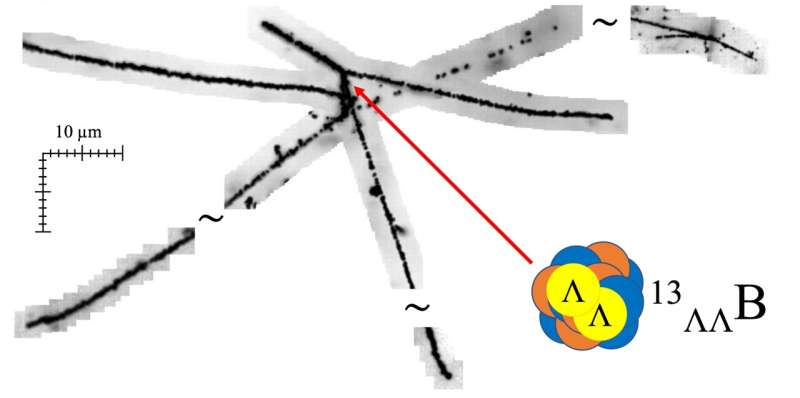
Researchers in Japan have achieved something nuclear physicists have been chasing for decades: the confirmed discovery of a new double-Lambda hypernucleus, found with the help of artificial intelligence. The work was carried out by scientists from the High Energy Nuclear Physics Laboratory at the RIKEN Pioneering Research Institute (PRI) along with an international team of collaborators, using experimental data from the J-PARC E07 experiment.
What makes this discovery remarkable is not just the rarity of the nucleus itself, but the way it was found. By applying deep learning techniques to an enormous archive of previously unexamined nuclear emulsion data, the team identified an exotic nuclear event that had remained hidden for more than two decades. This marks the first AI-assisted observation of a double-Lambda hypernucleus and only the second confirmed case in history, the previous one being reported nearly 25 years ago.
What exactly was discovered?
The nucleus identified by the researchers is known as boron-13 double-Lambda hypernucleus, written as ¹³ΛΛB. In simple terms, this nucleus consists of a boron-11 core bound together with two Lambda (Λ) hyperons.
Lambda particles are unusual because they contain a strange quark, unlike ordinary protons and neutrons, which are made only of up and down quarks. When one Lambda particle is embedded into a nucleus, the result is called a hypernucleus. When two Lambda particles are bound inside the same nucleus, the system becomes a double-Lambda hypernucleus, an extremely rare form of matter.
This newly identified nucleus is particularly important because it allows scientists to directly study the interaction between two Lambda particles inside a nuclear environment that is not helium, something that had never been done before.
Why double-Lambda hypernuclei matter
To understand why physicists care so much about these exotic systems, it helps to look at the bigger picture of nuclear forces.
All ordinary matter is made of atoms, whose nuclei are composed of protons and neutrons, collectively known as hadrons. These particles are held together by the strong nuclear force, one of the fundamental forces of nature. While this force is well studied in normal nuclei, its behavior becomes far less certain when strange quarks are involved.
Hypernuclei act as a natural laboratory for probing how the strong force behaves under these unusual conditions. Double-Lambda hypernuclei go one step further by providing a way to measure the Lambda–Lambda interaction directly. This interaction plays a crucial role in theoretical models of dense nuclear matter, especially in extreme cosmic environments.
One of the most important of those environments is the core of neutron stars, where matter is compressed to densities far beyond anything achievable on Earth. Many theoretical models predict that hyperons, including Lambda particles, should exist inside neutron stars. Understanding how these particles interact helps scientists refine predictions about neutron star masses, sizes, and internal structure.
The experimental challenge
Finding double-Lambda hypernuclei is notoriously difficult. They are produced extremely rarely, even in high-energy accelerator experiments, and their decay patterns are complex and subtle.
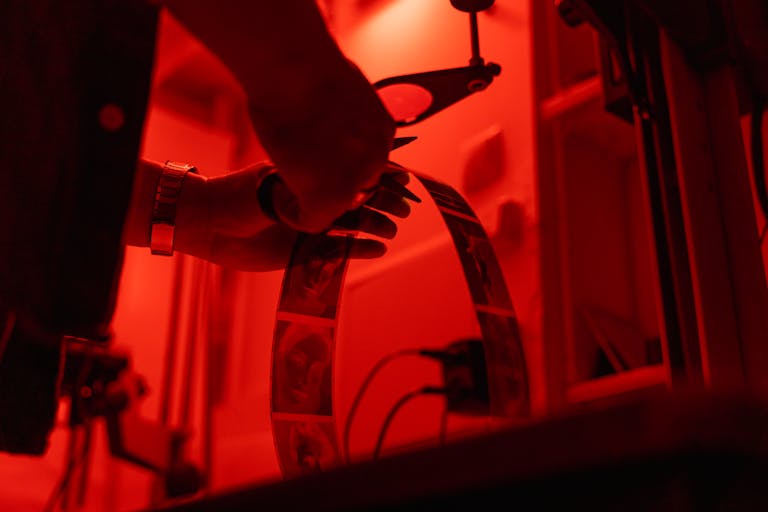
In the J-PARC E07 experiment, researchers used nuclear emulsion plates, a type of detector that records the microscopic tracks left behind by particles created during nuclear reactions. These plates contain an enormous amount of detailed information, but analyzing them has traditionally required manual inspection under microscopes, a slow and labor-intensive process.
Because of these limitations, only a small fraction of the collected data had ever been carefully examined. Vast amounts of potentially valuable information remained untouched simply because there were not enough human hours to analyze it.
How AI changed the game
To overcome this bottleneck, the RIKEN-led team developed a deep learning–based analysis framework specifically designed to recognize the signatures of double-strangeness events in nuclear emulsion images.
Neural networks were trained to identify the characteristic vertex structures and track patterns associated with the formation and decay of double-Lambda hypernuclei. Once trained, the system could automatically scan through massive datasets and extract promising candidate events.
From this AI-driven search, researchers selected candidate images and then examined them carefully using optical microscopes. One event stood out. Through detailed kinematic analysis, the team confirmed that it matched the expected behavior of a ¹³ΛΛB hypernucleus.
What makes this result even more impressive is the efficiency of the method. The confirmed discovery came from analyzing just 0.2% of the total emulsion data collected in the J-PARC E07 experiment.
A glimpse of what’s still hidden
Based on the detection rate achieved so far, the researchers estimate that the full dataset could contain more than 2,000 double-strangeness events. Many of these may correspond to other hypernuclei that have never been observed before.
The team plans to continue refining their AI tools and expand the search to include other types of hypernuclei, as well as interactions involving Xi (Ξ) hyperons, another class of strange particles. This approach could transform how experimental nuclear physics handles large, complex datasets in the future.
Why this discovery is a milestone
This work represents a major step forward on multiple fronts. Scientifically, it provides new, direct information about Lambda–Lambda interactions and strengthens the experimental foundation for theories of dense nuclear matter. Methodologically, it demonstrates how artificial intelligence can uncover rare physical phenomena that would be nearly impossible to find through traditional analysis alone.
It also signals a broader shift in experimental physics, where AI is no longer just a supporting tool but a core part of discovery itself. As experimental datasets continue to grow in size and complexity, approaches like this are likely to become increasingly essential.
Understanding hypernuclei and strange matter
Hypernuclei are not just scientific curiosities. They sit at the intersection of particle physics, nuclear physics, and astrophysics. By studying how strange quarks behave inside nuclei, researchers gain insight into how matter behaves under conditions far removed from everyday experience.
Double-Lambda hypernuclei are especially valuable because they provide the cleanest experimental access to hyperon–hyperon forces, which remain one of the least well-understood aspects of the strong interaction. Each new observation helps tighten theoretical models and reduces uncertainty in our understanding of the universe at both microscopic and cosmic scales.
Research paper:
Yan He et al., Artificial intelligence pioneers the double-strangeness factory, Nature Communications (2025).
https://doi.org/10.1038/s41467-025-66517-x