Climate Policies Can Backfire by Weakening Green Values, New Study Finds
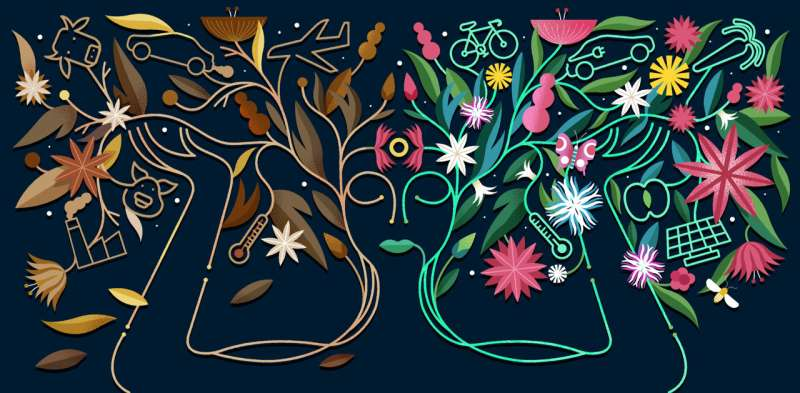
A future shaped by successful climate action is often imagined as quieter streets filled with bicycles, city centers free of cars, more plant-based diets, and fewer flights crisscrossing the sky. While this vision appeals to many environmentally conscious people, new research suggests that the way climate policies are designed could unintentionally undermine the very green values they aim to promote.
A recent study published in Nature Sustainability reveals that climate policies focused on enforcing lifestyle changes—such as urban car bans or restrictions on personal behavior—can actually weaken people’s intrinsic motivation to live sustainably. Instead of encouraging broader support for environmental action, these policies may reduce it, even among citizens who already care deeply about climate issues.
How Climate Policies Can Shape Values, Not Just Behavior
The study was led by Katrin Schmelz, a behavioral economist and psychologist affiliated with the Santa Fe Institute and the Technical University of Denmark, alongside economist Sam Bowles, also of the Santa Fe Institute. Their research starts from a simple but powerful idea: policies don’t just change what people do; they can also change how people think and feel.
Traditionally, policymakers focus on whether a policy successfully reduces emissions or alters behavior. This study takes a broader view by examining how policies affect people’s underlying values—specifically, their willingness to voluntarily act in environmentally friendly ways.
The findings suggest that poorly designed mandates can erode people’s internal commitment to sustainability. In other words, forcing people to behave green can sometimes make them feel less green inside.
The Survey Behind the Findings
To explore this effect, the researchers surveyed more than 3,000 people in Germany, carefully selected to reflect the country’s demographics. Participants were asked about their attitudes toward a range of climate-related policies, such as car bans, flight limitations, and other measures aimed at reducing carbon emissions.
For comparison, the survey also included questions about COVID-19 policies, which had sparked intense public debate and resistance in many countries. This comparison allowed the researchers to assess whether climate mandates provoke reactions similar to—or stronger than—public health mandates.
The results were striking. Participants expressed significantly stronger negative reactions to climate mandates than to COVID-19 mandates, with opposition to climate policies measuring about 52% higher on average.
The Crowding-Out Effect Explained
At the heart of the study is a concept known in psychology and economics as the crowding-out effect. This occurs when external controls—such as laws or mandates—reduce people’s internal motivation to do something voluntarily.
Many people choose to bike, conserve energy, or limit consumption because these actions align with their values. However, when similar behaviors are imposed by strict policies, people may experience a sense of lost autonomy. That feeling of being controlled can override their original motivation.
According to the study, even individuals who would willingly adopt sustainable habits may react negatively when those habits are mandated. The policy doesn’t just change behavior; it changes how people perceive their own choices and values.
Why Climate Mandates Trigger Strong Resistance
One of the more surprising findings was just how intense the resistance to climate mandates can be. Despite the widespread controversy surrounding pandemic restrictions, climate-related controls sparked even stronger negative responses.
The researchers suggest several reasons for this. Climate policies often target everyday lifestyle choices, such as transportation, food, and home energy use. These choices are deeply personal, making people more sensitive to perceived intrusions.
There is also a broader political challenge. While the scientific and technological tools for a low-carbon society are largely available, the study argues that social and behavioral science has lagged behind. Understanding how people react emotionally and psychologically to climate policies is just as important as developing clean technologies.
When Climate Policies Work Better
Despite these concerns, the study is not a rejection of climate policy. Instead, it offers insights into how policies can be designed more effectively—and even strengthen green values rather than weaken them.
The researchers identified three key conditions that reduce resistance and may help cultivate long-term environmental commitment:
- Perceived effectiveness: People are more supportive when they believe a policy genuinely reduces carbon emissions.
- Respect for freedom of choice: Policies that preserve options and flexibility face less backlash.
- Low intrusiveness: Measures that do not interfere with personal privacy or bodily autonomy are better received.
An example highlighted in the study involves restrictions on short-haul flights in Germany. Public opposition is lower partly because the country’s extensive train network offers a viable alternative. When people feel they still have meaningful choices, resistance decreases.
Lessons for Policymakers
The findings carry an important warning for governments and institutions designing climate strategies. Mandates that appear heavy-handed or symbolic rather than effective can undermine public support, not just in the short term but over time.
The study suggests that policymakers should focus on creating conditions that make sustainable choices easier and more attractive, rather than relying solely on bans and restrictions. Infrastructure, incentives, and clear communication about environmental impact can help align policy goals with people’s values.
This approach recognizes that values are dynamic. Policies can either nurture a sense of shared responsibility or trigger defensive reactions that stall progress.
Why Values Matter in Climate Action
Climate change is not just a technical problem—it is a social one. Long-term success depends on widespread public cooperation and a shared belief in the importance of sustainable living.
If policies unintentionally weaken green values, they may reduce support for future environmental measures, creating political and social obstacles. On the other hand, well-designed policies can reinforce the idea that sustainable living is both effective and empowering.
The study highlights a crucial insight: how climate action is implemented may matter just as much as what actions are taken.
Broader Context: Behavioral Science and Sustainability
This research fits into a growing body of work showing that human behavior, norms, and motivation play a central role in environmental outcomes. Incentives, social trust, and perceptions of fairness all influence whether people embrace or resist change.
By combining large-scale survey data with behavioral theory, the study offers a roadmap for climate policy that takes human psychology seriously. It suggests that building a low-carbon future requires not just innovation and regulation, but also careful attention to how policies interact with values.
Looking Ahead
As countries accelerate efforts to address climate change, the study serves as a timely reminder that public support is fragile. Policies that alienate citizens may slow progress, while those that respect autonomy and demonstrate real impact can help build lasting commitment.
The researchers emphasize that there is still reason for optimism. Climate policies do not inevitably crowd out green values. With thoughtful design, they can do the opposite—helping people feel more, not less, invested in protecting the planet.
Research Paper Reference:
https://doi.org/10.1038/s41893-025-01715-5