Hubble Captures Galactic Gas Escaping From the Spiral Galaxy NGC 4388
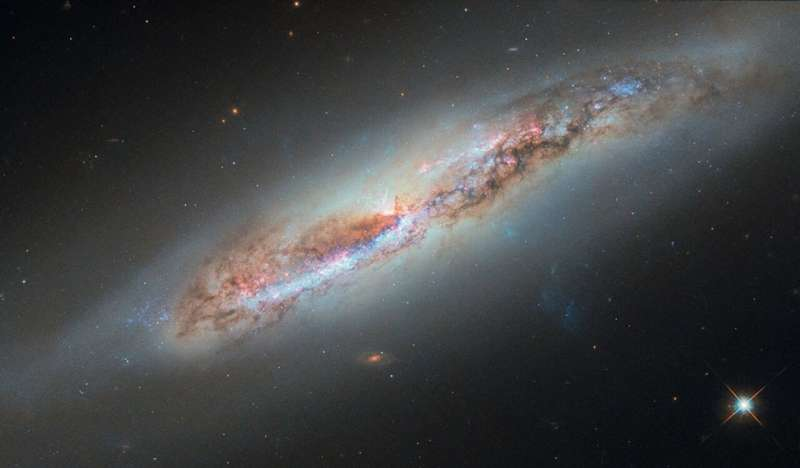
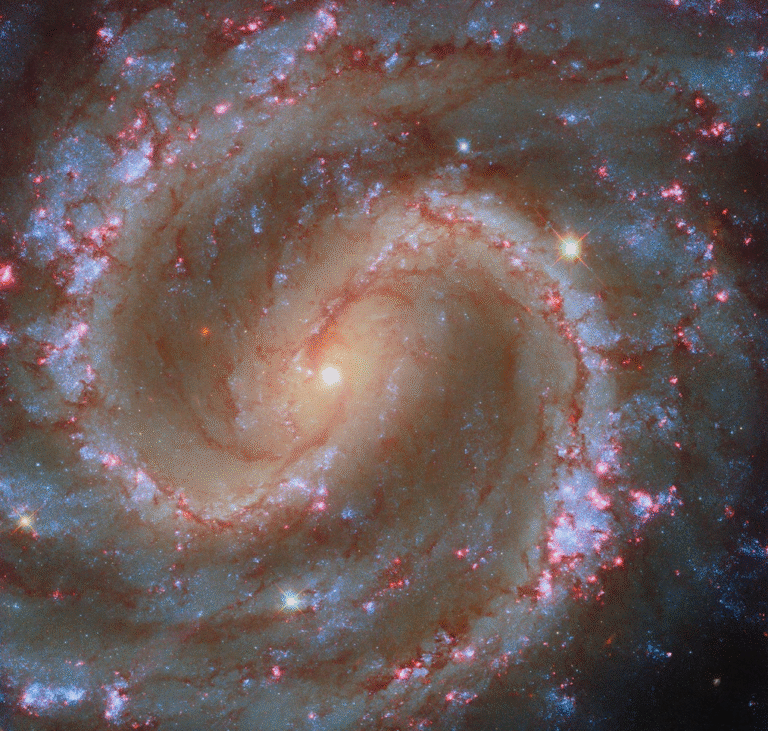
A striking new image from the NASA/ESA Hubble Space Telescope has offered astronomers and space enthusiasts a fresh look at a dramatic event unfolding in a nearby galaxy. The subject of this observation is NGC 4388, a spiral galaxy located about 60 million light-years away in the constellation Virgo. While this galaxy has been studied before, Hubble’s latest view reveals something new and visually compelling: gas being actively stripped from the galaxy and streaming away into space.
NGC 4388 is part of the Virgo galaxy cluster, the nearest large galaxy cluster to our own Milky Way. This massive cluster contains more than a thousand galaxies, bound together by gravity and immersed in an enormous cloud of hot, diffuse gas. Living in such a crowded and energetic environment has consequences, and NGC 4388 is now showing clear signs of those effects.
A Galaxy Seen Almost Edge-On
One of the reasons NGC 4388 is such an interesting target is its orientation. From Earth, the galaxy appears almost edge-on, meaning we see its disk from the side rather than from above. This extreme tilt provides astronomers with a clear view of structures rising above and below the galactic plane—features that can be much harder to detect in face-on galaxies.
In earlier Hubble images released in 2016, NGC 4388 already appeared unusual, but the newly released image includes additional wavelengths of light that were not part of the previous data. These new observations have made it possible to spot a distinct plume of ionized gas emerging from the galaxy’s central region and extending outward from the disk, toward the lower-right portion of the image.
This glowing gas cloud was effectively invisible before, not because it wasn’t there, but because it required a more sensitive, multi-wavelength approach to stand out against the surrounding darkness of space.
The Role of the Virgo Cluster’s Hostile Environment
At first glance, the space between galaxies might seem empty. In reality, galaxy clusters like Virgo are filled with an extremely hot, thin plasma known as the intracluster medium. While this gas is incredibly diffuse, it still exerts pressure—especially on galaxies moving through it at high speeds.
As NGC 4388 travels through the Virgo cluster, it effectively experiences a kind of cosmic headwind. This phenomenon, known as ram-pressure stripping, occurs when pressure from the intracluster medium becomes strong enough to sweep gas out of a galaxy’s disk. Over time, this process can remove large amounts of gas, which is a crucial ingredient for forming new stars.
In the case of NGC 4388, the stripped gas doesn’t simply vanish. Instead, it trails behind the galaxy, forming elongated filaments and clouds that glow faintly in visible light. The newly observed plume is a vivid example of this process in action.
Why the Escaping Gas Glows
One of the lingering questions surrounding this observation is what causes the stripped gas to glow so brightly. The answer is not entirely settled, but astronomers have several strong candidates.
At the center of NGC 4388 lies a supermassive black hole, actively feeding on surrounding material. As gas spirals into this black hole, it forms a superheated accretion disk that emits intense radiation. Scientists believe that this radiation is capable of ionizing nearby gas, stripping electrons from atoms and causing the gas to emit light.
However, this explanation may only apply to gas closer to the galaxy. For filaments farther out, researchers suspect that shock waves—generated as the galaxy plows through the intracluster medium—may also play a significant role in ionizing the gas. The glowing plume likely reflects a combination of both effects rather than a single energy source.
A Composite Image Built From Multiple Observations
The newly released Hubble image is not based on a single snapshot. Instead, it combines data from several observing programs, each designed to study galaxies with active galactic nuclei. By layering observations taken through different filters, astronomers were able to highlight specific features, including the faint glow of ionized gas that would otherwise remain hidden.
This approach underscores one of Hubble’s greatest strengths: its ability to reveal subtle, delicate structures that are impossible to see from the ground. Even decades after its launch, the telescope continues to produce scientifically valuable and visually stunning results.
Why Gas Loss Matters for Galaxy Evolution
Gas is the raw material for star formation. When galaxies like NGC 4388 lose their gas, their ability to form new stars gradually declines. Over long timescales, this process can transform once-active spiral galaxies into more passive systems with little ongoing star formation.
Observations of gas stripping in clusters like Virgo help astronomers understand how environment influences galaxy evolution. Galaxies are not isolated islands; their surroundings play a critical role in shaping their structure, activity, and long-term fate.
NGC 4388 offers a nearby and well-resolved example of these processes, allowing scientists to study them in far greater detail than would be possible in more distant clusters.
Extra Context: The Virgo Cluster and Active Galaxies
The Virgo Cluster is a cornerstone of extragalactic astronomy. Its proximity makes it an ideal laboratory for studying interactions between galaxies and their environments. Many Virgo galaxies show signs of distortion, gas loss, or enhanced nuclear activity, all linked to the cluster’s dense and energetic conditions.
NGC 4388 is also classified as an active galaxy, meaning its central black hole is currently accreting matter and emitting large amounts of energy. Active galactic nuclei are known to influence their host galaxies by heating, ionizing, or even expelling gas—processes collectively referred to as AGN feedback. The new Hubble image provides a valuable opportunity to examine how AGN activity and environmental effects work together.
Looking Ahead
This latest Hubble observation is a reminder that even well-known galaxies can still surprise us when viewed with fresh data and new techniques. By revealing gas literally being torn from NGC 4388, the image captures a moment of transformation—one that helps astronomers piece together the complex story of how galaxies live, interact, and evolve within massive clusters.
As future observatories like the James Webb Space Telescope and upcoming ground-based facilities continue to explore the universe, studies like this will serve as crucial reference points, grounding new discoveries in detailed observations of our cosmic neighborhood.
Research reference:
https://science.nasa.gov/missions/hubble/hubble-glimpses-galactic-gas-making-a-getaway/