Meet NASA’s Artemis Closeout Crew and How They Prepare Astronauts for Their Journey to the Moon
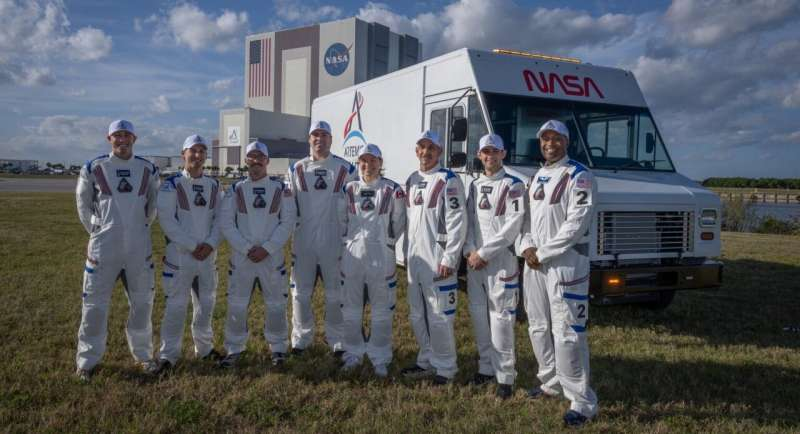
Getting into a car is something most of us do without thinking. But when the destination is the Moon, even the simple act of getting seated becomes a highly technical, carefully choreographed operation. That responsibility falls to a little-known but absolutely critical team at NASA: the Artemis Closeout Crew. These specialists are tasked with helping astronauts board, suit up, and get fully secured inside NASA’s Orion spacecraft before launch, making them the final humans the crew sees before leaving Earth.
The closeout crew plays a central role in Artemis II, NASA’s first crewed mission of the Artemis program, which aims to return humans to the Moon and eventually pave the way for missions to Mars. While astronauts often take the spotlight, the closeout crew ensures that everything inside the spacecraft is ready, safe, and flawlessly executed before liftoff.
Who the Artemis Closeout Crew Is
The Artemis II closeout crew is a highly trained group with specialized responsibilities. The core team includes five key members, each with a distinct role:
- Taylor Hose, the closeout crew lead, oversees the entire operation and coordinates the final preparations.
- Andre Douglas, an astronaut and astronaut support person, works directly with the flight crew during boarding.
- Bill Owens, a technician trained specifically on the Orion crew survival system spacesuits.
- Christian Warriner, an Orion technician.
- Ricky Ebaugh, another Orion technician with expertise in spacecraft systems.
Together, these individuals form a tightly coordinated unit responsible for the final steps before launch. They will be the last people to see astronauts Reid Wiseman, Victor Glover, Christina Koch, and Canadian Space Agency astronaut Jeremy Hansen before the Artemis II spacecraft departs for its lunar journey.
What Happens on Launch Day
On launch day at Launch Complex 39B at NASA’s Kennedy Space Center in Florida, the closeout crew arrives early. By the time the astronauts reach the launch pad, the team is already in position inside the mobile launcher and spacecraft access areas.
The process begins with helping astronauts put on their helmets and gloves, an important step before entering the Orion spacecraft. Once inside the crew module, the real complexity begins. Securing an astronaut in Orion is nothing like buckling a seatbelt in a car.
Each astronaut seat includes five separate restraint straps, designed to hold the crew securely during launch, ascent, and reentry. Beyond that, there are multiple connections that link the astronauts’ spacesuits to Orion’s environmental control, life support, and communications systems. Every connection must be checked, verified, and double-checked before moving on.
This phase of the process is handled primarily by Bill Owens and Andre Douglas, who assist each astronaut individually to ensure everything is properly connected and comfortable.
Closing the Orion Hatch Is a Major Operation
Once the astronauts are fully seated and secured, attention turns to closing the spacecraft hatch. Unlike a simple door, Orion’s hatch is pneumatically driven and requires coordination with ground support systems. Air lines must be connected, and pressure systems carefully managed to seal the hatch correctly.
Even something as small as a single strand of hair caught in the sealing surface could create problems, so the process is meticulous. The closeout crew spends significant time cleaning, greasing, and inspecting the hatch seals before closure.
After the crew module hatch is latched, the team removes window covers, installs thermal protection panels, and removes the purge barrier between the spacecraft and the surrounding ogive panels. These panels play a crucial role in protecting the crew module during launch and ascent.
Following this, the team closes the launch abort system hatch, which is another critical step in preparing Orion for flight. Only after both hatches are fully secured and verified does the closeout crew leave the launch pad area.
From start to finish, the entire closeout process takes around four hours, highlighting just how complex and detail-driven this phase of the mission is.
Training, Rehearsals, and Precision
The closeout crew does not simply show up on launch day and hope for the best. They participate in extensive training and countdown demonstration tests, including full rehearsals inside the Vehicle Assembly Building at Kennedy Space Center.
These tests allow the team to practice working under real mission timelines, coordinating with astronauts, flight controllers, and ground support teams. Every movement is planned, timed, and rehearsed to reduce risk and ensure smooth execution.
The crew must also be prepared to return to the spacecraft if something unexpected happens. Even after leaving the launch pad, they remain nearby until launch in case they are needed.
Why the Closeout Crew Matters So Much
Artemis II is more than just another spaceflight. It is the first crewed mission of the Artemis program and the first time humans will travel beyond low Earth orbit since Apollo 17 in 1972. The mission will test Orion’s systems, life support, and deep-space capabilities while sending astronauts on a journey around the Moon and back.
Because this is a test flight, everything must be done perfectly. The closeout crew plays a vital role in ensuring that astronauts are safely connected to the spacecraft systems that will keep them alive in space. Their work directly affects crew safety, mission success, and the future of human space exploration.
After Launch and Mission Completion
The responsibilities of the closeout crew do not end once Orion lifts off the pad. After the mission concludes and the spacecraft splashes down in the Pacific Ocean, several team members will travel to San Diego to support post-splashdown recovery operations.
This includes assisting with crew extraction and ensuring that astronauts safely transition back to Earth conditions after their journey.
Artemis II and the Bigger Picture
Artemis II is a key stepping stone toward NASA’s long-term goals. The Artemis program aims to establish a sustained human presence on the Moon, learn how to live and work there for extended periods, and use that experience to prepare for future missions to Mars.
By testing crewed deep-space flight with Artemis II, NASA is building confidence in the systems, procedures, and teams that will support more ambitious missions in the coming decades. The closeout crew may work behind the scenes, but their role is fundamental to making all of this possible.
Understanding the Orion Spacecraft
Orion is designed to carry astronauts farther into space than any previous human spacecraft. It includes advanced life support systems, radiation protection, and the ability to withstand the intense heat of reentry at lunar return speeds.
Every connector, strap, and hatch that the closeout crew works with is part of this carefully engineered system. Their familiarity with Orion’s design ensures that astronauts begin their mission in the safest configuration possible.
A Quiet but Essential Team
While astronauts often capture public attention, the Artemis Closeout Crew represents the thousands of NASA professionals whose work makes spaceflight possible. Their dedication, precision, and attention to detail ensure that when astronauts take their seats inside Orion, they are fully prepared for the journey ahead.
As NASA moves closer to returning humans to the Moon and eventually sending them to Mars, teams like the closeout crew will remain a crucial part of that effort—working quietly, carefully, and effectively at the very last moment before launch.
Research reference:
https://www.nasa.gov/humans-in-space/artemis-ii-mission-overview/