Researchers Find a Sustainable Way to Produce Triacetic Acid Lactone From Sugarcane
Triacetic acid lactone, often shortened to TAL, is a small molecule with outsized potential. It can serve as a bio-derived platform chemical, meaning it can be converted into a wide range of useful commercial products. One of the most notable examples is sorbic acid, a preservative widely used in the food industry. Despite this promise, TAL has never developed into a large global market, largely because producing it through conventional chemical synthesis is too expensive and energy-intensive to compete with petroleum-based alternatives.
That situation may now be changing. Researchers from the Center for Advanced Bioenergy and Bioproducts Innovation (CABBI), led by scientists at the University of Illinois at Urbana-Champaign, have demonstrated a detailed and scalable pathway to produce TAL sustainably from sugarcane. Their work combines experimental data with advanced process modeling to show that TAL can be produced at competitive costs and with a significantly lower carbon footprint than traditional routes.
The study, published in ACS Sustainable Chemistry & Engineering in 2025, focuses on producing TAL through microbial fermentation followed by crystallization-based separation, all within a carefully designed biorefinery framework.
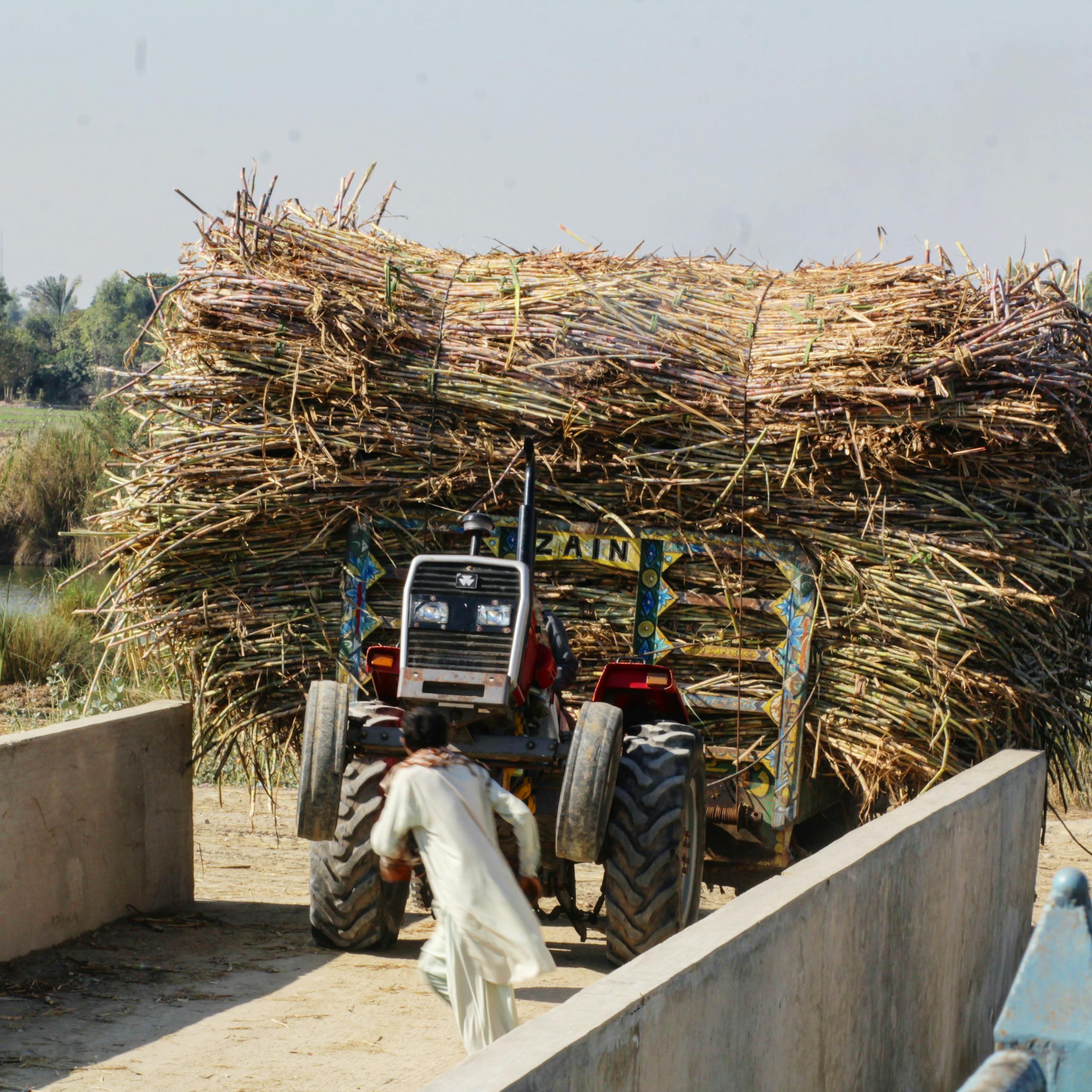
At the core of the research is the idea of using renewable biomass, specifically sugarcane, as the starting material. Sugarcane is already a major global crop used for sugar and bioethanol, making it an attractive feedstock for next-generation bioproducts. By converting sugarcane sugars into TAL using engineered microbes, the researchers aim to bypass fossil-based chemistry entirely.
To evaluate whether this approach could work beyond the lab, the team relied heavily on BioSTEAM, an open-source biorefinery simulation platform. Using BioSTEAM, they designed and simulated a full-scale industrial process, accounting for material flows, energy use, operating schedules, capital costs, and environmental impacts.
A key technical challenge addressed in the study was separating TAL from the fermentation broth. Downstream separation is often one of the most expensive steps in bioprocessing, sometimes accounting for the majority of total production costs. To tackle this, the researchers experimentally measured TAL solubility under different conditions, calibrated solubility models, and designed a crystallization process that allows TAL to be efficiently recovered from the liquid fermentation mixture.
Once the process design was established, the team conducted both a techno-economic analysis (TEA) and a life cycle assessment (LCA). These two tools are increasingly used together to evaluate not just whether a technology can make money, but whether it truly delivers environmental benefits.
Under a baseline scenario using state-of-the-art but realistic assumptions, the modeled biorefinery could produce TAL at a minimum product selling price (MPSP) ranging from $3.73 to $5.86 per kilogram, with a baseline value of $4.60 per kilogram. This range reflects uncertainty in key parameters, reported as the 5th to 95th percentiles.
From an environmental perspective, the same baseline process resulted in a carbon intensity (CI) of 5.31 kilograms of CO₂-equivalent per kilogram of TAL, with a range from 2.60 to 8.71 kg CO₂-eq per kg. These emissions values already compare favorably to many petroleum-derived chemicals, especially when considering TAL’s role as a platform molecule.
The researchers did not stop there. They went on to explore what could happen if key aspects of the process were further optimized. This included examining the theoretical fermentation space, improving operation scheduling, considering capacity expansion strategies, and identifying potential separation performance improvements.
With advancements in these areas, the model predicts that TAL production costs could drop dramatically. The MPSP could be reduced by as much as 51%, reaching $2.26 per kilogram, with an uncertainty range of $1.97 to $2.80 per kilogram. At the same time, carbon intensity could fall by 43%, reaching 3.05 kg CO₂-eq per kg of TAL, with a range of 1.91 to 4.15 kg CO₂-eq per kg.
These improvements would make bio-based TAL not only economically competitive but also significantly more climate-friendly than conventional production methods.
One of the broader takeaways from the study is the power of integrated TEA-LCA frameworks. By combining economic and environmental modeling early in the design process, researchers can quickly identify trade-offs, prioritize research efforts, and map out quantitative roadmaps for future development. Instead of optimizing one metric at the expense of another, this approach allows sustainability and profitability to be considered together.
Beyond the specifics of TAL, the study highlights why platform chemicals are such an important focus in the transition to a bio-based economy. Platform chemicals serve as building blocks for many downstream products. If a platform molecule like TAL can be produced sustainably and at scale, it opens the door to a whole family of renewable materials and chemicals, from food preservatives to specialty polymers.
TAL itself has been studied for years, but its high production cost has limited real-world adoption. Traditional chemical synthesis routes typically rely on fossil-derived inputs and harsh reaction conditions, driving up both costs and emissions. Fermentation-based approaches, especially those using crops like sugarcane, offer a fundamentally different pathway—one that leverages biology’s ability to build complex molecules efficiently.
Sugarcane is particularly attractive because of its high sugar content, established supply chains, and relatively low carbon footprint compared to many other crops. When integrated into a modern biorefinery, sugarcane can support the production of fuels, power, and chemicals simultaneously, improving overall resource efficiency.
The research also underscores the importance of separation science, an area that often receives less attention than microbial engineering but can make or break a commercial process. By carefully characterizing TAL solubility and designing a workable crystallization step, the team addressed one of the most critical cost drivers head-on.
Taken together, this work paints a clear picture: producing triacetic acid lactone from sugarcane is not just scientifically feasible, but potentially scalable, affordable, and environmentally responsible. While further experimental validation and industrial investment will be needed, the study provides a strong foundation for moving TAL closer to commercial reality.
As industries look for alternatives to fossil-based chemicals, studies like this show how renewable feedstocks, smart process design, and rigorous sustainability analysis can come together to reshape chemical manufacturing.
Research paper: https://pubs.acs.org/doi/10.1021/acssuschemeng.5c04797