New Tools Turn Grain Crops Into Living Biosensors for Detecting Environmental Chemicals
Researchers are steadily finding new ways to make agriculture smarter, more responsive, and more resilient. A recent study led by scientists from the Donald Danforth Plant Science Center, along with collaborators from the University of Florida, Gainesville, and the University of Iowa, introduces an innovative idea: turning grain crops into living biosensors. These engineered plants can visually signal the presence of specific chemicals in their environment, offering a powerful new approach to monitoring agricultural and environmental conditions directly in the field.
At the heart of this research is the concept of plants acting as active sentinels rather than passive organisms. Instead of relying solely on soil tests, lab analyses, or external sensors, farmers and researchers could one day look at the crops themselves to understand what is happening in the surrounding environment.
Engineering Grasses to Visibly Respond to Chemicals
The research team focused on grasses, a plant group that includes some of the world’s most important crops such as corn, wheat, rice, and sorghum. While plant-based biosensors have been explored before, most earlier work concentrated on dicot plants like Arabidopsis thaliana. These plants are useful for laboratory studies but are not representative of major food crops.
Grasses, which are monocots, have historically lagged behind in synthetic biology tool development. This gap is significant because grasses form the backbone of global food security. Addressing this challenge, the researchers developed new genetic tools specifically designed to work in grass species.
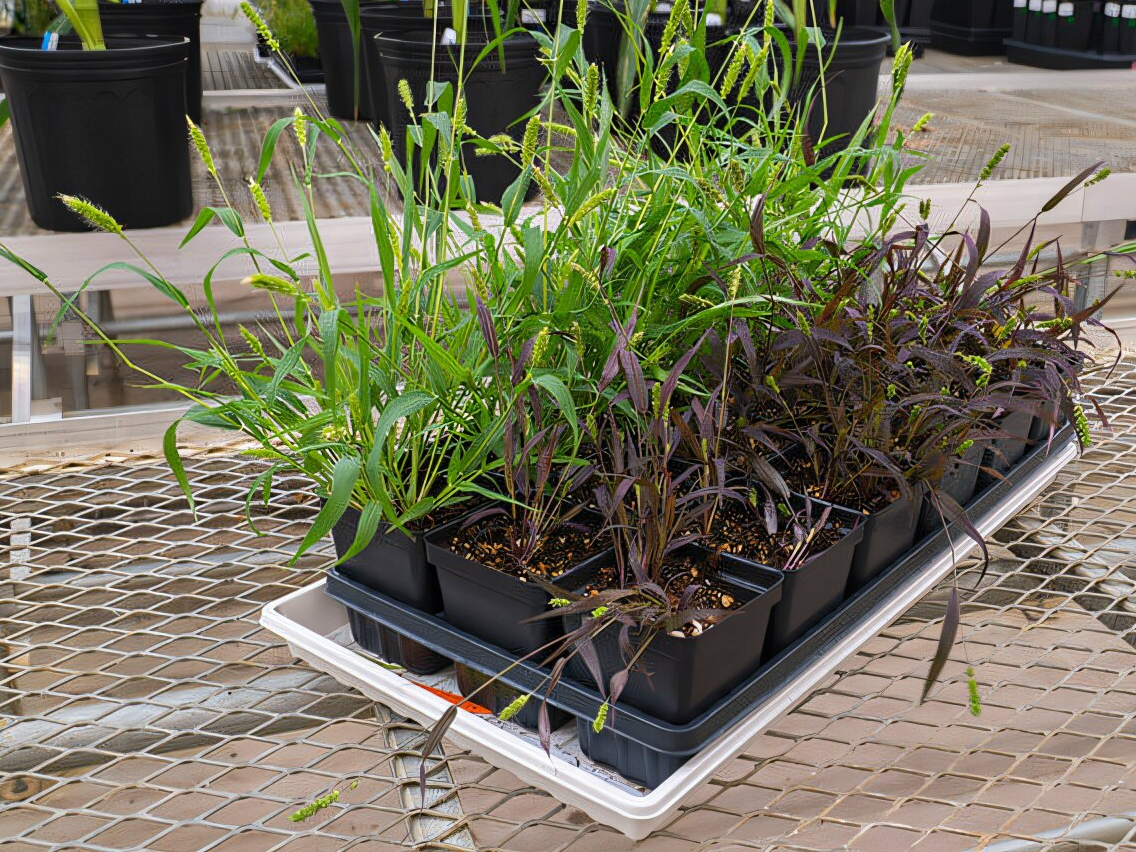
They demonstrated their approach using Setaria viridis, a fast-growing C4 grass often used as a model for crops like corn and sorghum. The engineered plants were designed to produce anthocyanin, a naturally occurring purple pigment, when exposed to particular chemical signals. Under normal conditions, the plants remain green. When the target chemical is present, the plants visibly turn purple.
This color change serves as a clear and non-destructive visual indicator that something in the environment has triggered a response.
How the Genetic System Works
The key innovation lies in a ligand-inducible synthetic genetic circuit. In simple terms, this circuit remains inactive until it encounters a specific chemical cue, known as a ligand. Once activated, the circuit turns on the plant’s own anthocyanin production pathway.
One major technical achievement was the identification of two transcription factors that could be co-expressed from a single genetic transcript. These transcription factors work together to activate anthocyanin biosynthesis efficiently. By packaging both factors into one construct, the researchers simplified the genetic design and made it more robust.
The team demonstrated that this system works in multiple contexts, including:
- Protoplasts (isolated plant cells)
- Whole plants
- Both constitutive (always on) and inducible (chemically triggered) expression systems
This flexibility makes the technology adaptable for different research and agricultural needs.
Seeing Chemical Exposure From a Distance
While purple plants are easy to spot up close, the researchers went further by developing advanced hyperspectral imaging techniques. Hyperspectral imaging captures information across many wavelengths of light, allowing subtle changes in pigmentation to be detected even when they are not obvious to the human eye.
Using discriminative analytical methods, the team showed that pigmentation changes could be detected non-destructively and from a near-remote distance. This opens the door to monitoring crops using drones, vehicle-mounted cameras, or other remote sensing platforms.
Combined with the engineered plants, these imaging tools create a system capable of precise, scalable environmental monitoring across large agricultural areas.
Why Anthocyanins Make an Ideal Reporter
Anthocyanins are widely found in nature and are responsible for red, purple, and blue colors in many fruits, vegetables, and flowers. They were an ideal choice for this system for several reasons:
- They are naturally produced by plants, reducing concerns about introducing foreign pigments.
- Their color is visually distinct, making detection straightforward.
- Anthocyanin production can be tightly regulated at the genetic level.
- The pigments are stable enough for imaging and analysis.
Beyond visual appeal, anthocyanins also have known roles in stress responses, UV protection, and antioxidant activity, making them a biologically relevant signal within plant systems.
Potential Applications in Agriculture and Beyond
The implications of this research extend well beyond a color-changing plant. These living biosensors could eventually be used to detect:
- Chemical drift from herbicides or pesticides applied nearby
- Soil or water contamination
- Low-level pollutants that are difficult to measure with traditional tools
- Environmental stressors that may affect crop health and yield
Early detection is critical in agriculture. By the time visible damage appears, yield losses may already be unavoidable. Biosensor plants could provide early warnings, allowing farmers to respond more quickly and precisely.
From a sustainability perspective, this approach could help reduce unnecessary chemical use, improve environmental monitoring, and support more informed decision-making at the farm level.
Open Science and Community Access
An important aspect of this project is the team’s commitment to open science. The molecular constructs used to build the biosensors, along with the imaging and analytical methods, have been deposited in public repositories.
This means other researchers can:
- Reproduce the system
- Adapt it to other grass species
- Develop new biosensors for different chemicals or conditions
By lowering barriers to entry, the researchers hope to accelerate innovation across the plant synthetic biology community.
The Bigger Picture of Plant-Based Biosensors
Plant-based biosensors represent a growing field at the intersection of synthetic biology, agriculture, and environmental science. Unlike electronic sensors, plants are self-powered, self-repairing, and already adapted to outdoor environments. They can cover large areas naturally and integrate environmental signals over time.
Grain crops, in particular, are uniquely positioned for this role because of their global distribution and economic importance. Advancing biosensor technology in monocots marks a significant step toward making these ideas practical at scale.
As detection technologies improve and genetic tools become more refined, plants could eventually monitor a wide range of conditions, from nutrient deficiencies to air quality, all while continuing to perform their primary role as food crops.
A Step Toward Smarter, More Responsive Crops
This research highlights how modern plant science is moving beyond yield and resistance traits toward communication and sensing capabilities. By enabling crops to visibly report on their environment, scientists are redefining what plants can do in agricultural systems.
While widespread field deployment will require further testing, regulatory consideration, and public dialogue, the foundational tools demonstrated here show what is possible. Grain crops that can signal chemical exposure could become a valuable asset in improving food security, environmental stewardship, and agricultural sustainability.
Research paper:
Remote Sensing of Endogenous Pigmentation by Inducible Synthetic Circuits in Grasses, Plant Biotechnology Journal
https://doi.org/10.1111/pbi.70480