Zombie Fungi and Bloodstained Orchids Lead Kew’s Top 10 Plants and Fungi Newly Named to Science in 2025
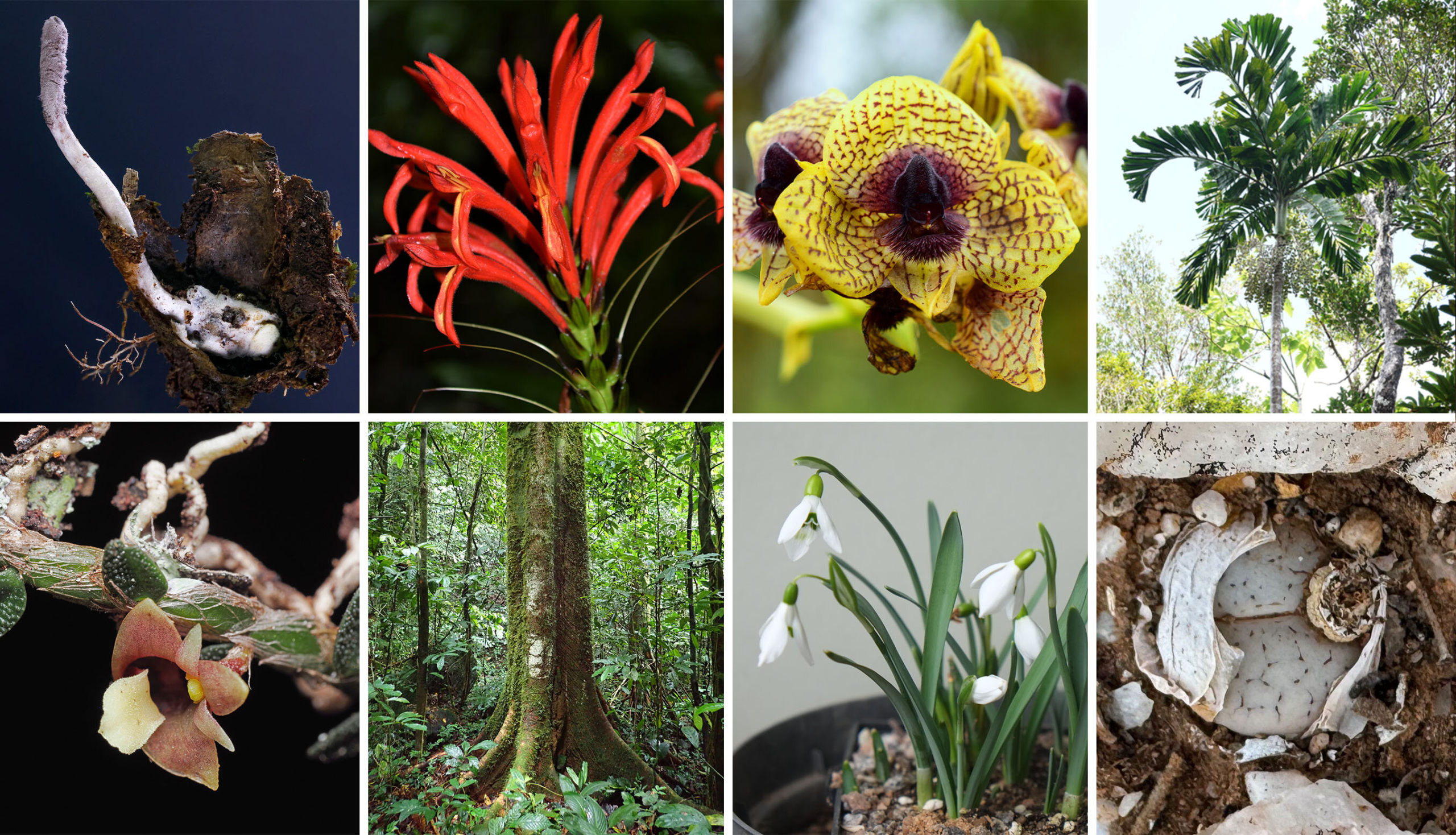
Scientists at the Royal Botanic Gardens, Kew, along with research partners from across the world, have revealed their annual list of the top 10 plant and fungal species newly named to science in 2025. The selection highlights not only the extraordinary diversity of life still being discovered on Earth, but also an uncomfortable reality: many of these species are already rare, endangered, or close to extinction at the very moment they are formally identified.
Over the past year, Kew’s taxonomists and collaborators described 190 species new to science, including 125 plants and 65 fungi. The discoveries range from a spider-parasitizing “zombie” fungus in Brazil’s Atlantic rainforest to a Critically Endangered snowdrop from the Balkans and a striking “bloodstained” orchid growing high in the Andean forests of Ecuador. Together, these species underline how much of the natural world remains undocumented, even as human pressure on ecosystems continues to accelerate.
The rise of zombie fungi and high-tech taxonomy
One of the most attention-grabbing discoveries is Purpureocillium atlanticum, a newly described fungus that infects trapdoor spiders in Brazil. Belonging to a group commonly known as entomopathogenic or “zombie” fungi, this species invades spiders hiding in underground burrows, envelops them in cotton-like white mycelium, and then sends a slender fruiting body up through the trapdoor to release spores above ground.
What makes this discovery especially notable is the method used to describe it. Researchers employed portable Oxford Nanopore DNA sequencing technology directly in the field, allowing them to decode the fungus’s genome in near real time. This emerging approach, often referred to as taxogenomics, speeds up species discovery while revealing hidden microbial partners and ecological relationships that would otherwise be missed.
Orchids, deception, and vanishing forests
Another standout is Telipogon cruentilabrum, a newly identified orchid species from Ecuador’s Cotopaxi region. Nicknamed the “bloodstained orchid”, the plant is named after the deep red markings on its lip. Like other members of the Telipogon genus, it uses sexual deception, mimicking female flies to attract male pollinators.
The orchid grows epiphytically on tree daisies, suspended 1.5 to 3 meters above the ground, but its future is uncertain. More than half of its known habitat has already been cleared for agriculture and mining, leading scientists to informally assess it as Endangered. With around 250 known Telipogon species, many of which are difficult to cultivate and identify, this discovery also highlights how fragile orchid diversity can be.
A fire demon flower inspired by animation
From Peru comes Aphelandra calciferi, a tall forest shrub with vivid orange-red and yellow flowers. The species is named after Calcifer, the fire demon from Hayao Miyazaki’s film Howl’s Moving Castle. Beyond its visual appeal, scientists believe the plant could have strong potential as a conservatory ornamental, bridging the worlds of biodiversity research and horticulture.
Living stones under pressure
In Namibia, researchers described a new subspecies of lithops, Lithops gracilidelineata subsp. mopane. Often called “living stones”, lithops are succulents famous for their pebble-like camouflage, an adaptation that helps them survive in arid environments. This subspecies is unusual because it occurs in higher rainfall mopane woodland, rather than the dry habitats typically associated with lithops.
Although lithops are popular among collectors, illegal harvesting for the horticultural trade has driven several species toward extinction, making conservation efforts increasingly urgent.
A snowdrop on the brink
The Balkans yielded Galanthus subalpinus, a delicate new species of snowdrop found in subalpine grasslands on Mount Korab, spanning North Macedonia and Kosovo. While already present in cultivation in the UK, its wild origin was only confirmed through detailed DNA sequencing and genome size analysis.
Despite its recent discovery, the species has already been assessed as Critically Endangered, threatened by over-collection, grazing, and fires. Its situation reflects a troubling trend in modern taxonomy: species are often recognized only after their populations have been severely reduced.
A fruit tree with unexpected flavors
From Manus Island in Papua New Guinea comes Eugenia venteri, a towering rainforest tree with a highly unusual growth habit. Its flowers and fruits grow on long, whip-like stems that trail along the forest floor, making the fruit surprisingly easy to harvest. Collectors describe the flavor as a mix of banana, guava, and eucalyptus, and researchers believe the species may rely on giant ground rats for pollination and seed dispersal.
A five-ton giant in Cameroon
Among the largest discoveries this year is Plagiosiphon intermedium, a massive tree from Cameroon’s Ngovayang forest. Growing up to 34 meters tall and weighing an estimated 5 tons, this detarioid legume represents the first new addition to its genus in nearly 80 years. Known from just two locations in an unprotected biodiversity hotspot, the species is already considered at risk.
Hidden fungi beneath our feet
Not all discoveries are visible to the naked eye. Magnaporthiopsis stipae, a new fungal species from Inner Mongolia, lives quietly inside the roots of grass. Such endophytic fungi are thought to make up a large portion of Earth’s undescribed fungal diversity and may play important roles in plant health and soil ecosystems.
A Christmas palm and caterpillar orchids
In the Philippines, scientists formally described Adonidia zibabaoa, a graceful palm known locally as Amuring. Found on limestone ridges on Samar Island, the species is already sought after by collectors and has been classified as Critically Endangered due to its limited range and exposure to typhoons.
Rounding out the list are six new orchid species from Indonesian New Guinea and Maluku, including the aptly named caterpillar orchid, Dendrobium eruciforme. These discoveries are closely tied to conservation initiatives such as Tropical Important Plant Areas, which aim to protect regions of exceptional botanical richness.
Why these discoveries matter
On average, scientists describe around 2,500 new plant species every year, along with even greater numbers of fungi. Estimates suggest there could be up to 100,000 plant species and 2–3 million fungal species still waiting to be identified. Yet Kew’s research shows that as many as three-quarters of undescribed plants may already be threatened.
By naming species, scientists provide the foundation needed for conservation. Without formal identification, legal protection, seed banking, and habitat management become nearly impossible. Kew’s work, from field-based genomics to long-term conservation through the Millennium Seed Bank, plays a crucial role in safeguarding life on Earth before it disappears unnoticed.
Research papers and sources
https://doi.org/10.3897/imafungus.16.168534
https://doi.org/10.11646/phytotaxa.694.3.6
https://doi.org/10.1007/s12225-025-10334-4
https://doi.org/10.1007/s12225-025-10274-z
https://doi.org/10.1007/s12225-024-10239-8
https://doi.org/10.1007/s12225-025-10264-1
https://doi.org/10.36253/jopt-18480
https://doi.org/10.5943/mycosphere/15/1/26
https://palms.org/wp-content/uploads/2025/03/PALMSv69n1p005-020-Adorador-new-Adonidia.pdf
https://doi.org/10.1007/s12225-025-10281-0