Overlooked Decline in Grazing Livestock Brings New Environmental Risks and Opportunities
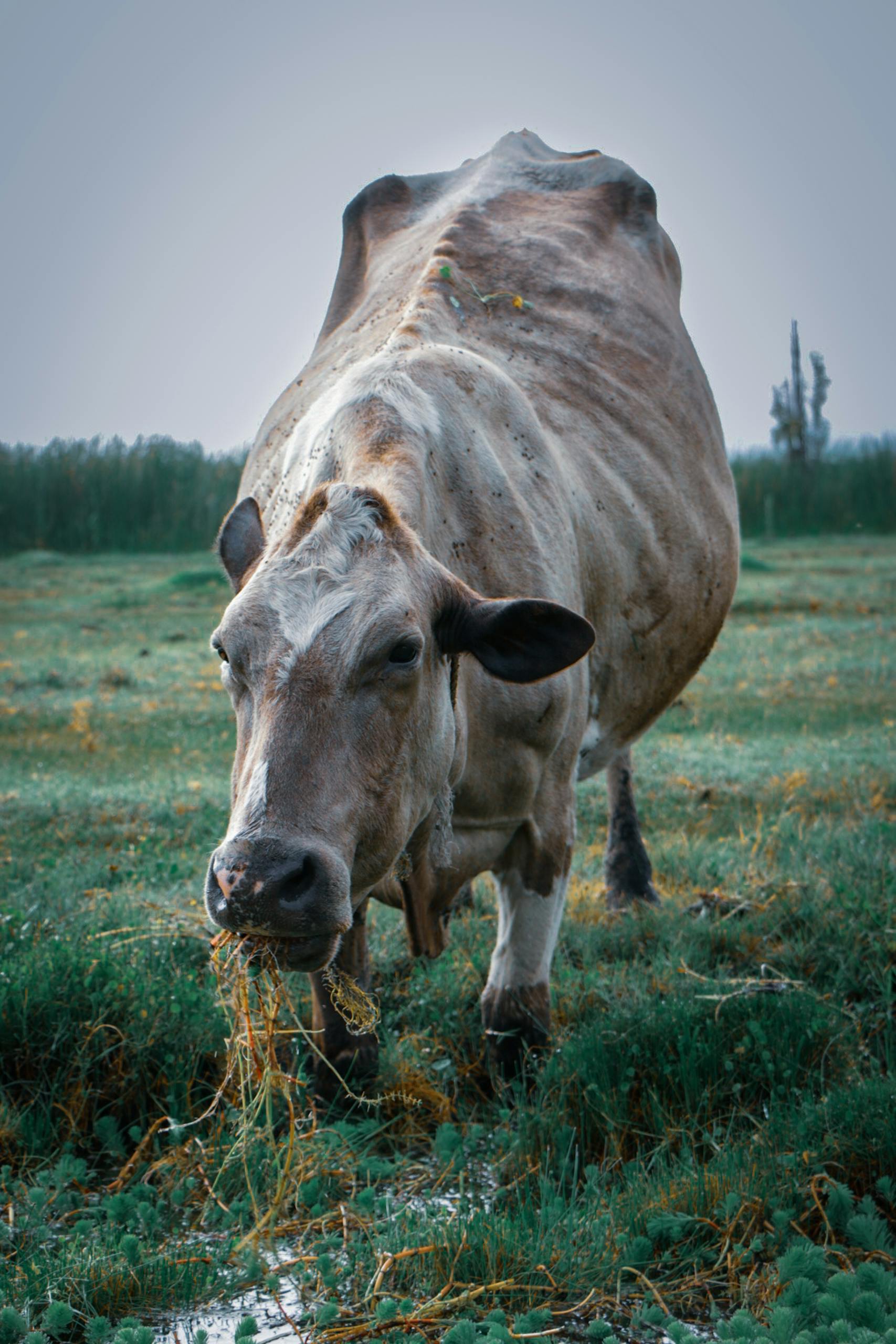
For decades, discussions around livestock and the environment have largely revolved around overgrazing—the idea that growing herds of cattle, sheep, and goats are steadily degrading grasslands, steppes, and drylands across the planet. But a new global study suggests that this long-held assumption only tells part of the story. In many major regions of the world, grazing livestock numbers are not increasing at all. In fact, they are quietly declining, and this shift could have wide-ranging ecological, economic, and land-management consequences.
The research, led by ecologist Osvaldo Sala of Arizona State University and José Anadón of the Instituto Pirenaico de Ecología, introduces a concept that has received surprisingly little attention so far: destocking, or the large-scale reduction of grazing livestock. Using global data from the United Nations Food and Agriculture Organization (FAO), the researchers analyzed changes in livestock populations between 1999 and 2023, uncovering a trend that challenges many prevailing narratives.
A Global Drop That Few Were Watching
According to the study, regions that held 42% of the world’s grazing livestock in 1999 experienced an overall 12% decline in the number of cattle, buffalo, sheep, and goats over the past 25 years. These declines are not evenly distributed across the globe. They are particularly pronounced in Europe, North America, Australia, and parts of Africa and Asia.
One of the most striking examples comes from Eastern Europe, where grazing livestock populations fell by a dramatic 37%. In contrast, other regions have seen strong growth rather than decline. Middle Africa, Central Asia, and South America recorded an overall 40% increase in livestock numbers during the same period.
This uneven global pattern matters because grazing livestock are deeply intertwined with ecosystems. They shape vegetation, influence wildfire risk, affect water cycles, and play a role in biodiversity. When grazing pressure declines, ecosystems do not simply return to a “natural” or healthier state by default.
Destocking Is Not the Opposite of Overgrazing
One of the key takeaways from the study is that destocking is not simply the reverse of overgrazing. While reducing livestock pressure might seem like an environmental win at first glance, the reality is far more complex.
When grazing animals disappear or decline sharply, plant growth can become excessive, leading to the accumulation of dry biomass. In many landscapes, this increases the risk of wildfires, sometimes with severe consequences for nearby communities and ecosystems. Grazing animals often act as natural fuel managers, keeping vegetation levels in check.
Biodiversity outcomes are also mixed. In some areas, reduced grazing allows certain plant and animal species to recover. In others, it can lead to the dominance of a few aggressive plant species, pushing out more vulnerable or specialized plants that depend on moderate grazing pressure to survive.
What’s Driving These Changes?
The researchers examined a range of possible explanations for why livestock numbers are declining in some regions and increasing in others. Two commonly cited factors—climate change and international trade—did not explain the observed patterns.
Although climate change is undeniably affecting ecosystems worldwide, the study found no clear link between warming trends and the specific regional patterns of destocking and increased stocking. Similarly, shifts in global trade failed to account for where livestock populations were shrinking or expanding.
Instead, economic development and human population growth emerged as the strongest drivers.
In wealthier regions, declining grazing livestock numbers are closely tied to a shift toward industrial, feed-based livestock systems. These systems rely more on technology, imported feed, and intensive management rather than open rangelands. As a result, meat production per animal is about 72% higher in these regions compared to poorer areas. Fewer animals are needed to produce the same—or even greater—amounts of meat.
In less wealthy regions, livestock systems are often grazing-based, subsistence-oriented, and less productive per animal. These regions also tend to experience faster human population growth, which increases demand for meat and drives the expansion of grazing herds. Together, lower productivity and rising demand help explain why livestock numbers continue to grow in parts of Africa, Asia, and South America.
Why Grazing Livestock Matter So Much
Livestock grazing takes place on roughly one quarter of the Earth’s land surface, making it the most extensive form of human land use on the planet. This alone makes changes in grazing pressure a major concern for planetary health.
Grazing affects far more than just grass height. It influences soil structure, carbon storage, water movement, and ecosystem stability. When grazing declines, plants may capture more atmospheric carbon dioxide, potentially helping to mitigate climate change. At the same time, changes in vegetation can alter how much water is absorbed by plants versus how much runs off into streams and rivers.
Importantly, reduced grazing does not always mean more water downstream. In some locations, increased plant cover leads to higher transpiration, which can offset gains in runoff. These effects are highly location-specific, underscoring the need for region-based research and management strategies.
Managing Landscapes in a Post-Destocking World
The study argues that land managers and policymakers need to move beyond a one-sided focus on overgrazing. Both overgrazing and destocking require active management, and neither should be viewed as automatically good or bad.
In some areas, rewilding or the introduction of different grazing species—such as bison, goats, or mixed herbivore systems—may help replace the ecological roles once played by cattle. In others, carefully managed grazing might be necessary to maintain biodiversity, reduce fire risk, or support rural livelihoods.
The researchers emphasize that many of these outcomes remain poorly studied. Destocking has largely flown under the radar of conservation science, leaving significant gaps in understanding how ecosystems respond over the long term.
Additional Context: Grazing and Carbon Storage
Beyond the study’s findings, it’s worth noting that grazing management is increasingly discussed in the context of carbon sequestration. Grasslands can store large amounts of carbon in their soils, sometimes rivaling forests. Moderate grazing can stimulate root growth and soil carbon storage, while both overgrazing and complete grazing removal may reduce these benefits in certain systems.
This adds another layer of complexity to the destocking debate. Simply removing livestock does not guarantee climate benefits. The type of ecosystem, climate, soil, and vegetation all influence whether destocking increases or decreases carbon storage.
A Call for Better Data and Smarter Policies
The central message of the research is not alarmist, but it is clear. The global decline of grazing livestock in many regions is real, widespread, and largely overlooked. It presents both risks and opportunities, from wildfire management and biodiversity conservation to carbon storage and rural economies.
Addressing these challenges will require better data, more experiments, and policies that recognize regional differences rather than applying one-size-fits-all solutions. As livestock systems continue to evolve alongside economic and demographic changes, understanding destocking may prove just as important as understanding overgrazing.
Research paper:
https://www.pnas.org/doi/10.1073/pnas.2509097122