Organisms in the Atacama Desert Soil Are Remarkably Diverse, New Study Reveals
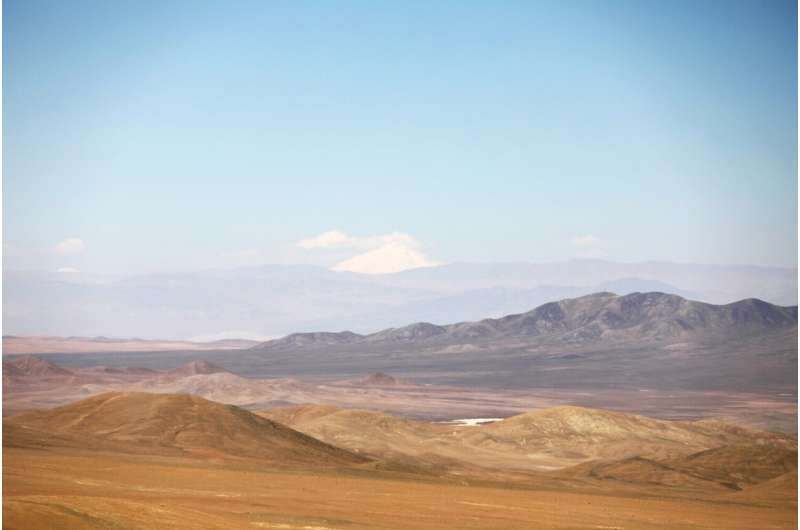
A place known for being almost completely inhospitable to life has just delivered a scientific surprise. New research shows that the soil of the Atacama Desert, one of the driest regions on Earth, supports remarkably diverse communities of living organisms, even under extreme environmental stress. The findings challenge long-held assumptions about how life survives in hyper-arid environments and offer valuable insights into how ecosystems might respond to increasing global dryness.
The Atacama Desert stretches across northern Chile and is often compared to Mars because of its lack of rainfall, high salinity, intense ultraviolet radiation, and dramatic temperature swings. Some parts of the desert go years—sometimes decades—without measurable rain. For scientists, this makes the Atacama an ideal natural laboratory for studying the limits of life.
The new study, led by an international research team from the University of Cologne, focuses on one group of organisms that thrives quietly beneath the surface: nematodes, also known as roundworms. Despite their microscopic size, these animals play an outsized role in soil ecosystems worldwide.
Why Nematodes Matter More Than You Might Think
Nematodes are among the most abundant multicellular organisms on the planet. Found in soils, oceans, freshwater, and even extreme environments, they perform essential ecological functions. They help regulate bacterial populations, contribute to nutrient cycling, and act as indicators of soil health.
Because nematodes sit at multiple levels of the soil food web, changes in their diversity or population structure can signal broader shifts in ecosystem stability. Yet until now, little was known about how nematodes survive—or whether they survive at all—in the harsh soils of the Atacama Desert.
The researchers aimed to fill that knowledge gap by focusing not on microbes, which are often studied in extreme environments, but on multicellular animals living in the soil.
Exploring the Atacama’s Hidden Underground Life
The research team is part of the Collaborative Research Center 1211: Earth—Evolution at the Dry Limit, a long-running scientific initiative dedicated to understanding life at the edge of habitability. For this study, the scientists selected six distinct regions across the Atacama Desert, each representing different environmental conditions.
These regions included:
- High-altitude areas with slightly more moisture and sparse vegetation
- Highly saline zones exposed to intense UV radiation
- Fog-influenced oases, where moisture from coastal fog supports surprising plant diversity
- Sand dunes, salt lakes, riverbeds, and mountainous terrain
Soil samples were collected from each location and analyzed for nematode diversity, population structure, reproductive strategies, and their relationship to environmental factors such as elevation, temperature, and precipitation.
Diversity Where Few Expected It
One of the study’s most striking findings is that nematode communities are far more diverse than previously assumed, even in areas with extreme dryness and salt concentrations. While biodiversity did vary across regions, no site was completely devoid of complex soil life.
The researchers found that water availability plays a key role. Areas receiving slightly higher precipitation tended to host greater nematode diversity, reinforcing the idea that even small differences in moisture can have major ecological effects in arid landscapes.
Temperature also mattered. Variations in daily and seasonal temperature influenced which nematode species could survive in a given area, shaping the overall composition of soil communities.
Asexual Reproduction as a Survival Strategy
Another major discovery relates to how nematodes reproduce under extreme conditions. At higher elevations, where conditions are especially harsh and unpredictable, the team observed a dominance of asexually reproducing nematodes.
This supports a long-standing but previously unconfirmed theory known as geographical parthenogenesis. According to this idea, asexual reproduction can be advantageous in extreme environments because it allows organisms to reproduce without needing a mate, enabling faster population recovery when conditions briefly become favorable.
In the Atacama, this strategy appears to help nematodes persist in environments where survival windows may be short and unpredictable.
Signs of Resilience—and Warning Signals
While the results highlight impressive resilience, the study also reveals potential signs of ecological stress. In some regions, the soil food webs were found to be simplified, meaning fewer species occupied higher trophic levels.
Simplified food webs can indicate that ecosystems are already under pressure and may be more vulnerable to further disturbances, such as rising temperatures or changes in moisture patterns. These findings suggest that even the most resilient systems have limits.
Why This Research Matters in a Changing World
As global aridity increases due to climate change, understanding how life adapts to extreme dryness becomes increasingly important. Large parts of the world are expected to experience reduced rainfall and more frequent droughts in the coming decades.
The Atacama Desert offers a glimpse into what these future conditions might look like. By identifying how nematodes and other soil organisms respond to precipitation gradients, altitude, and temperature, scientists can better predict how ecosystems elsewhere might change.
Importantly, the study shows that macroecological patterns, such as the influence of elevation and climate gradients, are still detectable even in the harshest environments—and even at the genetic level. This suggests that extreme ecosystems are not chaotic or random but structured by identifiable environmental rules.
Soil Ecosystems: Small Creatures, Big Impact
Soils are often overlooked, yet they are crucial for carbon storage, nutrient availability, and overall ecosystem performance. Healthy soil communities help regulate greenhouse gases and support plant growth, even in marginal environments.
By focusing on nematodes rather than microbes alone, this study underscores the importance of multicellular soil organisms in maintaining ecosystem function. It also highlights how little we still know about life beneath our feet, especially in extreme environments.
What This Study Adds to Science
This research represents a significant step forward in understanding:
- How biodiversity persists under extreme aridity
- Why asexual reproduction can be advantageous in harsh environments
- How environmental gradients shape life even at the dry limits of habitability
- Why some desert ecosystems may already be ecologically fragile
The findings suggest that biodiversity in arid regions worldwide may be higher than previously estimated, but also that such ecosystems may be more sensitive to future change than they appear.
Research Reference
Geographic distribution of nematodes in the Atacama is associated with elevation, climate gradients and parthenogenesis
Nature Communications (2026)
https://www.nature.com/articles/s41467-025-67117-5