Avocados May Become Easier to Grow in India but High Global Emissions Could Ruin the Opportunity
Avocados are no longer just a niche fruit in India. With rising health awareness, changing food habits, and growing urban demand, this creamy, nutrient-rich fruit is slowly finding its place in Indian agriculture. A new scientific study now suggests that climate change could actually open up more regions of India for avocado cultivation—but only if global greenhouse gas emissions are kept under control. If emissions continue to rise unchecked, the situation could swing in the opposite direction, making avocado farming riskier and less stable by the end of the century.
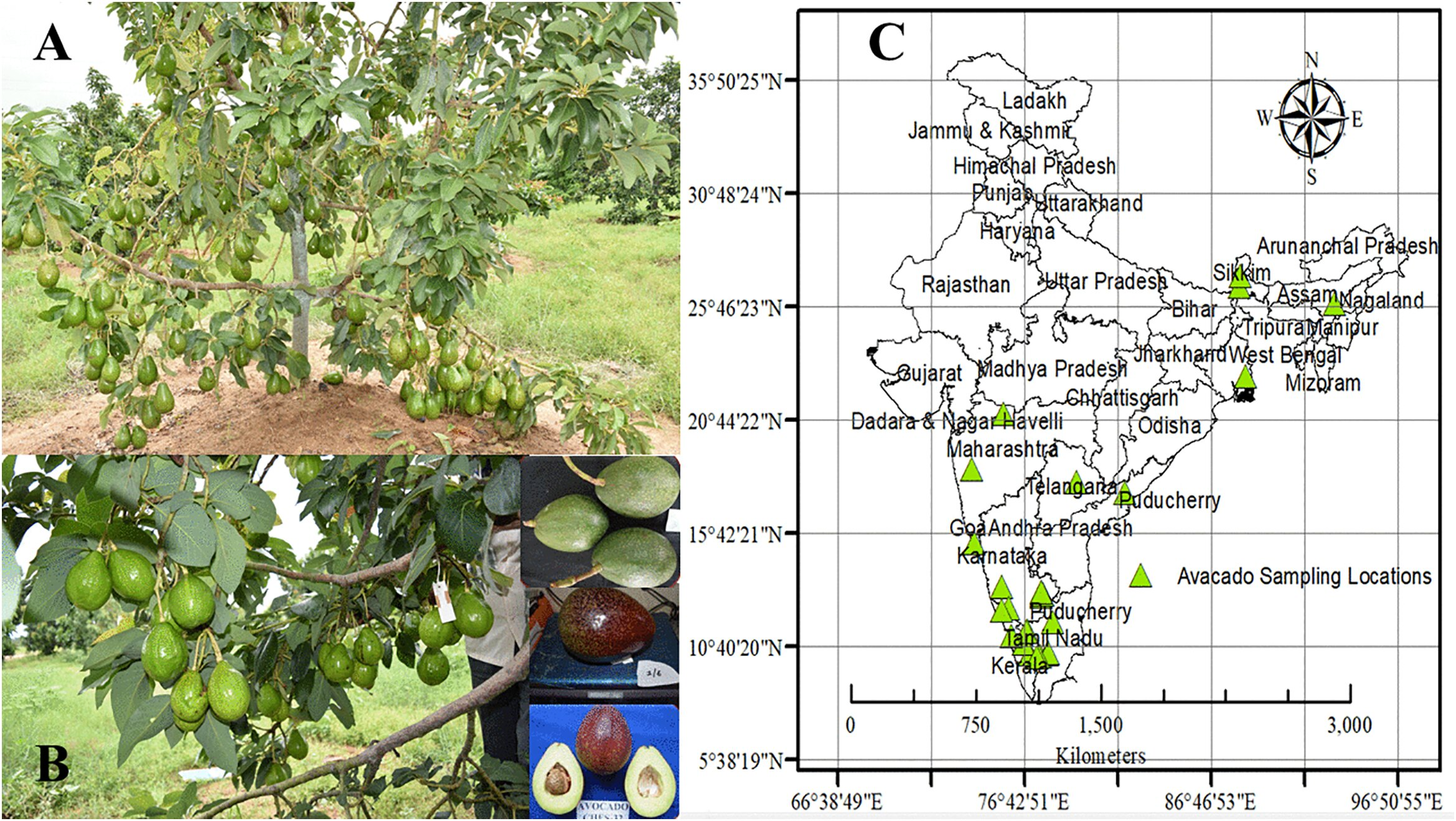
The study, led by researcher G. Karunakaran from the Indian Council of Agricultural Research’s Indian Institute of Horticultural Research, was published in the journal PLOS One. It takes a detailed look at how future climate conditions might reshape where avocados can grow in India, projecting changes for the years 2050 and 2070 under different global emissions scenarios.
Why Avocados Matter More Than Ever
Avocados are among the world’s most economically valuable fruit crops. Indigenous to Central and South America, they are now cultivated commercially across several continents due to their high demand and versatile use in food. India, while still a relatively small producer, has been experimenting with avocado cultivation for decades, especially in the southern states.
As global demand continues to rise, understanding whether India can sustainably expand its avocado production has become increasingly important. Climate change, however, adds a layer of uncertainty. Changes in temperature, rainfall, and land use can either create new opportunities or undermine existing growing zones.
How the Researchers Studied Avocado Suitability
To evaluate the future of avocado cultivation in India, the researchers used a method known as ensemble species distribution modeling. This approach combines the results of eight different machine-learning algorithms, rather than relying on a single model. By doing this, the study reduces uncertainty and produces more robust predictions.
The models assessed avocado suitability under low, moderate, and high greenhouse gas emission scenarios, similar to widely used global climate pathways. The projections focused on two future periods—2050 and 2070—allowing researchers to track both near-term and long-term trends.
Several key variables were included in the analysis:
- Minimum temperature during the coldest month
- Rainfall patterns
- Forest cover
- Urbanization and land-use changes
These factors are crucial because avocados are sensitive to frost, extreme heat, and water stress, while also requiring relatively stable growing conditions.
Where Avocados Grow in India Today
According to the study, the most suitable regions for avocado cultivation in India at present are Kerala and Tamil Nadu. This matches real-world farming patterns, as the majority of India’s current avocado production already comes from these states.
The warm, humid climate and relatively stable temperature ranges in southern India provide conditions that suit avocado trees well. However, the study notes that even within these regions, microclimates and land-use pressures play a role in determining long-term viability.
What Happens Under Low to Moderate Emissions
The most optimistic findings emerge under low to moderate global emission scenarios. If greenhouse gas emissions are curbed in the coming decades, the study predicts a modest but meaningful expansion of suitable avocado-growing zones across India.
These expansions are expected to occur:
- Northward from current southern regions
- At higher elevations, where warming temperatures make conditions more favorable
- In parts of the Western Ghats
- Across eastern India
- In the northeastern hill regions
Under these scenarios, temperature and precipitation patterns remain within thresholds that avocados can tolerate. This creates new opportunities for farmers and policymakers, especially in regions that currently grow other horticultural crops.
The Risky Future Under High Emissions
The picture changes dramatically under high-emission or business-as-usual scenarios. If global emissions continue to rise at current rates, the study warns that avocado-growing zones in India could become fragmented, unstable, and increasingly confined to high-elevation pockets.
By 2070, many of these suitable areas may:
- Become isolated and patchy
- Experience greater climate variability
- Degrade or disappear altogether
Such fragmented habitats are difficult to farm reliably. They also increase vulnerability to extreme weather events, pests, and diseases. Even regions that appear suitable on paper may not support long-term commercial cultivation under these conditions.
What the Study Means for Policy and Planning
The researchers emphasize that their findings are not just academic. They call for climate-smart agricultural planning, urging policymakers to prioritize regions identified as potential future avocado zones.
Key recommendations include:
- Conserving ecologically sensitive expansion areas, especially in mountainous and forested regions
- Developing climate-resilient avocado varieties
- Avoiding unplanned agricultural expansion that could harm biodiversity or strain water resources
The study highlights that emission pathways chosen today will directly influence the stability of avocado production tomorrow.
Understanding Avocado Climate Requirements
Avocado trees thrive under specific environmental conditions. They prefer:
- Mild temperatures without frost
- Well-distributed rainfall
- Good soil drainage
- Limited exposure to extreme heat or prolonged drought
Even small shifts in minimum winter temperatures or rainfall patterns can significantly affect flowering, fruit set, and yield. This sensitivity explains why climate projections play such a critical role in determining future suitability zones.
Avocados and India’s Agricultural Future
India’s agricultural landscape is already undergoing change due to climate variability. Introducing or expanding crops like avocados could diversify farmer incomes and reduce dependence on imports. However, the study makes it clear that success depends on both climate mitigation and thoughtful land management.
Under controlled emissions, avocados could become a viable crop in new parts of India. Under unchecked emissions, the same regions could become too unpredictable to support long-term farming.
A Clear Takeaway
The message from this research is straightforward. Avocado cultivation in India has real potential to expand, but that potential is tightly linked to global climate action. Lower emissions open doors to new growing regions. Higher emissions close them, replacing opportunity with uncertainty.
For farmers, policymakers, and consumers alike, the future of avocados in India is yet another reminder that climate choices made today will shape what ends up on our plates decades from now.
Research paper:
https://journals.plos.org/plosone/article?id=10.1371/journal.pone.0338518