A Rare Mojave Desert Plant Is Thriving at a Massive Solar Array Thanks to Thoughtful Sustainability Efforts
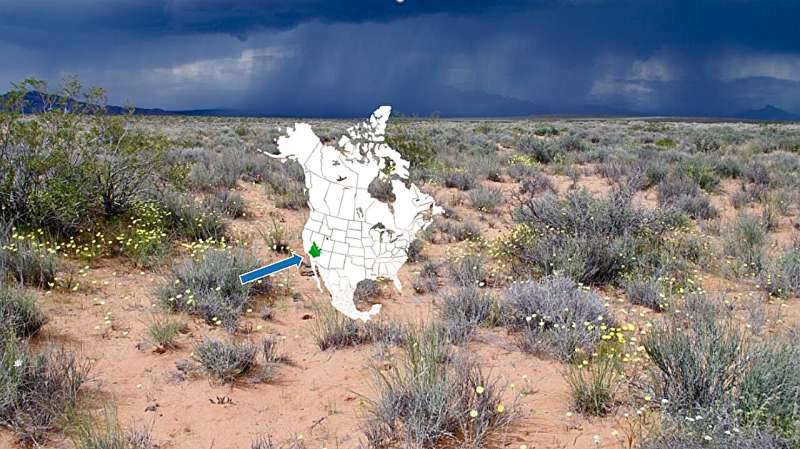
Solar energy is often praised as one of the cleanest and most abundant renewable energy sources available. But when large solar projects are built in fragile desert environments, they can come with serious ecological trade-offs. Clearing land, disturbing soils, and removing native vegetation can permanently alter habitats that took thousands of years to form. A new scientific study from the Mojave Desert, however, suggests that this outcome is not inevitable. With careful planning and alternative construction methods, renewable energy development and conservation can sometimes work together.
Recent research led by ecologist Tiffany Pereira from the Desert Research Institute (DRI) shows that a rare desert plant, known as threecorner milkvetch, is not only surviving but actually thriving within the boundaries of a large utility-scale solar facility in Nevada. The findings offer cautious optimism for balancing the growing demand for clean energy with the need to protect vulnerable desert ecosystems.
Solar Development and Desert Ecosystems
Deserts may look empty at first glance, but they are complex ecosystems with highly specialized plants and animals. Many desert species rely on fragile soil crusts and long-lived seed banks that sit just beneath the surface. Traditional solar construction methods often use a process called blade and grade, which removes vegetation and scrapes away topsoil to create a flat surface for solar panels. This method can destroy seed banks and make natural recovery nearly impossible.
Because of these risks, scientists and conservationists have raised concerns about placing large solar arrays in intact desert landscapes. The Mojave Desert, in particular, is home to many rare and endemic species, making land-use decisions especially sensitive.
The Gemini Solar Project Near Las Vegas
The study focused on the Gemini Solar Project, a massive solar and battery storage facility located northeast of Las Vegas, Nevada. Covering roughly 20 square kilometers (about 4,900 acres), Gemini is one of the largest solar-plus-storage projects in the United States and plays a significant role in supplying clean energy to the Las Vegas region.
What sets Gemini apart from many other projects is its effort to reduce ecological disturbance. Instead of relying heavily on blade-and-grade techniques, the project incorporated construction practices aimed at preserving native vegetation, soils, and wildlife wherever possible. This made Gemini an ideal site to study whether rare desert plants could persist after solar development.
Meet the Threecorner Milkvetch
The star of the research is threecorner milkvetch, a rare annual plant in the pea family. This species is considered Critically Endangered and Fully Protected by the State of Nevada and is listed as a Special Status Species by the Bureau of Land Management. It is also under consideration for protection under the U.S. Endangered Species Act.
Like many desert annuals, threecorner milkvetch has a life cycle tightly linked to rainfall patterns. During dry years, the plant may be completely absent above ground, surviving only as seeds buried in the soil. When wetter conditions arrive, those seeds can suddenly germinate, sometimes in large numbers.
What the Researchers Found
Before construction began at Gemini, surveys conducted in 2018 documented just 12 individual threecorner milkvetch plants within the project area. Two years after the solar panels were installed, researchers returned to the site in 2024 to see what had changed.
The results were striking. The team found 93 threecorner milkvetch plants growing within the solar facility. This dramatic increase showed that the plant’s seed bank survived construction and that the species was able to reestablish itself in significant numbers.
To rule out the possibility that this increase was simply due to favorable weather, researchers compared the Gemini population to plants growing at a nearby undisturbed reference site. This comparison allowed them to isolate the effects of the solar installation from broader climatic factors.
Bigger, Healthier Plants Inside the Solar Site
Not only were there more plants at Gemini, but the individual plants were also larger and more robust. Researchers measured several traits, including plant height, width, leaf length, and the number of flowers and fruits. Across all these metrics, the plants growing at Gemini outperformed those at the undisturbed site.
One possible explanation lies in soil moisture retention. The researchers observed that after rainfall events, soil at the Gemini site retained moisture for longer periods. This slower drying process may give plants more time to absorb water in an otherwise arid environment. The presence of solar infrastructure may subtly alter wind patterns, shade distribution, and evaporation rates, creating microconditions that benefit certain species.
Important Limitations and Trade-Offs
Despite the encouraging results, the study also revealed important limitations. Only one threecorner milkvetch plant was found growing directly beneath a solar panel. Most plants were located in the open spaces between panels. This suggests that while the species can survive within a solar facility, it may be excluded from shaded areas, effectively reducing the amount of usable habitat.
This highlights an ongoing trade-off. Even with careful construction, solar development can still fragment habitat and restrict where certain species can grow. To better understand this limitation, the research team plans to conduct germination studies to see how shade and panel placement affect seed sprouting.
Why This Study Matters
The findings represent just one year of post-construction data, and the researchers emphasize the need for long-term monitoring. Desert ecosystems can be highly variable from year to year, especially in response to rainfall. Continued surveys will help determine whether threecorner milkvetch continues to thrive at Gemini over time or whether the observed success was tied to particularly favorable conditions.
Still, the study sends a powerful message. It shows that avoidance remains the best strategy for protecting rare plant habitat, but when development cannot be avoided, alternative construction methods can make a meaningful difference. Preserving topsoil and seed banks may allow deserts to recover in ways previously thought impossible.
Renewable Energy and Conservation Can Coexist
As the demand for renewable energy grows, projects like Gemini highlight the importance of thoughtful land-use planning. Deserts are often targeted for solar development because of abundant sunlight and open space, but they are far from empty. This research suggests that with careful design, monitoring, and management, it is possible to reduce ecological harm while still advancing clean energy goals.
The resilience of desert seed banks is particularly remarkable. Some seeds can remain dormant for years, waiting for the right combination of moisture and temperature. This study demonstrates that, under the right conditions, those seeds can even survive construction activities that would normally wipe out plant communities.
Looking Ahead
The success of threecorner milkvetch at the Gemini Solar Project should not be seen as a free pass to build anywhere. Instead, it provides a case study showing what is possible when conservation is taken seriously. Future solar projects can learn from Gemini’s approach by minimizing soil disturbance, preserving native vegetation, and committing to long-term ecological monitoring.
As renewable energy continues to expand, studies like this remind us that sustainability is not just about reducing carbon emissions. It is also about protecting the landscapes and species that make our planet diverse and resilient.
Research paper:
https://www.frontiersin.org/articles/10.3389/fevo.2025.1697878/full