First Minimally Invasive Coronary Artery Bypass Achieved for High-Risk Heart Patients
A major milestone in heart medicine has just been reached. Researchers from the National Institutes of Health (NIH) and Emory School of Medicine have successfully performed the world’s first minimally invasive coronary artery bypass without opening the chest or stopping the heart. For patients who are considered too high-risk for conventional open-heart surgery, this breakthrough could eventually offer a far safer alternative.
Coronary artery bypass grafting, often called CABG, has long been one of the most common and effective treatments for severe coronary artery disease. However, it typically requires a sternotomy, where the chest is cut open, and the patient is placed on a heart-lung machine. While effective, this approach carries significant risks, especially for patients with multiple prior heart procedures, extensive vascular disease, or complex anatomy. The newly demonstrated technique aims to change that equation.
The achievement was reported in the journal Circulation: Cardiovascular Interventions, marking the first successful use of a completely percutaneous, or catheter-based, coronary bypass procedure in a human.
Why a New Approach Was Needed
The patient at the center of this breakthrough was a 67-year-old man with a long and complicated cardiac history. He had previously undergone multiple heart interventions, including replacement of his aortic valve with a bioprosthetic valve. Over time, calcium buildup caused that valve to degenerate, making another valve replacement necessary.
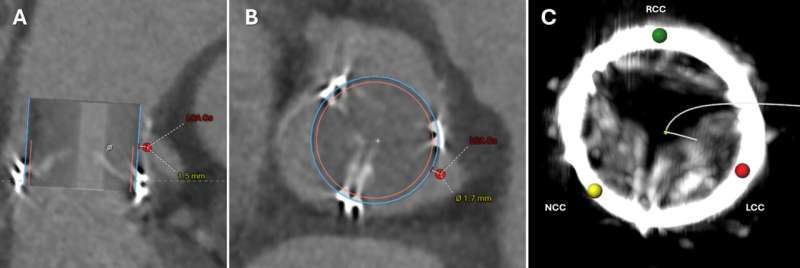
However, this case came with a dangerous complication. The opening, known as the ostium, of the patient’s left coronary artery was positioned extremely close to the failing aortic valve. During a standard valve replacement procedure, this anatomy made it highly likely that the coronary artery would become blocked. Coronary obstruction after valve replacement is rare, but when it occurs, it is often fatal.
Open-heart surgery was not an option due to the patient’s extensive vascular disease and prior interventions. Existing minimally invasive techniques designed to prevent coronary obstruction were also ruled out because of his unique anatomy and heavy calcification. In short, the patient had no safe conventional options.
This is where innovation stepped in.
The Concept Behind VECTOR
Physicians at Emory School of Medicine, including interventional cardiologists who routinely treat complex structural heart disease, had been working on a concept designed for exactly this type of scenario. Their idea was deceptively simple: instead of trying to protect the coronary artery from blockage, move the effective origin of the artery out of harm’s way.
To turn that concept into reality, they partnered with researchers at the NIH’s National Heart, Lung, and Blood Institute (NHLBI). Together, the teams refined the approach through extensive testing in animal models before bringing it to a human patient.
The result was a new procedure known as ventriculo-coronary transcatheter outward navigation and reentry, abbreviated as VECTOR.
How the VECTOR Procedure Works
VECTOR is a fully catheter-based procedure that takes advantage of the body’s natural vascular pathways. Instead of opening the chest, doctors access the heart through blood vessels in the legs, a technique commonly used in modern interventional cardiology.
The procedure unfolds in several carefully coordinated steps:
First, a guidewire is passed through the aorta and into the coronary artery that is at risk of being blocked. The wire is then advanced deep into one of the artery’s branches. From there, the wire is deliberately guided through the artery wall into the right ventricle, one of the heart’s four chambers.
A second catheter, introduced through the venous system, captures this wire inside the heart and pulls it out through the femoral vein. This creates a continuous rail running from the aorta, through the coronary artery and heart, and out through the vein. This rail allows doctors to deliver more advanced tools with precision.
The next phase focuses on creating a new pathway for blood flow. Doctors form a new opening in the aorta, downstream from the valve and safely away from the danger zone. A second opening is then created in the coronary artery wall, using a specialized catheter supported by an expandable mesh tube, or stent, to maintain stability.
These two openings are connected, and a coronary bypass graft is advanced along this newly created route. Once deployed, the graft establishes a brand-new channel for blood flow, effectively bypassing the risky anatomical area altogether.
Importantly, all of this is done without opening the chest, stopping the heart, or using a heart-lung machine.
The Outcome of the First Human Case
The VECTOR procedure was successfully performed on the patient, followed by his planned transcatheter aortic valve replacement (TAVR). Six months after the intervention, follow-up imaging showed no signs of coronary artery obstruction, and the bypass graft remained open and functional.
This outcome confirmed that VECTOR could work in a real-world human setting, not just in experimental models. While this represents only a single case, it is a crucial proof of concept.
The researchers emphasize that additional patients and longer follow-up will be required before VECTOR can be considered for broader clinical use. Still, the initial success marks a major step forward.
Why This Matters for High-Risk Patients
For decades, coronary bypass surgery has relied on open surgical techniques. Even with advances in minimally invasive surgery, most bypass procedures still require some form of chest incision. VECTOR introduces a completely new category: percutaneous coronary bypass.
This approach could be particularly valuable for patients who:
- Are not candidates for open-heart surgery
- Have failed prior valve or coronary interventions
- Face a high risk of coronary obstruction during valve replacement
- Have complex or unusual coronary anatomy
In such cases, VECTOR could provide a lifesaving option where none previously existed.
Broader Implications for Cardiology
Beyond its immediate application, VECTOR may have implications for the future treatment of coronary artery disease. The researchers suggest that similar techniques could eventually be adapted for cases where stents fail, arteries repeatedly re-narrow, or traditional bypass options are limited.
This development also highlights how modern cardiology is increasingly blending ideas from surgery, interventional techniques, and advanced imaging. The procedure relies heavily on precise imaging, catheter control, and cross-disciplinary expertise.
Understanding Coronary Artery Bypass Surgery
Traditional coronary artery bypass surgery involves taking a blood vessel from another part of the body, often the chest or leg, and surgically attaching it to reroute blood around a blocked coronary artery. It is highly effective but physically demanding for patients.
Minimally invasive approaches aim to reduce trauma, recovery time, and complications. VECTOR represents an extreme evolution of that idea, pushing bypass surgery entirely into the catheterization lab.
What Comes Next
While it is too early to say whether VECTOR will become widely available, its success demonstrates what is possible when clinical necessity drives innovation. The collaboration between NIH researchers and Emory physicians also shows how quickly ideas can move from concept to patient care when resources and expertise align.
For now, VECTOR remains reserved for highly specialized cases. But as techniques improve and experience grows, it could redefine how cardiologists think about coronary bypass surgery in the future.
Research paper:
https://www.ahajournals.org/doi/10.1161/CIRCINTERVENTIONS.125.016130