A New Tool Could Tell Us How Consciousness Works
Consciousness has long been described as one of science’s most difficult puzzles. We all experience thoughts, emotions, sensations, and awareness every day, yet researchers still cannot fully explain how physical matter inside the brain produces these subjective experiences. This mystery is often referred to as the “hard problem” of consciousness. Now, a growing body of research suggests that a relatively new brain technology could help scientists move closer to real answers.
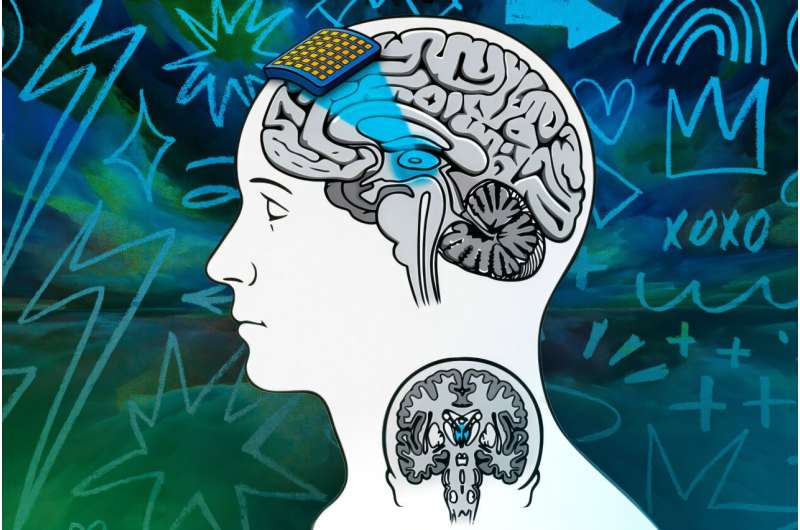
Researchers connected to MIT and collaborating institutions are exploring the use of a technique called transcranial focused ultrasound, a noninvasive method that allows scientists to precisely stimulate small, deep regions of the human brain. In a newly published paper, the researchers present a detailed roadmap for how this tool could be used specifically to study conscious perception, rather than just general brain activity.
The work appears in the journal Neuroscience & Biobehavioral Reviews and lays out why this technology could be uniquely powerful for understanding where consciousness arises in the brain and how it is generated.
Why Consciousness Is So Hard to Study
One of the biggest challenges in consciousness research is that most methods used to study the brain are either observational or invasive. Brain scans like MRI or EEG can show patterns of activity, but they cannot easily reveal whether that activity is causing a conscious experience or simply responding to it. On the other hand, invasive techniques that allow direct stimulation of deep brain regions are typically limited to neurosurgical patients and cannot be applied broadly to healthy individuals.
This creates a major scientific limitation. Researchers may see brain activity linked to vision, pain, or thought, but they often cannot say with confidence whether that activity is essential for conscious experience or merely a side effect.
This is where transcranial focused ultrasound begins to stand out.
What Transcranial Focused Ultrasound Actually Does
Transcranial focused ultrasound uses acoustic waves that pass safely through the skull and converge on a very small target area inside the brain. These target areas can be just a few millimeters wide, allowing for remarkably precise stimulation.
Unlike other noninvasive brain stimulation methods, such as transcranial magnetic stimulation or electrical stimulation, focused ultrasound can reach much deeper brain structures while maintaining high spatial accuracy. This means scientists can modulate activity in subcortical regions that were previously accessible only through surgery.
Because the technique actively modulates brain activity, it gives researchers a powerful way to study cause and effect, not just correlation. If altering activity in a specific region changes what a person consciously experiences, that region is likely playing a meaningful role in generating consciousness.
Moving From Correlation to Causality
Many current studies of consciousness focus on sensory systems, especially vision. Researchers may show participants images and record which brain regions become active. While this approach reveals associations, it does not settle whether those brain areas are necessary for conscious perception.
Focused ultrasound allows researchers to go a step further. By selectively stimulating or disrupting activity in specific brain regions while participants perform perception tasks, scientists can observe whether conscious experience itself changes. This makes it possible to identify which neural circuits are causally involved in producing conscious awareness.
This ability to test necessity rather than simple correlation is one of the main reasons the researchers believe focused ultrasound could be transformative for consciousness science.
Testing Competing Theories of Consciousness
The roadmap presented in the paper is designed to help distinguish between two broad families of theories about how consciousness works.
One group of theories, often described as cognitivist, argues that consciousness depends on higher-level cognitive processes such as reasoning, self-monitoring, and global integration of information. These theories often emphasize the frontal cortex and large-scale brain networks as essential for conscious experience.
The opposing view, sometimes referred to as non-cognitivist, suggests that consciousness does not require complex reasoning or reflection. Instead, specific patterns of neural activity may directly give rise to subjective experiences. From this perspective, consciousness could be more localized, potentially involving regions toward the back of the cortex or even deep subcortical structures.
Focused ultrasound offers a way to test these ideas directly by selectively modulating different brain regions and observing how perception changes.
Key Questions Researchers Hope to Answer
The paper outlines several concrete research questions that focused ultrasound experiments could address:
- What role does the prefrontal cortex actually play in conscious perception?
- Is conscious experience generated locally in specific regions, or does it require brain-wide networks?
- If consciousness depends on distributed activity, how are signals from distant regions combined into a single unified experience?
- What role do subcortical structures play in conscious awareness?
By designing experiments that carefully manipulate neural activity while measuring subjective reports, researchers hope to move beyond philosophical debate and toward experimental clarity.
Pain, Vision, and Core Conscious Experiences
The researchers point out that focused ultrasound could be especially useful for studying fundamental conscious experiences such as vision and pain. Pain is a particularly interesting case because the body often reacts before conscious awareness fully registers. For example, a person may pull their hand away from a hot surface before consciously feeling pain.
This raises deep questions about where and how the conscious sensation of pain is generated. Is it primarily cortical, or does it arise from deeper brain structures? Focused ultrasound may allow researchers to test these possibilities directly by targeting different regions and observing changes in reported pain perception.
Planned Experiments and Next Steps
The researchers are not simply offering theoretical ideas. They are actively planning experiments that will begin with stimulation of the visual cortex, where responses can be compared against well-established measures of visual perception. From there, they plan to move toward higher-level regions in the frontal cortex and eventually deeper structures.
Combining focused ultrasound with recording techniques such as EEG will help build a more complete picture of how neural activity translates into conscious experience. The goal is to understand not just whether neurons fire, but whether those firings actually correspond to what a person experiences.
Why This Tool Matters Beyond Consciousness Research
While the focus of the paper is basic science, the implications extend further. A better understanding of how consciousness arises could eventually inform treatments for neurological and psychiatric conditions, including disorders of consciousness, chronic pain, and perception-related conditions.
At the same time, the researchers acknowledge that focused ultrasound is still a relatively new tool. Its full capabilities and limitations are not yet known. However, they describe the approach as low risk and high reward, making it an exciting direction for future research.
Additional Context: Why Noninvasive Brain Tools Are Advancing Rapidly
Over the past decade, neuroscience has seen rapid progress in noninvasive brain technologies. Tools like focused ultrasound represent a broader shift toward methods that allow precise intervention without surgery. This trend is reshaping how scientists study the human brain, particularly when it comes to complex phenomena like consciousness that cannot be fully captured through animal models alone.
As these tools improve, the line between philosophical questions and experimental science continues to blur, opening the door to answers that once seemed out of reach.
Research Reference:
https://doi.org/10.1016/j.neubiorev.2025.106485