Customizable Stainless Steel Neural Probes Make Brain Recording Safer and More Affordable
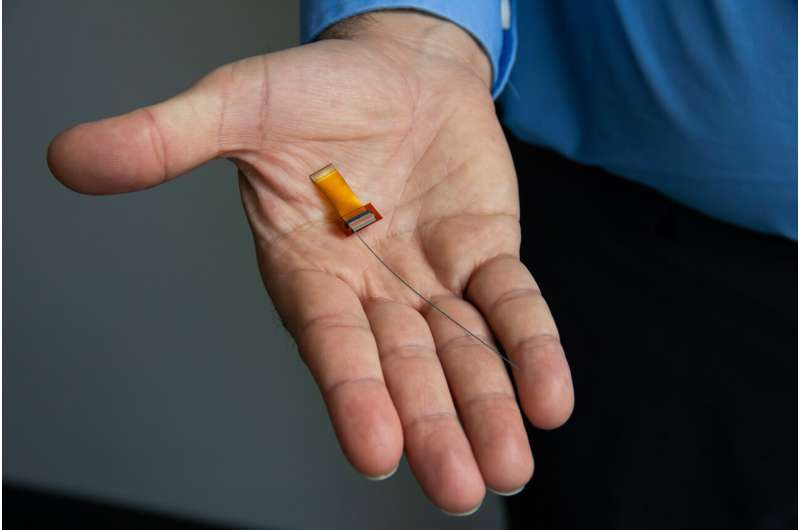
Understanding how the human brain works—especially its deeper regions—has always been one of neuroscience’s biggest challenges. Many of the most important brain functions linked to disorders like epilepsy, Parkinson’s disease, and schizophrenia happen far below the surface of the cortex. To study or treat these areas, doctors often rely on neural probes inserted deep into the brain. While effective, these tools come with serious limitations. A new development from researchers at Carnegie Mellon University could significantly change that situation.
Engineers at CMU have created the first customizable stainless steel neural probes designed for high-density, high-resolution brain recording while reducing the risk of tissue damage and probe breakage. The research, published in Nature Communications, introduces a new class of neural interfaces that could be safer, cheaper, and more practical for both clinical and research use.
Why Current Neural Probes Fall Short
For decades, most advanced neural probes have been made from silicon. Silicon has been a popular choice because it works extremely well with established microfabrication technologies, allowing engineers to pack many tiny electrodes into very small devices. This has enabled impressive advances in neural recording, including probes that support optical stimulation, imaging, and chemical sensing.
However, silicon has a major drawback: it is brittle. While silicon probes perform well in thin or shallow brain tissue, they are far less reliable when inserted deep into the brain. During surgery, these probes can crack or shatter, potentially leaving fragments behind in delicate neural tissue. This creates safety concerns and limits how long and how robust such probes can be.
Deep brain applications—such as epilepsy localization or deep brain stimulation (DBS) implantation—require long, compact probes that can travel deep into the brain without breaking. Until now, that balance has been hard to achieve.
The Shift to Stainless Steel
The CMU research team, led by Maysam Chamanzar, Associate Professor of Electrical and Computer Engineering, took a different approach by turning to stainless steel. This material is already widely used in medical implants like coronary stents and prosthetics, which means its biocompatibility is well established.
Compared to silicon, stainless steel is tougher, more resilient, and far less brittle. These mechanical properties allow probes to be longer and stronger, making them suitable for navigating to the middle and deep regions of the brain with minimal cortical tissue damage.
By switching materials, the team significantly reduced the risk of probe fracture during surgery—a critical improvement for patient safety.
What Makes These Probes Different
The new probes, informally called steeltrodes, are not just stronger; they are also highly customizable and high-density. This means they can be tailored to specific clinical or research needs while still supporting a large number of recording channels.
One of the biggest technical challenges was fabrication. Silicon-based probes benefit from decades of development in the MEMS, NEMS, and CMOS industries. Stainless steel, by contrast, has been relatively unexplored at the micro- and nanoscale for biomedical devices.
To overcome this, the team developed a multilayer microfabrication process that allows for:
- High-density electrode integration
- Micron-scale features on stainless steel
- Optional flexible cables for easier surgical and experimental setup
These advances make the probes robust, reusable, and scalable for mass production, something that has not been easy to achieve with traditional hand-made or silicon-based neural electrodes.
Demonstrated Performance in the Brain
The researchers didn’t stop at design and fabrication. They also demonstrated that these stainless steel probes actually work in real neural tissue. The team successfully recorded high-resolution neural signals from the auditory cortex in test subjects, showing that the probes can capture detailed brain activity.
Because stainless steel allows for longer probe designs, these devices can reach deeper brain structures while maintaining signal quality. This opens the door to interoperative and intraoperative neural recording, particularly useful during surgeries that require precise mapping of brain function.
Easier Integration and Practical Use
Beyond the probes themselves, the team also optimized post-fabrication processing and packaging. Their design is compatible with commercial stimulation and recording systems, which lowers the barrier for adoption in hospitals and research labs.
This practical focus is important. Many promising neural technologies fail to move beyond the lab because they are too complex, fragile, or incompatible with existing equipment. By designing steeltrodes with real-world use in mind, the researchers aim to bridge the gap between research-grade precision and clinical scalability.
Implications for Neurological Disorders
The potential impact of this technology is significant. Safer, stronger, and more affordable neural probes could improve both diagnosis and treatment for a range of brain disorders, including:
- Epilepsy, where precise localization of seizure activity is critical
- Parkinson’s disease, which often relies on deep brain stimulation
- Schizophrenia and other psychiatric disorders, where better neural mapping could lead to improved therapies
In the future, surgeons may be able to use multiple stainless steel probes simultaneously, creating a dense, cross-regional map of brain activity. This could lead to more accurate diagnoses and more targeted interventions with less damage to brain tissue.
Benefits for Neuroscience Research
Outside the clinic, steeltrodes also address a long-standing problem in neuroscience research. Traditional hand-made laminar electrodes often have low channel counts and can be extremely expensive. Despite their cost, they still lack the resolution and scalability needed for many modern studies.
These new probes offer:
- Higher channel density
- Lower production costs
- Mass manufacturability
This combination could make advanced neural recording more accessible to labs that previously could not afford or maintain custom electrode systems.
Why Material Choice Matters in Neural Engineering
This research also highlights a broader trend in neural engineering: the growing importance of materials science. While electronics and software often get the spotlight, the physical material of a neural interface plays a huge role in safety, durability, and performance.
Stainless steel’s success here may encourage researchers to explore other non-traditional materials for neural and biomedical devices, especially those that need to withstand mechanical stress inside the body.
Looking Ahead
The CMU team views this work as more than just a new probe design. They see it as a platform technology. The planar microfabrication process developed for stainless steel could enable a new generation of resilient biomedical devices that integrate multiple functions—sensing, stimulation, and even chemical detection—on a single steel-based platform.
As research continues, these probes could help reshape how scientists and clinicians interact with the brain, offering high-resolution data with less risk and lower cost.
Research Paper Reference:
https://www.nature.com/articles/10.1038/s41467-025-67681-w