To Measure the Force of Traumatic Brain Injuries, This Lab Is Building a Better Brain
Traumatic brain injuries, often shortened to TBIs, affect millions of people every year, from athletes and accident victims to military personnel exposed to blasts. Doctors and researchers understand a lot about the medical consequences of TBIs, such as concussions, cognitive impairment, and long-term neurological damage. What remains far less understood is something more fundamental: how much physical force actually reaches the brain during an impact, and how that force moves through different regions of brain tissue.
A research lab at Virginia Commonwealth University (VCU) is trying to answer that question in a very hands-on way—by building realistic physical brain models that can be hit, shaken, and measured without harming any living beings.
Building brains to measure impact, not just injury
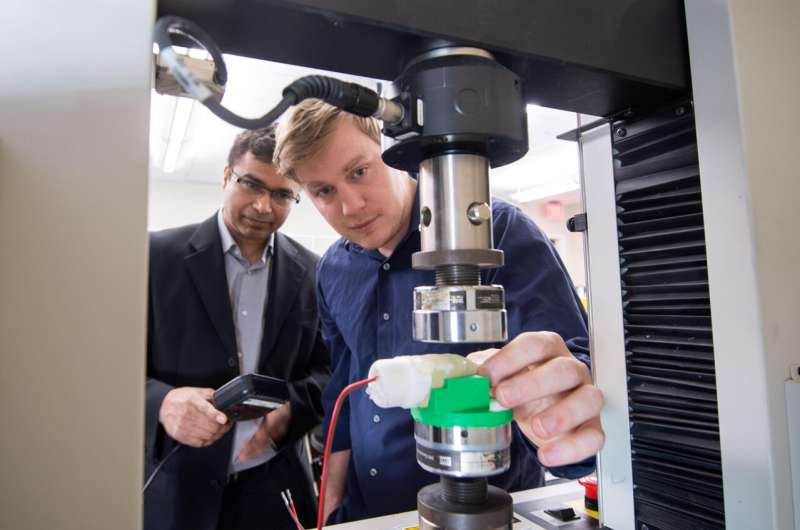
The work is being led by Ravi Hadimani, an associate professor in the VCU College of Engineering. His lab focuses on creating brain phantoms, which are physical replicas designed to mimic the structure and mechanical behavior of real brains. These phantoms are not meant to look realistic for display purposes. Instead, they are engineered to respond to force in the same way biological brain tissue does.
The central goal is to measure stress, strain, and acceleration inside the brain when it experiences external forces, such as those caused by car crashes, falls, explosions, or sudden g-forces. To do that accurately, the brain’s internal structure and material properties must be closely replicated.
Rather than starting with a full-size human brain, the team began with something smaller and far more practical: rat brains.
Why rat brains are the starting point
Rats are one of the most studied organisms in neuroscience, and their brains are well-mapped using MRI and CT scans. From a research standpoint, rat brains offer several advantages. They are faster and less expensive to reproduce, require less material, and are already widely used as models in neurological research.
Importantly, these brain phantoms do not involve live animals at all. That makes them attractive to researchers who want to reduce or replace animal testing while still collecting meaningful biomechanical data.
The rat brain phantoms are built using publicly available imaging data, allowing the researchers to recreate different brain regions with impressive anatomical accuracy.
A lab where engineering meets neuroscience
Hadimani’s lab is well-known for combining 3D printing, materials science, and biomedical engineering. In earlier work, the group developed human brain models to study transcranial magnetic stimulation, a therapy used for conditions such as depression and other psychiatric disorders. Those earlier models focused on replicating the brain’s electrical and magnetic properties.
This new project takes things in a different direction by focusing on mechanical behavior, specifically viscoelasticity. Viscoelastic materials behave partly like solids and partly like liquids, which closely matches how real brain tissue responds to force.
Different regions of the brain have different elastic properties, and accurately reproducing those differences is critical when studying traumatic injuries. The lab’s new brain phantoms are carefully engineered so their mechanical response closely matches that of biological brain tissue.
The role of hydrogels in brain modeling
At the heart of these brain phantoms is an adaptable hydrogel material. Hydrogels are polymer-based materials that absorb large amounts of water, forming soft, flexible structures. Many people encounter hydrogels in everyday life through cosmetics or contact lenses. A familiar analogy is gelatin desserts, which are also polymer networks swollen with water.
In the lab, the hydrogel forms a sponge-like internal network. By carefully controlling the polymer composition and water content, researchers can tune the material’s softness, elasticity, and viscosity to match real brain tissue.
The brains are created using 3D-printed plastic molds, similar in concept to pouring liquid gelatin into a mold and letting it set. The assembly process involves multiple freeze-thaw cycles, which help establish the final mechanical properties of the hydrogel.
Embedded sensors that turn force into data
What truly sets these brain phantoms apart is what’s inside them. Each hydrogel brain is embedded with piezoelectric sensors, which generate an electrical signal when mechanical pressure is applied. During impact testing, these sensors convert physical force into measurable voltage signals.
By analyzing those signals, researchers can determine how much force different parts of the brain experience, how that force spreads, and how quickly it changes. This allows for precise, repeatable experiments that would be impossible or unethical to perform on living brains.
During testing, the hydrogel brain is placed inside a 3D-printed plastic skull, surrounded by a silicone gel layer that mimics skin and muscle. This layered setup helps recreate how force travels through the head before reaching the brain.
A high school student at the center of the research
One of the most striking aspects of this project is the role played by Sanaya Bothra, a senior at Maggie L. Walker Governor’s School. She has worked in Hadimani’s lab since 2023 and is the first author on the recent research paper describing the brain phantom system.
Her involvement highlights both the accessibility of the research and the mentorship culture within the lab. She identified a clear gap in existing brain models: while phantoms existed for electromagnetic studies, none were capable of accurately measuring mechanical injury.
That insight helped shape the direction of the project and contributed directly to its success.
Testing beyond the lab
The research is not staying confined to controlled laboratory environments. The team has partnered with Ram Rocketry, a student rocketry organization, to launch one of the rat brain phantoms in a rocket as part of a national competition.
The brain model will be embedded with an accelerometer to measure the effects of intense g-forces during flight. This experiment will provide valuable data on how rapid acceleration impacts brain tissue, information that could be relevant for aerospace, defense, and high-speed transportation research.
The sensing technology developed in the lab is patented under Hadimani’s startup company, Realistic Anatomical Model (RAM) Phantoms, signaling potential future commercial and research applications.
Why measuring force matters in TBI research
Understanding TBIs is not just about identifying symptoms after the fact. It’s about knowing what levels of force cause damage, how that damage differs across brain regions, and how protective measures can be improved.
Physical brain phantoms offer a unique advantage over computer simulations alone. While simulations are powerful, they rely on assumptions and approximations. A physical model allows researchers to directly observe and measure real-world mechanical behavior.
These insights could eventually inform helmet design, vehicle safety systems, sports equipment, and medical diagnostics, helping reduce the severity of TBIs before they happen.
Looking ahead to human brain models
While rat brains are the current focus, the long-term vision is clear. The team aims to scale up the technology to create human-sized hydrogel brain phantoms with the same level of anatomical and mechanical accuracy.
Human brains are far more complex and require significantly more material, time, and precision. Starting small allows the researchers to refine their methods before taking on that challenge.
If successful, these models could become a powerful tool for studying human traumatic brain injuries without relying on live subjects.
Extra context: what makes TBIs so complex
One reason TBIs are difficult to study is that the brain is not uniform. Gray matter, white matter, and fluid-filled spaces all respond differently to force. Rotational motion, not just direct impact, plays a major role in causing injury. Even relatively mild forces can lead to long-term damage depending on how they are applied.
By creating physical models that capture these nuances, researchers can begin to untangle the relationship between external impact and internal brain response in ways that were previously out of reach.
Research paper:
https://doi.org/10.36227/techrxiv.176184900.09044741/v1