Study Suggests Taking Photos at Live Events Can Come at a Social Cost
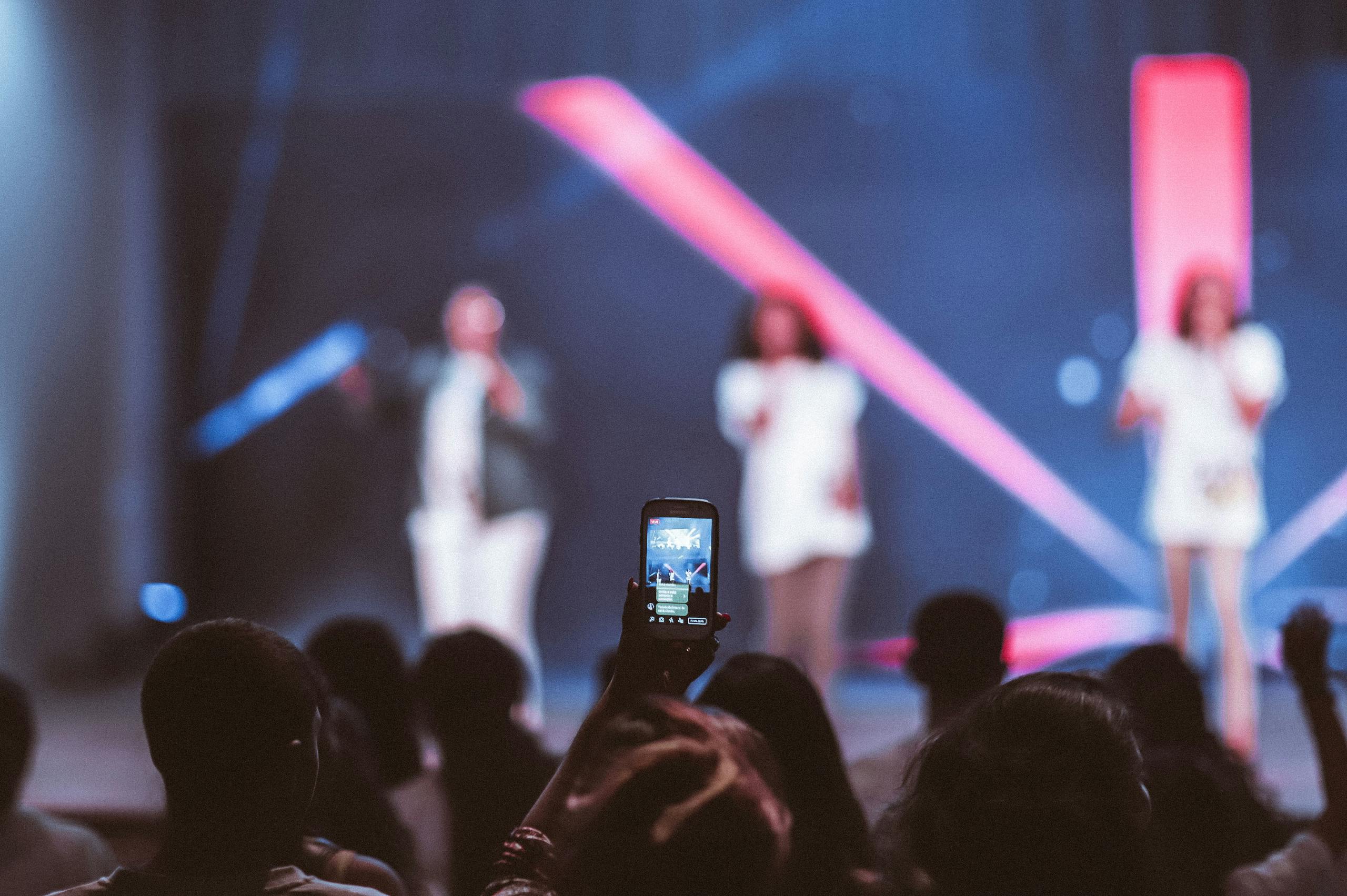
At the beginning of many concerts, comedy shows, or live performances, audiences often hear a familiar announcement asking them not to take photos or record videos. Despite these reminders, it is common to see glowing smartphone screens rise above the crowd as people capture moments from the stage. This habit, often described as documenting, has become deeply embedded in modern shared experiences. A recent academic study suggests that while documenting may feel harmless—or even beneficial—it can quietly affect how others perceive us, sometimes in ways that strain social relationships.
The research was led by Freeman Wu, an assistant professor at the University of Oregon’s Lundquist College of Business, in collaboration with scholars from DePaul University and Vanderbilt University. Their findings were published in the Journal of the Association for Consumer Research and focus on what they call the documenting penalty—the social cost people may pay when they record live experiences in front of others.
The central question behind the study was simple but revealing: how do people judge someone who chooses to photograph or record a live event instead of simply watching it? Previous research had already shown that documenting can help the person holding the phone remember the experience more vividly and even enjoy it more. Wu wanted to know whether that was the full picture or whether there were hidden downsides that had gone unnoticed.
To explore this, the researchers conducted a series of experiments designed to measure social perceptions. Across multiple studies, participants were shown scenarios involving people attending live events such as concerts, fireworks displays, or comedy shows. Some individuals in these scenarios were described as taking photos or videos, while others were simply watching the performance. Participants were then asked to evaluate how engaged those people seemed and how likely they would be to socialize with them in the future.
The results were strikingly consistent. People who were seen documenting were widely perceived as less engaged with the live experience. Observers also reported that they would be less likely to invite these individuals to future events, including social outings with friends. This suggests that documenting does not just affect momentary impressions but can also influence longer-term social decisions.
To better understand where these judgments come from, Wu and his colleagues began by analyzing online comments posted in response to a New York Times article about audiences taking photos at concerts. More than three-quarters of the comments expressed negative attitudes toward people who document live events. Many commenters described documenters as distracted, disengaged, or inconsiderate of others nearby. This early analysis helped shape the researchers’ hypotheses and informed the design of their experiments.
One possible explanation for these negative perceptions was that people might be annoyed by nearby screens blocking their view or distracting them during a performance. However, the study found that distance did not matter. Whether the person recording was seated close by or far away, observers still judged them similarly. This indicates that the social penalty is not primarily about physical distraction.
The researchers also tested whether the type of device made a difference. Interestingly, it did not. People using smartphones and those using digital cameras were judged in much the same way. This suggests that the issue is not tied to smartphones specifically but to the act of documenting itself.
Wu points out that documenting is often misunderstood. Unlike phubbing, which refers to checking messages or scrolling through social media during social interactions and typically signals boredom or disengagement, documenting can stem from enthusiasm. Someone recording a concert may feel deeply absorbed in the moment and eager to preserve it. However, observers often interpret the behavior differently, assuming the person is not fully present.
This gap between intention and perception is what makes the documenting penalty particularly important. The person taking photos may feel connected and excited, while others see them as detached. Over time, these small moments of misalignment can influence how people are viewed within social groups.
The study also highlights that not all documenting is equal. The degree and timing of phone use matter. Taking a few photos at the beginning of a performance or capturing a brief clip before putting the phone away does not carry the same negative consequences as continuous recording. Problems arise when documenting becomes frequent or prolonged, signaling to others that the person is more focused on capturing content than sharing the experience.
In response to widespread phone use, performers and event organizers have adopted a range of strategies. Some venues require attendees to place their phones in locked pouches that can only be opened by staff, effectively eliminating recording altogether. Others take a more flexible approach, inviting audiences to record a short segment of the show before asking them to put their phones away. Some performers have even paused performances to directly address audience members who are recording excessively.
These varied responses reflect a broader cultural tension. Smartphones are now constant companions, and completely banning them can feel extreme or impractical. At the same time, both performers and audiences are grappling with how to preserve the sense of a shared, immersive experience.
Beyond concerts and live shows, the findings have implications for everyday social situations. Wu emphasizes that people often underestimate how their phone use affects others, even when their reasons for using a phone feel justified. Whether it is documenting a moment, checking a message, or responding to a notification, these actions can subtly shape how we are perceived.
The key takeaway from the research is not that people should never take photos at live events. Instead, it is a reminder to be mindful of social context. Shared experiences carry unspoken expectations about presence and attention, and small choices—like how often we raise our phones—can influence how connected others feel to us.
As documenting continues to be a normal part of modern life, understanding its social consequences becomes increasingly important. The documenting penalty identified by Wu and his colleagues sheds light on why tensions around phone use persist and why seemingly minor behaviors can have lasting effects on relationships.
Ultimately, the study encourages a balanced approach. Enjoy capturing memories, but also recognize the value others place on being fully present together. In a world where experiences are easily recorded and shared, the challenge is learning when to press record—and when to simply watch.
Research paper:
How to Lose Friends and Influence No One: The Documenting Penalty in Experiential Consumption
Journal of the Association for Consumer Research (2025)
https://doi.org/10.1086/737204