Natural Hydrogel Could Make Personal Hygiene Products Far Greener and More Sustainable
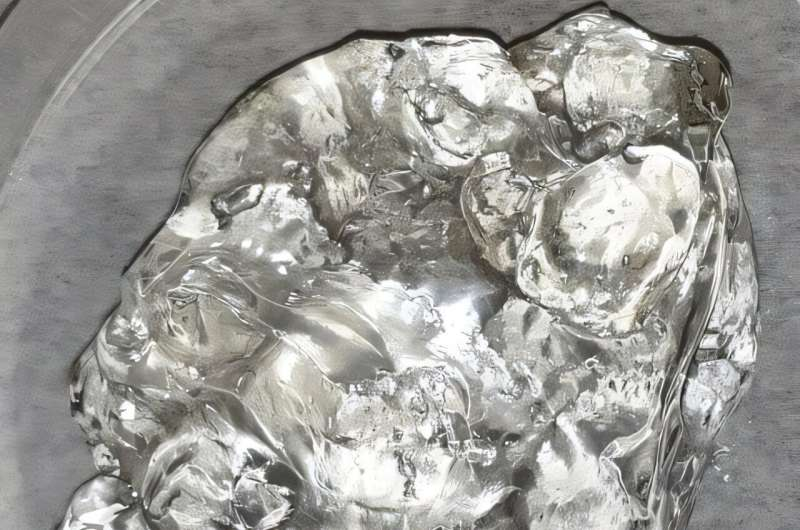
A team of researchers at the University of Waterloo has developed a new natural, biodegradable hydrogel that could significantly reduce the environmental impact of everyday personal hygiene products such as diapers, menstrual pads, and tampons. These products are used by billions of people worldwide, yet their environmental footprint is rarely discussed. This new material offers a promising alternative to the petroleum-based absorbents that currently dominate the market.
At the heart of most disposable hygiene products is a class of materials known as superabsorbent polymers, or hydrogels. These substances are soft, flexible, and capable of absorbing hundreds of times their own weight in liquid. They are extremely effective, which is why they are so widely used. The problem is that nearly all commercial hydrogels are synthetic and non-biodegradable, meaning they can sit in landfills for centuries after a single use.
The new hydrogel developed at Waterloo is designed to solve that exact problem.
Why Conventional Hygiene Products Are an Environmental Problem
Disposable hygiene products are a major contributor to global waste. According to estimates from the United Nations Environment Programme, around 250 million disposable diapers are thrown away every single day worldwide. Add to that the vast number of menstrual pads and tampons used by roughly 1.8 billion women globally, and the scale of the issue becomes clear.
Most of these products are made largely from plastic-based materials. Once discarded, they can take up to 500 years to fully break down. During that time, they contribute to overflowing landfills and release microplastics into soil and water systems, creating long-term environmental and health concerns.
The absorbent core of these products is one of the biggest challenges to replace, because it needs to perform extremely well under demanding conditions. Any alternative material must absorb large volumes of fluid, retain it securely, and remain safe for prolonged skin contact.
What Makes This New Hydrogel Different
The hydrogel developed by the University of Waterloo team is made entirely from cellulose-based materials, which are derived from plants. Cellulose is one of the most abundant organic polymers on Earth, making it a highly attractive raw material from a sustainability perspective.
The researchers combined two different cellulose derivatives and used citric acid as a natural crosslinking agent. This process binds the cellulose molecules together, creating a stable hydrogel network that is both strong and flexible. Importantly, citric acid is non-toxic and widely used in food and pharmaceutical applications, adding another layer of safety to the material.
Unlike conventional hydrogels, this new material is fully biodegradable. When placed in soil, it breaks down harmlessly within three months, leaving behind no toxic residues. This rapid degradation stands in stark contrast to the centuries-long lifespan of synthetic absorbents.
Performance That Matches or Exceeds Existing Materials
Environmental benefits alone are not enough if performance suffers, especially for products as sensitive as diapers and menstrual supplies. To address this, the researchers conducted extensive testing under conditions designed to mimic real-world use.
For diaper-related testing, the team created synthetic urine, made by adding protein enzymes and sodium chloride to water heated to 37 degrees Celsius, roughly equivalent to human body temperature. This allowed them to evaluate how well the hydrogel absorbed liquid and how securely it held onto that liquid under pressure.
The results showed that the natural hydrogel delivered equal or better absorption performance compared to conventional petroleum-based materials. It was also tested for leakage during movement, simulating scenarios such as a baby sitting, crawling, or shifting position in a wet diaper. The hydrogel maintained its integrity and retention capabilities under these conditions.
Safety and Biocompatibility Testing
Because personal hygiene products come into direct contact with the body, safety is critical. To assess biocompatibility, researchers grew mouse cells directly on the hydrogel material. These tests confirmed that the material does not harm living cells, indicating it is safe for human use.
Additional environmental safety tests were conducted to ensure that the hydrogel does not release toxic by-products as it degrades in soil. The findings showed that the breakdown process is clean and environmentally benign from start to finish.
Environmental Benefits Beyond Waste Reduction
Replacing conventional hydrogels with biodegradable alternatives could have multiple environmental benefits. In addition to reducing landfill waste, it would significantly lower the release of microplastics into ecosystems. Over time, this could help protect soil health, groundwater quality, and aquatic environments.
The shift toward biodegradable materials also supports compliance with emerging environmental regulations. Governments around the world are beginning to place stricter limits on single-use plastics and non-degradable consumer products. A material like this positions manufacturers to stay ahead of regulatory changes while improving their sustainability credentials.
Commercialization and Industry Interest
The research team has already taken steps toward real-world application. A patent has been filed, and the lead researcher is working with CTK Bio Canada, a Vancouver-based company, to explore commercialization pathways.
One of the key goals of the project was to develop a material that could be produced through a scalable and economical process. This is essential for adoption by major hygiene product manufacturers, who operate at massive production volumes and tight cost margins.
The work also aligns with the University of Waterloo’s Global Futures initiative, which supports research aimed at tackling large-scale challenges such as climate change, sustainability, and environmental waste.
Why Hydrogels Matter in Everyday Life
Hydrogels are not limited to hygiene products. They are widely used in medical dressings, drug delivery systems, agriculture, and water purification. Their ability to absorb and retain water makes them extremely versatile.
In agriculture, biodegradable hydrogels are being explored as soil additives that help retain moisture during drought conditions. In medicine, they are used in wound care and tissue engineering due to their softness and compatibility with biological tissues.
The development of high-performance, biodegradable hydrogels could therefore have far-reaching implications beyond diapers and menstrual products, influencing multiple industries that rely on absorbent materials.
A Step Toward More Sustainable Consumer Products
While this new hydrogel will not eliminate waste overnight, it represents an important step toward rethinking how everyday products are made. Hygiene products are essential, but their environmental cost does not have to be permanent.
By combining plant-based materials, non-toxic chemistry, and strong real-world performance, the University of Waterloo research demonstrates that sustainability and functionality do not have to be mutually exclusive.
If adopted at scale, materials like this could significantly reduce long-term waste, limit microplastic pollution, and help future generations inherit a cleaner environment—without sacrificing comfort, safety, or effectiveness.
Research Paper:
Citric acid–crosslinked cellulose derivatives superabsorbent hydrogels (SAH) as sustainable alternatives for personal hygiene applications, Chemical Engineering Journal (2025).
https://doi.org/10.1016/j.cej.2025.170721