Intricacies of the Helix Nebula Revealed With NASA’s James Webb Space Telescope
NASA’s James Webb Space Telescope has once again delivered a stunning and deeply informative look at the universe—this time by zooming into the Helix Nebula, one of the closest and most famous planetary nebulae to Earth. The new observations offer an extraordinarily detailed glimpse into what may one day happen to our own Sun and planetary system, while also revealing how dying stars contribute to the creation of future generations of stars and planets.
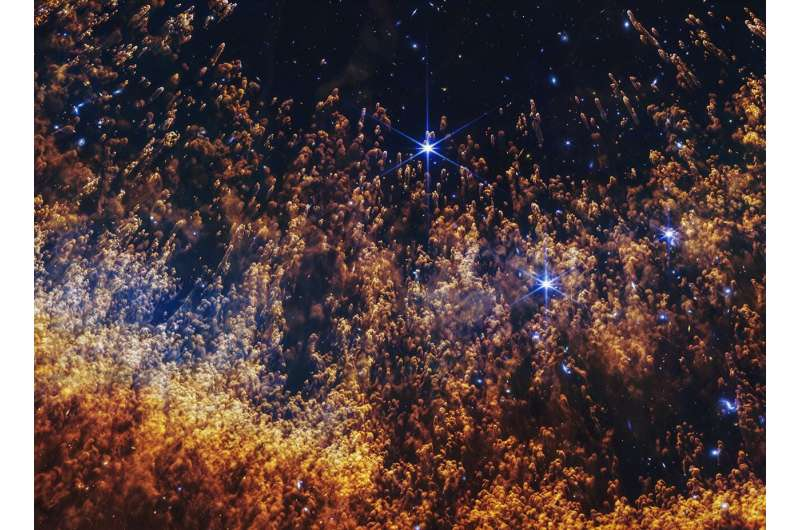
Using Webb’s powerful Near-Infrared Camera (NIRCam), astronomers captured a close-up view of the nebula that brings its internal structure into sharp focus. Unlike broader images that show the Helix Nebula as a glowing eye-like ring in space, this new view dives into the fine details of the gas, dust, and energetic processes shaping it.
A Planetary Nebula Shaped by a Dying Star
The Helix Nebula is what astronomers call a planetary nebula, a misleading name that has nothing to do with planets. Instead, it refers to the glowing shell of gas formed when a Sun-like star reaches the end of its life. After burning through its nuclear fuel, the star sheds its outer layers into space, leaving behind a dense, hot core known as a white dwarf.
In the Helix Nebula, this white dwarf sits at the center of the expanding cloud, although it lies just outside the frame of Webb’s latest image. Its intense radiation floods the surrounding gas with energy, causing it to glow and interact in complex ways. Webb’s observations show these interactions in far greater detail than ever before.
Comet-Like Knots and Sculpted Gas Pillars
One of the most striking features revealed by Webb is the presence of comet-like knots—dense clumps of gas and dust with long, tail-like structures streaming away from the central star. These knots trace the inner edge of an expanding shell of gas, forming a dramatic ring-like pattern.
These structures are not static. Fast-moving, blisteringly hot stellar winds from the dying star slam into slower, cooler material that was ejected earlier in the star’s life. This collision sculpts the gas into pillars, filaments, and knots, giving the nebula its intricate and textured appearance. Webb’s high resolution makes these features stand out far more clearly than in previous images.
Seeing Temperature and Chemistry Through Color
In Webb’s image, color is not just aesthetic—it carries scientific meaning. Different hues represent variations in temperature and chemical composition across the nebula.
A blue tint marks the hottest gas in this region, energized by intense ultraviolet radiation pouring out from the white dwarf. Moving farther from the center, the gas cools, appearing in yellow tones where hydrogen atoms begin bonding into molecular hydrogen. At the outer edges, reddish colors trace the coolest material, where gas thins out and dust grains can begin to form.
This layered structure reveals a clear transition from hot, ionized gas near the star to cooler, denser regions farther away—a crucial process in understanding how stellar material evolves after being expelled into space.
Building Blocks for Future Worlds
One of the most scientifically exciting aspects of these observations is what they reveal about chemical complexity. Earlier infrared studies from NASA’s now-retired Spitzer Space Telescope hinted that complex molecules could form within the Helix Nebula. Webb’s sharper vision confirms this and shows where and how it happens.
Within the nebula are shielded pockets of gas and dust, protected from the harsh radiation of the white dwarf. These darker regions allow molecules to survive and grow more complex. Over time, this material becomes part of the interstellar medium, the raw substance from which new stars and planets are born. In this sense, the Helix Nebula is both an ending and a beginning.
Webb Compared to Hubble and Spitzer
The Helix Nebula has been studied for nearly two centuries and imaged by many observatories, including the Hubble Space Telescope and the Spitzer Space Telescope. Hubble’s visible-light images revealed the nebula’s iconic shape and glowing structure, while Spitzer’s infrared observations provided early clues about dust and molecular gas.
Webb, however, combines infrared sensitivity with exceptional resolution, allowing astronomers to see fine details that were previously blurred or invisible. The comet-like knots, sharp gas boundaries, and subtle temperature transitions all appear with unprecedented clarity in Webb’s near-infrared view.
A Glimpse Into the Sun’s Distant Future
Because the Helix Nebula formed from a star similar in mass to our own Sun, it serves as a preview of our solar system’s far-off destiny. In roughly five billion years, the Sun is expected to expand into a red giant, shed its outer layers, and leave behind a white dwarf surrounded by a glowing planetary nebula.
Studying objects like the Helix Nebula helps astronomers understand this process in detail, from mass loss and stellar winds to chemical enrichment of surrounding space. It also places our own cosmic future into a broader context of stellar life cycles.
Location and Legacy of the Helix Nebula
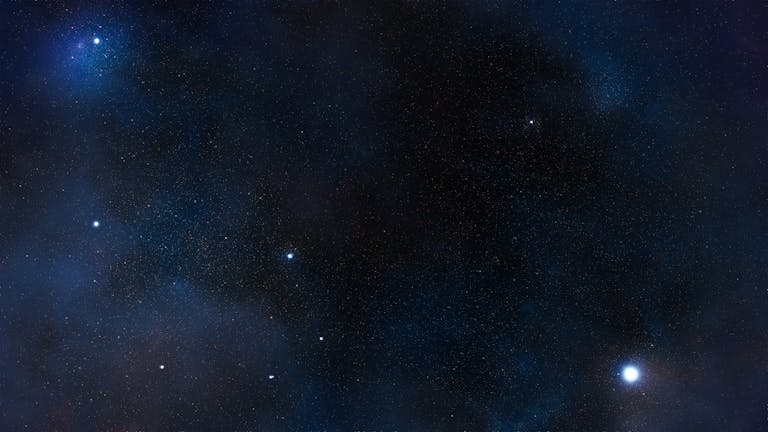
The Helix Nebula, also known as NGC 7293, lies about 650 light-years from Earth in the constellation Aquarius. Its relative proximity makes it a favorite target for both professional astronomers and backyard stargazers. Its eye-like appearance has even earned it pop-culture nicknames such as the “Eye of Sauron.”
Despite being so well known, the nebula continues to surprise scientists. Webb’s observations prove that even familiar objects can reveal new secrets when viewed with more advanced technology.
Why These Observations Matter
The new Webb image of the Helix Nebula is more than just visually stunning. It provides critical insights into stellar death, gas dynamics, molecule formation, and the recycling of cosmic material. These processes are essential to understanding how galaxies evolve and how the ingredients for planets—and potentially life—are distributed across the universe.
As Webb continues its mission, observations like this one are steadily reshaping our understanding of where stars come from, how they die, and how their remains help build what comes next.
Research reference:
https://science.nasa.gov/missions/webb/intricacies-of-helix-nebula-revealed-with-nasas-webb/