New River Chemistry Insights Could Sharpen How Scientists Model Coastal Oceans
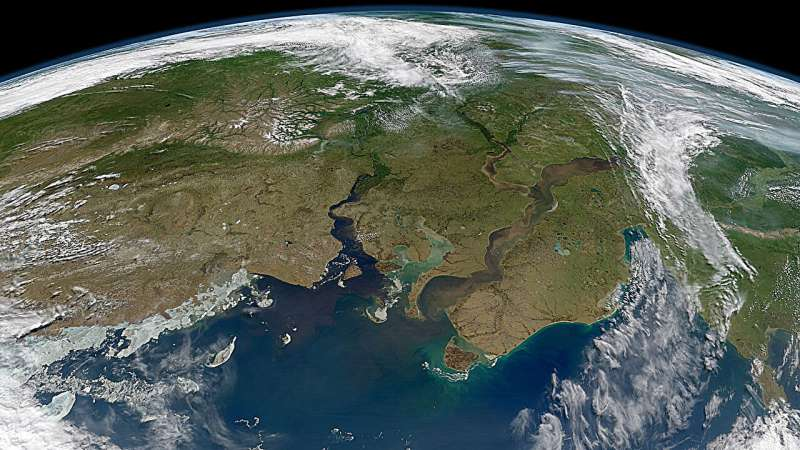
Rivers may look simple on the surface, but chemically, they are doing a huge amount of work behind the scenes. Every day, rivers carry freshwater, nutrients, and large amounts of carbon from land into the oceans. This steady flow plays a powerful role in shaping the chemistry of coastal seawater around the world, with direct consequences for marine ecosystems and even the global climate. A new scientific study now shows that understanding river chemistry in greater detail could significantly improve how scientists model the coastal ocean and its ability to absorb carbon dioxide from the atmosphere.
At the heart of this research is the idea that rivers are not chemically uniform. Their composition changes depending on what happens across their watersheds—things like forest cover, rock types, rainfall, permafrost, and glaciers. These differences matter more than many global models have previously assumed.
Why River Chemistry Matters to the Ocean
Two chemical properties of river water are especially important when rivers meet the sea: total alkalinity and dissolved inorganic carbon (DIC). Total alkalinity measures water’s ability to resist changes in pH, while dissolved inorganic carbon represents the pool of carbon available in forms such as bicarbonate and carbonate.
Together, these factors influence coastal ocean acidity, the health of marine organisms like shellfish and corals, and the ocean’s ability to absorb carbon dioxide (CO₂) from the atmosphere. Because coastal waters act as an interface between land and the open ocean, even small miscalculations in their chemistry can ripple outward into global climate estimates.
Until now, many large-scale ocean and climate models have either simplified river chemistry or accounted for it only partially. This has led to a consistent problem: models tend to overestimate how much CO₂ coastal oceans can absorb. The new study suggests that this bias can be corrected by representing rivers more realistically.
What the New Study Did Differently
The research, led by Fei Da and colleagues, took a global approach. Instead of relying on broad assumptions, the team used real-world data from rivers across the globe to examine how specific watershed characteristics shape river chemistry.
They focused on how different environmental factors influence both total alkalinity and dissolved inorganic carbon as rivers flow toward the ocean. The factors they examined included:
- Forest cover within river watersheds
- The presence of carbonate-containing rocks
- Annual rainfall patterns
- The influence of permafrost
- Contributions from glaciers
By analyzing these variables together, the researchers were able to tease apart why some rivers deliver very different chemical signatures to the sea compared to others.
Key Findings on Alkalinity and Carbon
One of the clearest findings was that between-river differences in total alkalinity are largely controlled by three main factors: forest cover, carbonate rock coverage, and rainfall patterns. Forested watersheds, for example, influence soil chemistry and biological activity, which in turn affects how carbon and alkalinity are generated and transported.
The study also looked closely at the ratio of dissolved inorganic carbon to total alkalinity, an important indicator of how river inputs will interact with seawater chemistry. Variations in this ratio were strongly influenced by carbonate rock coverage and the amount of atmospheric CO₂ absorbed by plants through photosynthesis in the watershed.
In colder regions, especially in the Arctic, permafrost thaw and glaciers added another layer of complexity. As permafrost thaws, it releases previously frozen carbon and minerals into rivers, altering both alkalinity and carbon concentrations before the water even reaches the ocean.
Building Better Models from Watersheds to the Sea
Using these insights, the researchers developed new statistical models that estimate total alkalinity and dissolved inorganic carbon at river mouths, where rivers discharge into the ocean. Importantly, these models rely on measurable watershed characteristics rather than oversimplified global averages.
When these improved river chemistry estimates were incorporated into a global ocean carbon model, the results were striking. The model showed a significant reduction in the overestimation of coastal CO₂ uptake. In other words, earlier models had been assuming that coastal oceans absorb more carbon dioxide than they actually do, largely because they did not account properly for river chemistry.
The updated model results aligned much more closely with real-world, data-based measurements of carbon dioxide absorption in coastal waters.
Why This Changes the Bigger Climate Picture
Coastal oceans play an outsized role in the global carbon cycle. They are biologically productive, chemically dynamic, and closely connected to human activity. Getting their chemistry right is essential for accurate climate predictions.
This study shows that river chemistry is not a minor detail. Instead, it is a key missing piece that affects estimates of how much carbon the ocean can store and how quickly atmospheric CO₂ levels might rise. Improving river inputs in models helps scientists better understand carbon cycling, ocean acidification, and long-term climate change trajectories.
Extra Context: What Is Total Alkalinity and Why Is It Important?
Total alkalinity often sounds abstract, but it plays a very practical role in ocean health. It determines how resistant water is to becoming more acidic. Higher alkalinity generally means seawater can better buffer against acidification, which is critical for organisms that build shells or skeletons from calcium carbonate.
Rivers are one of the main sources of alkalinity to the ocean. When river alkalinity changes—due to land use, climate warming, or permafrost thaw—it can directly affect coastal ecosystems. This is why refining alkalinity estimates at river mouths is so important for predicting future ocean conditions.
Rivers, Climate Change, and the Road Ahead
Climate change is already reshaping rivers worldwide. Changes in rainfall patterns, increasing temperatures, glacier retreat, and thawing permafrost are all altering river chemistry. This means that river inputs to the ocean are not static, and models need to evolve alongside these changes.
The researchers behind this study emphasize that more work is needed. Expanding river monitoring networks, improving data coverage in understudied regions, and refining statistical approaches will help make coastal ocean models even more accurate.
Still, this research marks a major step forward. By connecting land processes, river chemistry, and ocean carbon dynamics, it shows how tightly linked Earth’s systems really are—and how much we gain by studying them together rather than in isolation.
Research paper:
https://agupubs.onlinelibrary.wiley.com/doi/10.1029/2025GB008528