Ocean Impacts Nearly Double the Economic Cost of Climate Change, New Study Finds
A new scientific study has found that the true economic cost of climate change is far higher than previously estimated, largely because the damage done to the world’s oceans has been missing from the calculation. For the first time, researchers have systematically integrated ocean-related climate damages into the social cost of carbon, revealing that when these impacts are included, the overall cost to society from carbon dioxide emissions nearly doubles.
The research was led by scientists from the Scripps Institution of Oceanography at the University of California, San Diego, and represents a major shift in how climate damages are measured. Until now, most economic models have focused heavily on land-based impacts such as agriculture, heat stress, and property damage, while the ocean — despite covering more than 70% of the planet — remained largely undervalued.
The findings were published in the journal Nature Climate Change and introduce what researchers describe as the “blue social cost of carbon.”
What the Social Cost of Carbon Really Measures
The social cost of carbon (SCC) is a widely used economic metric that estimates the total harm caused by emitting one additional ton of carbon dioxide into the atmosphere. Governments and institutions rely on it to guide climate policies, energy regulations, and environmental impact assessments.
Before this new research, the standard global estimate for the social cost of carbon stood at $51 per ton of CO₂. This figure has been used by organizations such as the U.S. Environmental Protection Agency and the U.S. Department of Energy to evaluate climate-related regulations and policies.
However, this number had a major blind spot: the ocean.
When the researchers incorporated climate-driven ocean damages into their economic model, they found an additional $46.2 per ton of CO₂ in previously uncounted costs. That brings the total social cost of carbon to $97.2 per ton, representing a 91% increase.
In simple terms, for every ton of carbon dioxide released into the atmosphere, society is paying almost twice as much as current models suggest.
Why the Ocean Was Overlooked for So Long
Despite decades of research documenting ocean warming, acidification, coral reef loss, and declining fisheries, these impacts rarely made it into formal economic assessments. One key reason is that many ocean benefits do not have clear market prices.
Fish sold at market are easy to price. But how do you put a dollar value on coral reefs protecting coastlines, mangroves supporting biodiversity, or the cultural and recreational value people attach to healthy oceans?
Because these benefits lacked explicit price tags, they were often excluded entirely from cost calculations. As a result, the ocean’s degradation became economically invisible, even though it affects millions of people worldwide.
This study is the first to assign monetary-equivalent values to a wide range of ocean impacts, allowing them to be integrated into standard climate-economic models.
How Climate Change Damages the Ocean
Human-generated carbon dioxide emissions drive multiple changes in ocean systems, each with cascading consequences.
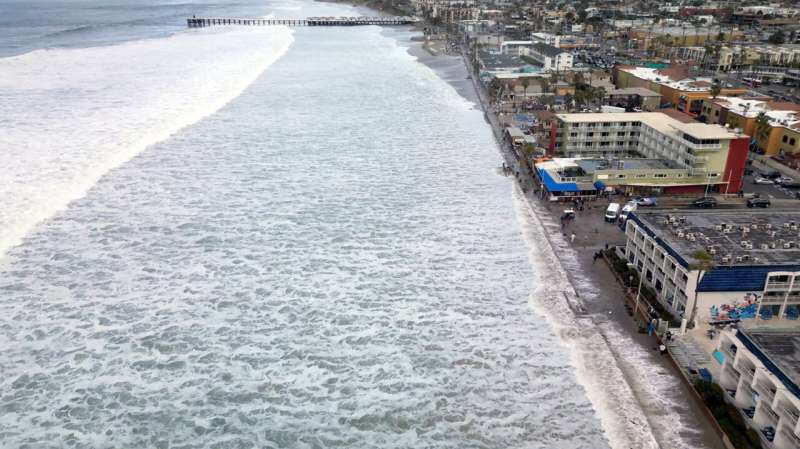
As atmospheric CO₂ levels rise, oceans absorb both heat and carbon dioxide. This leads to warmer ocean temperatures, ocean acidification, and reduced oxygen levels, all of which stress marine ecosystems. Warmer oceans also intensify extreme weather events, providing more energy to powerful storms that batter coastlines.
These changes disrupt marine food webs and alter species distributions, harming ecosystems such as coral reefs, mangroves, seagrass beds, and kelp forests. Coastal infrastructure, including ports and harbors, becomes more vulnerable to flooding and storm damage.
The study highlights that these impacts are not theoretical or distant — they are already occurring and accelerating.
Breaking Down the Economic Damages
To capture the full picture, the researchers categorized ocean-related damages into three major groups.
Market damages represent the largest share. These include losses from reduced fisheries revenue, disruptions to trade, and damage to coastal infrastructure. By the year 2100, these market losses alone are projected to reach $1.66 trillion annually on a global scale.
Non-market use damages include impacts that affect people directly but are not traded in markets. One major example is nutrition. As fish stocks decline or shift, communities that depend on seafood face reduced access to essential nutrients such as protein, calcium, iron, and omega-3 fatty acids. These losses can increase disease risk and lead to additional deaths. The study estimates these non-market use damages at $182 billion per year by 2100.
Non-use or existence values capture the inherent value people place on healthy oceans and biodiversity, even if they never directly use those ecosystems. This includes the satisfaction people derive from knowing coral reefs or mangrove forests continue to exist. Losses in this category are projected to reach $224 billion annually.
Importantly, the researchers emphasize that these categories are not interchangeable. A dollar of lost fisheries income is not the same as a dollar of lost cultural or ecological value, and losses in one area cannot fully compensate for losses in another.
The Global Scale of the Problem
To understand the magnitude of these findings, consider current emissions. In 2024, global carbon dioxide emissions were estimated at 41.6 billion tons. Applying the newly calculated ocean-related damages suggests that nearly $2 trillion in ocean damage is associated with just one year of global emissions — costs that are currently missing from standard climate estimates.
These damages are also unevenly distributed. Small island nations and coastal economies face disproportionately high impacts due to their reliance on fisheries and marine ecosystems for food, livelihoods, and protection from storms. For these regions, ocean degradation directly translates into health risks, economic instability, and cultural loss.
Why This Matters for Policy and Business
The social cost of carbon is a foundational tool for cost-benefit analysis, which governments use when designing environmental regulations and climate policies. It is also increasingly used by private companies for risk management and financial planning.
By revealing that the economic harm of emissions has been substantially underestimated, this study strengthens the case for more aggressive climate action. Higher damage estimates imply that investments in emissions reduction, renewable energy, and ecosystem protection deliver greater benefits than previously assumed.
For businesses, the findings underscore that carbon emissions carry real societal costs that extend beyond traditional balance sheets — especially when ocean impacts are taken into account.
Expanding Awareness of the Ocean’s Economic Role
Beyond policy implications, the study highlights how deeply human societies depend on the ocean. Oceans support global trade, provide food and nutrition, regulate climate, and offer recreational and cultural benefits. Yet their role in economic systems has often been treated as secondary.
By introducing the blue social cost of carbon, the researchers provide a framework that recognizes the ocean as a central pillar of global well-being — not an afterthought.
The study itself was made possible through collaboration across disciplines, involving experts in fisheries science, coral reef ecology, mangrove research, biological oceanography, and climate economics. This interdisciplinary approach reflects the complex and interconnected nature of ocean systems.
Looking Ahead
As climate change accelerates, ignoring ocean impacts is no longer an option. This research makes clear that failing to account for ocean damage leads to systematic underestimation of climate harm, distorting policy decisions and delaying meaningful action.
By placing a clearer economic value on ocean health, the study aims to help policymakers, industries, and societies better understand what is truly at stake when carbon dioxide is released into the atmosphere.
Research paper:
https://doi.org/10.1038/s41558-025-02533-5