A New Beetle Species Named After Gerald Durrell Honors a Giant of Wildlife Conservation
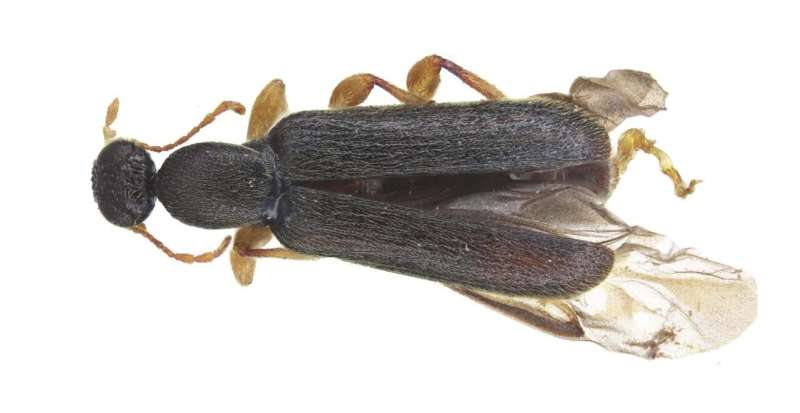
A newly identified beetle species from Madagascar has been named Macratria durrelli, paying tribute to the legendary British naturalist, author, and conservation pioneer Gerald Durrell. The naming is more than a scientific formality—it reflects the deep personal and professional influence Durrell had on generations of scientists and conservationists around the world.
The species was described by Dmitry Telnov, a museum scientist and beetle specialist whose own journey into biology was shaped by reading Durrell’s books while growing up behind the Iron Curtain. The discovery connects taxonomy, conservation history, and personal inspiration in a way that is both scientifically important and culturally meaningful.
The Beetle and Its Discovery in Madagascar
Macratria durrelli was discovered in Madagascar, one of the world’s most biologically diverse regions and a place closely tied to Gerald Durrell’s conservation legacy. Madagascar is famous for its high level of endemism, meaning many species found there exist nowhere else on Earth. New species discoveries on the island are common, but each one adds critical knowledge about ecosystems that are under increasing threat from habitat loss and climate change.
The beetle belongs to the genus Macratria, a large and globally distributed group of beetles within the family Anthicidae, commonly known as antlike flower beetles. Members of this genus are found on every continent except Antarctica, with the greatest diversity in tropical and subtropical regions.
At present, the genus contains more than 320 known species, and remarkably, Dmitry Telnov himself has described nearly half of them, formally naming over 150 species during his career. The discovery of Macratria durrelli is part of a broader scientific effort to document Madagascan beetle fauna, many elements of which remain poorly studied.
Why the Name Gerald Durrell Matters
The decision to name the species after Gerald Durrell was deeply intentional. Durrell was not only a celebrated author but also one of the earliest voices to argue that zoos should exist primarily for conservation, not entertainment. His ideas helped reshape modern wildlife preservation practices.
Durrell worked extensively in Madagascar, and it was during his time there that he became acutely aware of how quickly species were disappearing. This realization played a major role in shaping his later conservation philosophy and institutional work.
Naming a Madagascan beetle after him is especially fitting, as it symbolically links Durrell’s early warnings about biodiversity loss with the ongoing scientific work needed to understand and protect fragile ecosystems.
The timing also carries significance. The beetle was named in a year marking 100 years since Gerald Durrell’s birth, making it a centenary tribute to his enduring impact on conservation science.
Dmitry Telnov’s Personal Connection to Durrell
Dmitry Telnov grew up in Latvia during the Soviet era, when access to Western books and scientific literature was severely restricted. Travel outside the Soviet Union was prohibited, and foreign publications were often censored or banned.
Despite these barriers, some of Gerald Durrell’s books were translated into Russian and became available in libraries and bookstores. For many young readers, including Telnov, these books offered a rare window into the wider natural world.
Durrell’s writing stood out because it blended humor, adventure, and science, making wildlife exploration feel accessible and exciting. His stories about expeditions to West Africa, South America, and other remote regions inspired Telnov to pursue entomology and eventually specialize in beetles.
While Telnov was already collecting insects locally as a teenager, Durrell’s work expanded his ambitions beyond local fields and forests to the tropics. After the collapse of the Soviet Union in the 1990s, Telnov was finally able to travel freely and fulfill his dream of studying tropical insects firsthand.
What Are Antlike Flower Beetles?
The beetles in the family Anthicidae are commonly referred to as antlike flower beetles because of their appearance and behavior. Many species resemble ants in size, shape, and movement, often holding their heads forward and actively probing their surroundings with antennae.
These beetles are typically found in warm environments and are often seen on flowers, leaf litter, or sandy ground. While they may look inconspicuous, they play important roles in ecosystems, including pollination and nutrient cycling.
The genus Macratria is particularly diverse and taxonomically complex, making it an important focus for specialists like Telnov. Each newly described species helps scientists better understand evolutionary relationships, geographic distribution, and ecological roles within this group.
Gerald Durrell’s Life and Lasting Legacy
Gerald Durrell was born in India in 1925 and spent much of his childhood on the Greek island of Corfu, where his fascination with wildlife began. As a child, he collected animals ranging from insects to reptiles, often keeping them in makeshift enclosures at home.
These early experiences later formed the basis of his most famous book, My Family and Other Animals, which introduced millions of readers to his unique blend of natural history and humor.
After returning to Britain during the Second World War, Durrell worked as a keeper at Whipsnade Zoo before embarking on his first animal-collecting expedition to West Africa at the age of 21. To fund his travels, he began writing about his experiences, unknowingly launching a highly successful literary career.
The popularity of his books eventually allowed him to establish his own zoo in Jersey, in the Channel Islands. This institution later became the Jersey Wildlife Preservation Trust, now known as the Durrell Wildlife Conservation Trust.
Durrell was among the first to argue that zoos should focus on breeding endangered species and reintroducing them into the wild, a philosophy that is now central to modern conservation biology.
He passed away on 30 January 1995, and his memorial at the Natural History Museum was attended by prominent figures, including Sir David Attenborough, highlighting the respect he commanded within the scientific and conservation communities.
Why Naming Species After People Matters
Naming new species after influential individuals is a long-standing tradition in taxonomy. It serves as both recognition and remembrance, ensuring that contributions to science and conservation are permanently recorded in biological nomenclature.
Gerald Durrell already has several species named in his honor, reflecting his global influence. Macratria durrelli now joins that list, reinforcing the idea that conservation is not just about protecting charismatic animals, but also about understanding and safeguarding lesser-known species like insects.
Insects make up the vast majority of Earth’s biodiversity, yet they are often overlooked in conservation discussions. Discoveries like this highlight why continued taxonomic research is essential.
Research Reference
Dmitry Telnov, Anthicidae (Coleoptera) of Madagascar: The Faunal Composition, New Descriptions, Rediscoveries, and an Annotated Checklist, Annales Zoologici (2025).
https://doi.org/10.3161/00034541anz2025.75.3.003