A Newly Reconstructed Homo erectus Face Reveals Fresh Clues About Early Human Migrations
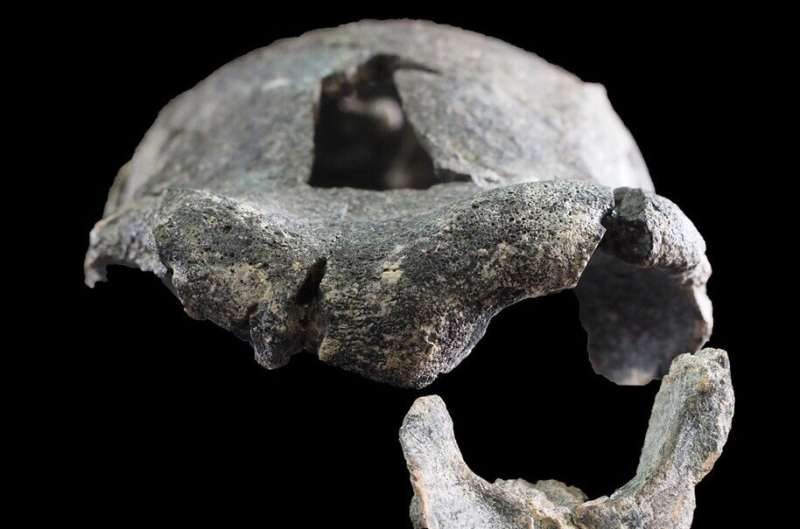
Scientists studying human evolution have unveiled a remarkable new reconstruction of an ancient human ancestor’s face, and it is reshaping how researchers think about the origins and early movements of Homo erectus, one of the most important species in human history. The fossil, known as DAN5, comes from Ethiopia and dates back roughly 1.6 to 1.5 million years, a critical period when early humans were beginning to spread across Africa and beyond.
The study, led by paleoanthropologist Dr. Karen L. Baab of Midwestern University, brings together cutting-edge imaging technology and decades of fieldwork to present the most complete hominin cranium from this time period in the Horn of Africa. The findings were published in Nature Communications and suggest that early Homo erectus populations were far more diverse than previously assumed.
The DAN5 Fossil and Where It Was Found
The fossil comes from Gona, a well-known paleoanthropological site in the Afar region of Ethiopia. Gona is extraordinary because it preserves evidence of human evolution stretching back more than 6.3 million years, along with stone tools covering the last 2.6 million years of technological development.
DAN5 was discovered during fieldwork conducted in 2000 as part of the Gona Paleoanthropological Research Project, co-directed by Dr. Sileshi Semaw and Dr. Michael Rogers. The fossil belongs to a single individual and includes a braincase, fragments of the face, and several teeth. The braincase itself was first described in 2020, but until now, the facial fragments had not been fully reconstructed.
What makes DAN5 especially important is its age. At 1.5 to 1.6 million years old, it dates to a time after Homo erectus had already begun migrating out of Africa, which is thought to have occurred around 1.8 million years ago.
How Scientists Reconstructed an Ancient Face
Reassembling DAN5 was no simple task. Researchers used high-resolution micro-CT scans to digitally capture the four major facial fragments recovered from the site. These scans were then transformed into 3D models, allowing scientists to virtually piece the fragments together on a computer.
The teeth were carefully fitted into the reconstructed upper jaw, and the final step involved digitally attaching the face to the already-known braincase. The entire process took about a year and went through multiple revisions to ensure anatomical accuracy.
According to the research team, the reconstruction was essentially a complex three-dimensional puzzle, made possible by detailed knowledge of how hominin faces are structured and how bones typically align.
A Surprising Mix of Ancient and Modern Traits
Once reconstructed, the DAN5 cranium revealed something unexpected. While the braincase clearly shows features typical of Homo erectus, the face and teeth appear much more primitive, resembling earlier species such as Homo habilis.
Key features of the face include:
- A flat nasal bridge
- Large molars
- Facial proportions usually associated with older hominin species
This combination of traits is known as a mosaic pattern, meaning the fossil displays a mix of ancestral and more evolved characteristics. While similar mosaics had previously been observed in early Homo erectus fossils from Eurasia, particularly the famous Dmanisi fossils from Georgia, this is the first time such a combination has been clearly documented within Africa.
What This Means for Homo erectus Origins
For many years, some researchers suggested that Homo erectus may have evolved its defining features outside Africa and then spread back into the continent. The DAN5 fossil challenges that idea.
The presence of transitional traits in an African fossil of this age strongly supports the view that Homo erectus emerged in Africa, but did so in a complex and non-linear way. Instead of a clean evolutionary shift from earlier species to a fully modern Homo erectus form, different populations appear to have retained different traits for long periods of time.
One possible explanation is that the Gona population retained features from an even earlier group that left Africa around 300,000 years earlier. Another possibility is genetic admixture between Homo erectus and earlier species such as Homo habilis, similar to how later human species interbred with Neanderthals and Denisovans.
Stone Tools and Behavior at Gona
DAN5 is also significant because of its association with stone tools. The Gona site preserves evidence of both Oldowan tools, which are simple stone flakes, and early Acheulean handaxes, which are more complex and symmetrical.
This makes DAN5 one of the earliest hominins directly associated with both tool traditions, suggesting that early Homo erectus populations were experimenting with and using multiple technologies at the same time. This challenges the idea that technological advances always followed a strict, linear progression.
Why the Gona Site Is So Important
Gona is one of the most informative sites in the world for understanding early human evolution. It has yielded:
- Some of the oldest known stone tools
- Fossils representing multiple stages of hominin evolution
- Clear evidence linking anatomy, behavior, and environment
The DAN5 reconstruction adds another crucial piece to this puzzle, showing that anatomical diversity within early Homo was likely the norm rather than the exception.
What Comes Next for Researchers
Scientists now hope to compare DAN5 with early human fossils from Europe, including those assigned to Homo erectus and Homo antecessor, which date to around 1 million years ago. These comparisons could help clarify how facial variation evolved as humans spread into new environments.
Researchers also emphasize the need for more fossils dated between one and two million years ago. This period remains poorly represented in the fossil record, yet it is essential for understanding how our genus emerged, diversified, and adapted.
A Bigger Picture of Human Evolution
The DAN5 fossil reinforces an increasingly clear message in paleoanthropology: human evolution was messy, diverse, and full of overlap. Early members of our genus did not all look the same, behave the same way, or evolve at the same pace.
Instead, Homo erectus appears to have been a flexible and variable species, capable of surviving across different environments while retaining a surprising mix of old and new traits. With every new discovery like DAN5, the story of our origins becomes more detailed—and more fascinating.
Research paper:
Baab, K. L. et al. (2025). New reconstruction of DAN5 cranium (Gona, Ethiopia) supports complex emergence of Homo erectus. Nature Communications. https://doi.org/10.1038/s41467-025-66381-9