Ancient Animal Fossils Reveal Million-Year-Old Environments Through Preserved Metabolic Molecules
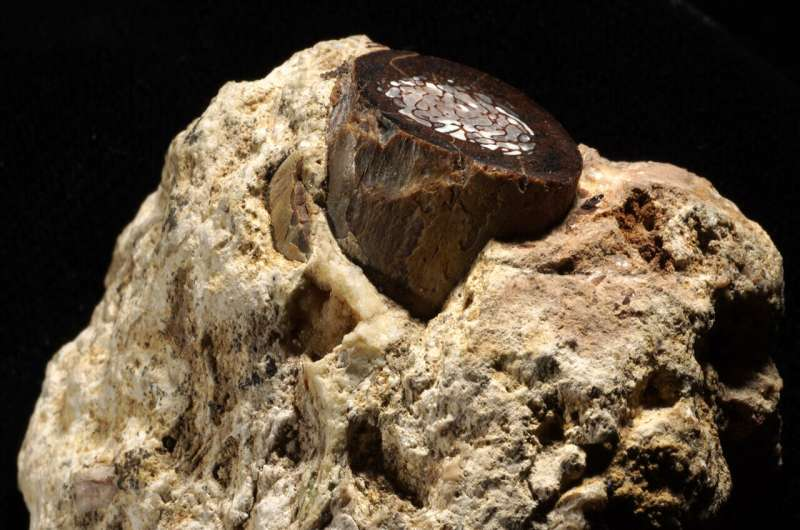
Scientists have long relied on bones, teeth, and sediments to understand life millions of years ago. Now, a new study has added an unexpected and powerful tool to that list: metabolism-related molecules preserved inside fossilized bones. For the first time, researchers have successfully analyzed metabolites from animal fossils dating back 1.3 to 3 million years, offering remarkably detailed insights into the health, diets, diseases, and environments of ancient animals—and, by extension, the landscapes early humans once inhabited.
This groundbreaking research, led by scientists at New York University and published in Nature, introduces a new field known as palaeometabolomics, which applies modern metabolomic techniques to ancient fossils. The results suggest that fossil bones are not chemically “dead” relics but instead contain rich biological information locked away for millions of years.
What Are Metabolites and Why Do They Matter?
Metabolites are small molecules produced and used during metabolism, including those involved in digestion, immune responses, vitamin processing, and energy production. In modern medicine and biology, metabolomics is widely used to study health, disease, drug responses, and environmental exposures.
Until now, scientists assumed that such fragile molecules could not survive over geological timescales. Fossil research has traditionally focused on DNA, proteins like collagen, bone structure, and isotopic signals. While ancient DNA has transformed our understanding of evolutionary relationships, it tells us relatively little about day-to-day health, diet, and environmental conditions.
This study challenges those assumptions by showing that metabolites can remain preserved within fossil bones, opening an entirely new window into the prehistoric world.
Why Bone Is a Perfect Molecular Time Capsule
The key insight behind this research lies in the biology of bone itself. Bone is a living tissue with a spongy internal structure surrounded by tiny blood vessels. During life, bones constantly exchange oxygen, nutrients, and metabolic byproducts with the bloodstream.
The researchers hypothesized that as bone forms, metabolites circulating in the blood become trapped in microscopic niches within the bone’s mineral structure. Over time, fossilization seals these molecules inside, protecting them from decay.
Previous discoveries showing that collagen can survive in fossil bones, even those of dinosaurs, encouraged the team to test whether smaller biomolecules might also persist.
Testing the Idea With Modern and Ancient Bones
To confirm their approach, the scientists first analyzed present-day mouse bones using mass spectrometry, a technique that identifies molecules by converting them into charged particles and measuring their mass. This step allowed them to establish a modern baseline.
The results were striking: nearly 2,200 distinct metabolites were detected in modern bone samples, proving that bone is densely packed with metabolic information.
With this validation in hand, the team turned to fossilized animal bones collected during earlier paleontological excavations. These fossils came from key early human sites in Tanzania, Malawi, and South Africa, regions central to understanding human evolution.
Animals Studied and Their Time Periods
The fossil samples represented animals that lived between 1.3 and 3 million years ago, during the early Pleistocene. To make comparisons more meaningful, the researchers focused on species that still have living relatives today, including:
- Rodents such as mice, ground squirrels, and gerbils
- Larger mammals including an antelope, a pig, and an elephant
Despite their great age, the fossil bones yielded thousands of metabolites, many of which overlapped with those found in modern animals. This confirmed that the molecules were biological in origin and not simply contaminants from the surrounding rock.
Health, Sex, and Disease Preserved in Fossil Chemistry
One of the most surprising findings was how much information about individual animal health could be extracted from fossil metabolites.
Many detected molecules reflected normal biological processes, such as the metabolism of amino acids, carbohydrates, vitamins, and minerals. Some metabolites were associated with estrogen-related pathways, allowing researchers to infer that certain animals were likely female.
Even more remarkable was evidence of ancient disease. In the bone of a 1.8-million-year-old ground squirrel from Olduvai Gorge in Tanzania, scientists identified a metabolite unique to Trypanosoma brucei, the parasite responsible for sleeping sickness in humans.
This parasite is transmitted by the tsetse fly, meaning the fossil not only records infection but also points to the presence of disease vectors in the ancient environment. The squirrel’s bone also showed signs of an anti-inflammatory immune response, indicating how its body reacted to the infection.
Reconstructing Ancient Diets From Bone Molecules
The study also revealed what these ancient animals were eating. While plant metabolomics is less developed than animal or human metabolomics, the researchers identified metabolites from regionally specific plants, including varieties related to aloe and asparagus.
These findings suggest that animals absorbed plant metabolites into their bloodstream after feeding, and those molecules were later preserved in bone. For example, evidence that a squirrel consumed aloe provides clues far beyond diet alone.
Aloe grows only under specific environmental conditions, including particular ranges of temperature, rainfall, soil chemistry, and vegetation cover. By identifying such plant markers, scientists can reconstruct detailed environmental parameters with surprising precision.
What These Fossils Say About Ancient Environments
By combining dietary, health, and plant metabolite data, the researchers were able to rebuild snapshots of ancient ecosystems. Their conclusions align with—and significantly refine—previous reconstructions based on geology and fossils.
At Olduvai Gorge, for instance:
- Certain layers corresponded to freshwater woodland and grassland
- Others reflected dry woodland and marsh environments
Across all studied sites in Tanzania, Malawi, and South Africa, the data consistently indicated that these regions were warmer and wetter than they are today. This has important implications for understanding how early humans and animals adapted to shifting climates.
Why This Matters for Human Evolution and Climate Science
Early humans did not evolve in isolation. Their survival depended on animal populations, plant availability, water sources, and disease pressures. By revealing the fine-scale environmental conditions surrounding early human sites, palaeometabolomics adds crucial context to archaeological and fossil discoveries.
Beyond human evolution, this approach has broader implications:
- It provides a new tool for paleoclimate reconstruction
- It complements ancient DNA and protein studies
- It allows scientists to study disease ecology deep in time
- It offers insights into how ecosystems respond to long-term climate change
A New Frontier in Fossil Research
This study demonstrates that fossil bones are not just structural remnants but chemical archives of ancient life. With further refinement, palaeometabolomics could allow scientists to study prehistoric ecosystems with a level of detail comparable to modern field ecology.
As analytical techniques improve and reference databases expand, future studies may uncover even more information hidden within fossilized remains—bringing us closer than ever to understanding how life functioned millions of years ago.
Research paper: https://www.nature.com/articles/s41586-025-09843-w