Animals From Humans to Flies Stay Balanced by Constantly Correcting Their Steps, MIT Study Finds
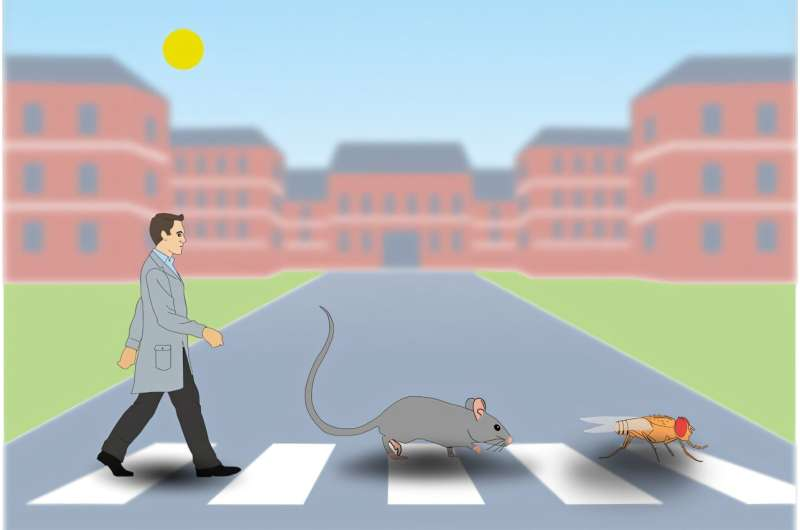
Staying upright while walking may feel effortless, but behind every step is a complex process of monitoring, prediction, and correction. A new study from researchers at the Massachusetts Institute of Technology (MIT) reveals that animals with vastly different bodies—including humans, mice, and fruit flies—use a remarkably similar strategy to maintain stability while walking. The research shows that balance during movement relies on continuously tracking body position and correcting small errors with each step, regardless of whether an animal walks on two legs, four legs, or six.
The study was led by Nidhi Seethapathi, an assistant professor in Brain and Cognitive Sciences and Electrical Engineering and Computer Science at MIT, along with Antoine De Comite, a postdoctoral researcher affiliated with the McGovern Institute for Brain Research and the K. Lisa Yang ICoN Center. Their findings were published in the journal Proceedings of the National Academy of Sciences (PNAS) in 2025.
Why Walking Stability Is More Complicated Than It Looks
Walking is not just a repetitive motion. With every step, the brain must assess whether the body is moving as expected. Even minor disturbances—a slightly uneven surface, a small slip, or a subtle shift in body weight—can push the body away from its ideal state. If these deviations are not corrected quickly, they can lead to instability or falls.
In humans, this challenge is especially pronounced because of our upright, two-legged posture, which is inherently less stable than walking on multiple legs. To compensate, the brain constantly integrates information from several sensory systems. These include visual cues, proprioception (the sense of where body parts are in space), and the vestibular system, which helps detect motion and orientation.
What remained unclear until now was whether animals that are naturally more stable—such as quadrupeds or insects—use similar error-correction mechanisms, or whether this type of control is unique to humans.
A Cross-Species Look at Walking Behavior
To answer this question, the MIT researchers took a comparative approach. Instead of conducting new experiments from scratch, they analyzed existing locomotion data collected by other laboratories. This allowed them to compare walking behavior across species in a way that would otherwise be difficult and time-consuming.
The study focused on humans, mice, and fruit flies, three species with dramatically different body plans and movement patterns. Importantly, all of the data came from animals walking in natural, everyday environments—such as freely moving around a room—rather than on treadmills or artificial terrains. This ensured that the findings reflected how animals normally move in the real world.
Even in these ordinary conditions, small missteps and balance disturbances occurred frequently. When the researchers examined how animals responded to these disturbances, a clear pattern emerged.
Defining “Error” in a Way That Works for All Animals
One of the biggest challenges of the study was defining what counts as an “error” in a way that applies equally to humans, mice, and flies. The researchers approached this by identifying an expected body state for a given walking speed. When an animal’s actual body position or motion deviated from this expected state, that deviation was treated as an error.
This error was not theoretical—it could be measured directly from the animals’ movements. By tracking body position, velocity, and foot placement step by step, the researchers found that these errors reliably predicted where the next foot would land.
In other words, across all three species, animals adjusted their foot placement in response to deviations in body state. This showed that error correction plays a central role in guiding each step, regardless of the number of legs or the overall stability of the body.
How Speed and Error Work Together
The analysis revealed that foot placement is influenced by two main factors: walking speed and body-state error.
As animals move faster, their steps naturally become longer, and their feet spend less time on the ground. This effect was consistent across humans, mice, and fruit flies. Speed primarily influenced the forward and backward length of each step.
Error correction, on the other hand, had a stronger influence on step width—how far apart the feet were placed from side to side. When an animal deviated from its expected body position, it adjusted the width of its next step to compensate and regain stability.
This dual control system suggests that the brain manages locomotion by combining predictive control (based on speed) with feedback control (based on error), a strategy that appears to be conserved across species.
Why These Similarities Matter
At first glance, it might seem surprising that fruit flies and humans share common principles for maintaining balance. But the findings suggest that evolution may have arrived at a shared solution for stable locomotion, even as body structures diversified.
By using a unified framework to analyze different species, the researchers developed a generalizable method for studying locomotion. This opens the door to similar analyses in many other animals, potentially revealing universal rules that govern how brains control movement.
Understanding these rules is especially important for neuroscience, because locomotion is one of the most fundamental behaviors controlled by the brain. It requires continuous coordination between sensory input, neural processing, and muscle activation.
Implications for Human Health and Rehabilitation
The study also has important implications for human balance and fall prevention. Falls are a major concern for older adults and for individuals with sensorimotor or neurological disorders. In many cases, the underlying problem is not muscle weakness but a failure in the brain’s ability to detect and correct errors quickly enough.
By identifying the core error-correction mechanisms that support stable walking, researchers can better understand why these systems break down in certain populations. This knowledge could help guide the development of more targeted rehabilitation strategies that focus on restoring or compensating for impaired error detection and correction.
Lessons for Robotics and Engineering
Beyond biology and medicine, the findings are also relevant for robotics and artificial intelligence. Designing robots that can walk stably on uneven terrain remains a major engineering challenge. Many current systems rely on rigid control rules that struggle to adapt to unexpected disturbances.
The error-based foot placement strategy identified in this study provides a blueprint for more adaptive and resilient walking machines. By continuously estimating body state and correcting errors in real time, robots could achieve more natural and stable movement.
A Step Toward Understanding Movement Across Species
This research highlights how studying simple, everyday behaviors—like walking across a room—can reveal deep insights into how brains work. Despite differences in size, anatomy, and environment, animals appear to rely on shared principles to solve the problem of staying upright while moving.
By bridging research across species, the study helps connect animal models to human movement and provides a stronger foundation for future work in neuroscience, rehabilitation, and bio-inspired design.
Research paper:
https://doi.org/10.1073/pnas.2413958122