Bird Researchers Are Using Virtual Reality to Bring Real Fieldwork Experience Into the Classroom
Bird fieldwork has traditionally been something only a small group of trained scientists ever get to experience. Catching a wild bird, banding it, taking samples, and studying it up close requires the right season, the right location, and years of preparation. Now, researchers at Penn State have found a way to open that experience to far more students using virtual reality, and they are doing it in a way that stays remarkably close to how real field research actually works.
At the center of this effort is a virtual reality program called VRmirova, a fully immersive learning experience that allows students to step into the world of ornithological research without leaving the classroom. Developed by scientists and immersive technology specialists at Penn State, the program recreates real bird fieldwork, from setting up mist nets to handling and studying warblers, and even following the research process into a virtual laboratory.
A Virtual Take on Real Bird Science
The idea behind VRmirova is simple but powerful. Instead of only describing fieldwork through lectures, photos, or videos, students can now experience it directly. When users put on a VR headset, they find themselves in a realistic outdoor environment filled with trees, grass, shrubs, and seasonal flowers. Birds move naturally through the space, and students can approach them just as researchers would in the field.
One of the main species featured in the simulation is the blue-winged warbler, a small but striking songbird with bluish wings and a bright yellow body. In the VR environment, students can observe these birds perched on branches, listen to their songs, and carefully interact with them. The experience mirrors real-world research techniques, including safely capturing birds, examining their physical features, and preparing them for banding.
The program does not stop at observation. Users are guided through the hands-on steps of bird research, learning how scientists measure birds, attach identification bands, and collect samples needed for deeper analysis. Every step is designed to reflect actual field protocols while remaining accessible to learners.
Who Created VRmirova and Why
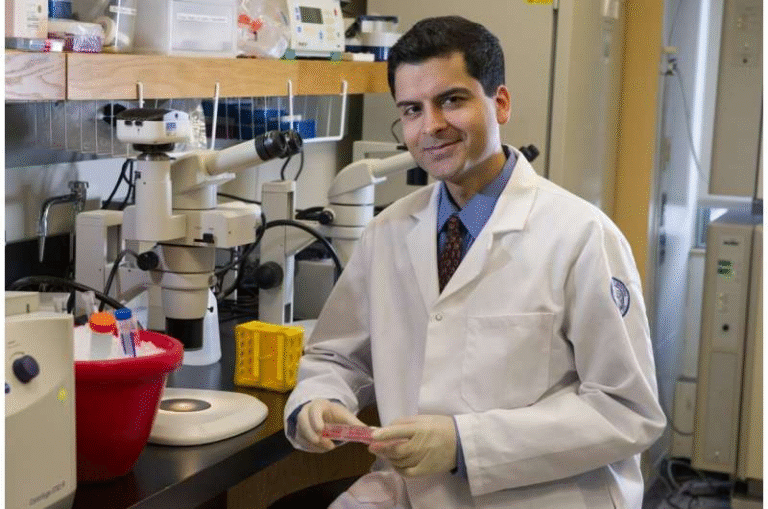
VRmirova was developed under a five-year National Science Foundation CAREER Award earned by David Toews, the Louis Martarano Career Development Professor of Biology in Penn State’s Eberly College of Science. Toews is an evolutionary biologist whose research focuses on the genetics, diet, and hybridization of North American warblers, particularly blue-winged and golden-winged warblers.
To bring the VR project to life, Toews partnered with the Penn State Center for Immersive Experiences, a group specializing in extended reality technologies. This collaboration allowed scientists and technologists to work side by side, ensuring both biological accuracy and a high-quality virtual experience.
The project itself was first sparked by Lisa Wang, an undergraduate researcher in Toews’ lab. Wang wanted to improve science outreach and make complex research processes more understandable to students and the general public. With a background in art and 3D animation, she saw VR as a way to bridge the gap between abstract scientific concepts and real-world practice. She created the original 3D bird model that became part of the grant proposal and eventually the full VR program.
Why Virtual Fieldwork Matters
Field research in ornithology often happens at very specific times of year. In Pennsylvania, migratory warblers typically arrive in mid-May, which unfortunately coincides with final exams and the end of the academic semester. As a result, many students never get the chance to participate in fieldwork, even if they are studying the topic in class.
VRmirova helps solve this problem by giving students a close approximation of fieldwork regardless of season or location. While it does not replace real outdoor research, it fills a major educational gap. Students can now visualize techniques like mist-netting and bird banding, which are difficult to understand without seeing them in action.
Another advantage of the VR environment is that students can make mistakes safely. In real fieldwork, errors can stress animals or compromise data. In VR, learners can experiment, learn from missteps, and repeat tasks until they understand them fully.
From the Field to the Lab in One Experience
One of the standout features of VRmirova is how it connects fieldwork with laboratory science. After interacting with birds in the virtual outdoor environment, students transition into a virtual lab setting. Here, they go through the steps of analyzing collected samples, including extracting and processing genetic material.
This mirrors Toews’ real research, which investigates how diet and genetics influence the coloration and hybrid traits of warblers. His team studies hybrid offspring that result from crosses between blue-winged and golden-winged warblers, examining how genes and environmental factors shape their appearance.
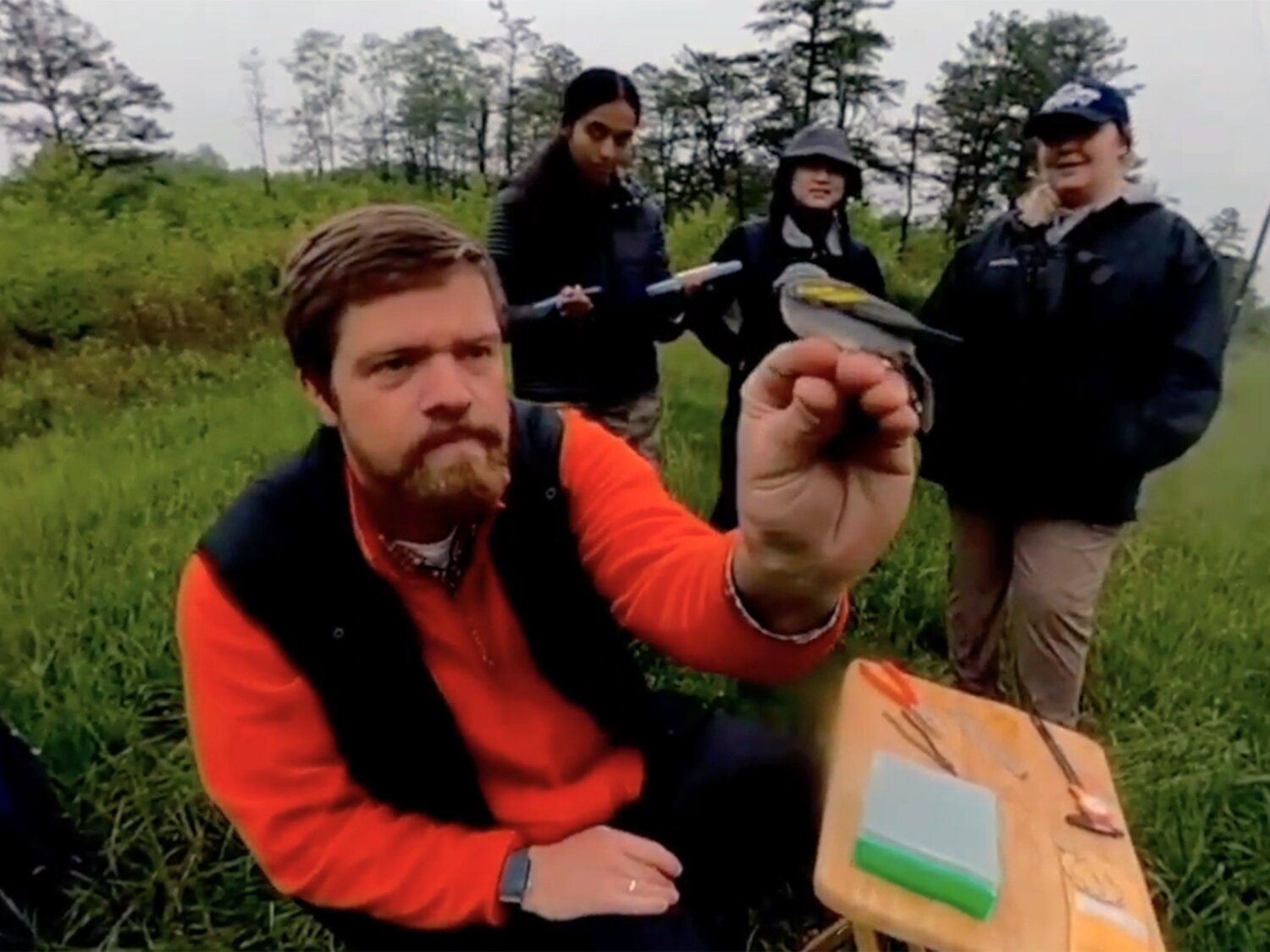
To support realism, the VR simulation includes 360-degree video footage of Toews and his team conducting real fieldwork. Students can watch scientists setting up nets, measuring birds, and banding them in actual outdoor settings. This blending of virtual interaction and real-world footage strengthens the educational value of the experience.
Designed for Students and Beyond
VRmirova is already being used in BIOL 445: Molecular Ecology, a course taught by Toews at Penn State. In the class, students work through the simulation under guidance, using it as a tool to understand evolutionary biology through genetics.
The program is designed for high school students and older learners, making it suitable for outreach events as well. Toews hopes to showcase VRmirova at events like DNA Day, organized by the National Human Genome Research Institute, to introduce younger students to genetics and evolutionary science.
Importantly, VRmirova is available for free download on SideQuest, a community platform for VR content. This makes it accessible not just to Penn State students, but to educators and learners around the world.
The Role of Technology in Modern Biology Education
Projects like VRmirova highlight how virtual reality is reshaping science education. Biology and ecology often rely on environments that are remote, seasonal, or difficult to access. VR offers a way to bring those environments into classrooms, expanding who gets to participate in hands-on learning.
At the same time, VR encourages interdisciplinary collaboration. In this project, biologists worked closely with programmers and 3D modelers, including specialists who developed accurate models of both “pure” warbler species and their hybrids. This collaboration ensures scientific integrity while pushing the boundaries of educational technology.
Looking Ahead
While VRmirova does not replace the experience of standing in a real field with birds flying overhead, it offers something equally valuable: access. It allows more students to understand how scientific research actually happens, from observation to data analysis.
For educators, it also serves as an example of what is possible when immersive technology is thoughtfully applied to teaching. As VR becomes more common in classrooms, projects like VRmirova may help shape the future of how biology, ecology, and evolution are taught.
Research reference:
https://www.science.org/doi/10.1126/science.aad8177