Bubble Net Feeding Knowledge Spreads Through Immigrant Humpback Whales, Boosting Population Recovery
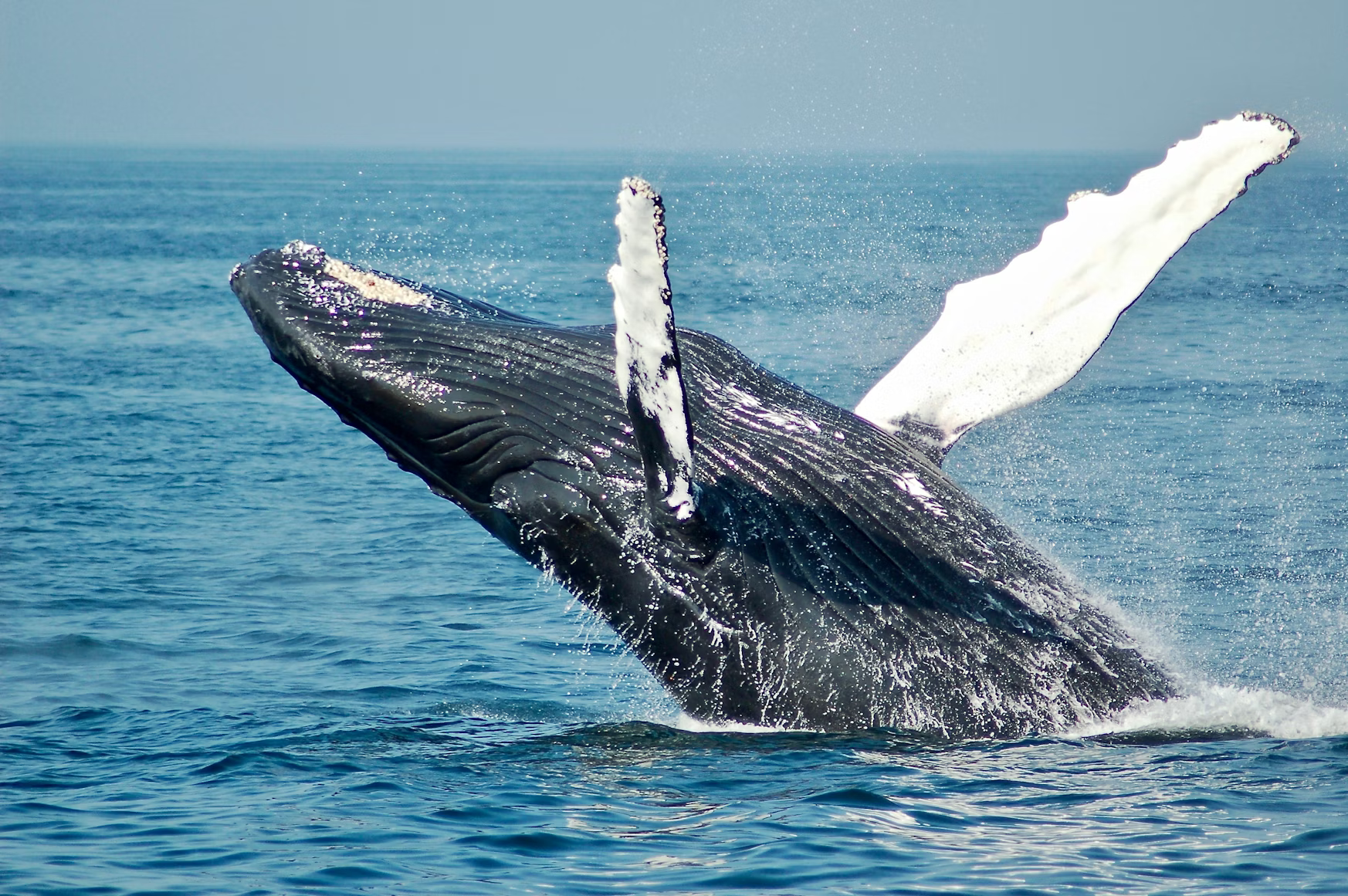
New research from the University of St Andrews has revealed that the recovery of humpback whales in the northeastern Pacific is not driven by numbers alone. Instead, it is deeply tied to the spread of learned, cooperative feeding behavior, specifically bubble-net feeding, which moves through whale populations via social connections and immigrant individuals.
The study, published in Proceedings of the Royal Society B, shows that humpback whales don’t just rebound biologically after centuries of whaling—they also recover culturally. The ability to hunt efficiently using bubble nets depends on whales learning from one another, and the research highlights how this shared knowledge can determine whether a population truly thrives.
What Bubble-Net Feeding Is and Why It Matters
Bubble-net feeding is one of the most striking examples of cooperation in the animal world. In this technique, a group of humpback whales dives beneath schools of small fish, such as herring or capelin. As they swim in coordinated circles, they release streams of bubbles that rise and form a dense, vertical “net.” This bubble barrier traps and concentrates the prey into a tight mass near the surface.
Once the fish are corralled, the whales surge upward together with their mouths wide open, engulfing thousands of fish in a single, synchronized move.
This behavior is not instinctive. It is highly social, requires precise coordination, and must be learned. Whales need to understand timing, positioning, and group roles for the technique to work. Because of this, bubble-net feeding is now recognized as a form of animal culture, rather than a simple feeding trick.
A Cultural Key to Population Recovery
The research focuses on humpback whales in the Canadian Pacific, particularly those using the Kitimat Fjord System in northern British Columbia. This region lies within the territory of the Gitga’at First Nation, an area known for its ecological richness and long-standing cultural stewardship.
While bubble-net feeding has been observed for decades in Alaskan waters, it was not always common among Canadian Pacific humpbacks. That began to change as the population recovered from the impacts of commercial whaling.
According to the study, immigrant humpback whales—individuals that moved from regions where bubble-net feeding was already established—played a critical role. These whales effectively reintroduced or spread the knowledge of bubble-net feeding to whales in Canadian waters that either had never learned the behavior or had lost it over time.
This process mirrors how new ideas or technologies spread in human societies. When individuals carrying specialized knowledge move into a new community, that knowledge can ripple outward, benefiting the entire group.
Tracking Knowledge Through Social Networks
To understand how bubble-net feeding spread, researchers from the Sea Mammal Research Unit (SMRU) at the University of St Andrews analyzed long-term social network data. This included years of photo-identification records, behavioral observations, and association patterns among individual whales.
By mapping which whales spent time together and when individuals adopted bubble-net feeding, the team was able to track how the behavior moved through the population. Their analysis showed that whales were far more likely to learn bubble-net feeding if they were socially connected to whales that already used the technique.
This finding strongly supports the idea that the behavior spreads via social learning, not random chance. Certain whales and social groups acted as key hubs, accelerating the flow of knowledge through the network.
Cooperative and Solo Bubble-Net Feeding
An important detail highlighted by the study is that bubble-net feeding exists in both cooperative and solo forms. Cooperative bubble-net feeding involves multiple whales working together, while solo bubble-net feeding allows an individual whale to perform a simplified version of the technique alone.
The research examined how both forms spread through the population and found that social learning played a role in each. However, the cooperative form is particularly dependent on strong social bonds and repeated interactions between whales.
This distinction matters because cooperative feeding can be especially efficient, giving whales a significant advantage when prey is patchy or environmental conditions change.
Why Culture Matters in Conservation
One of the most important conclusions of the study is that species recovery is not just a numbers game. Even as humpback whale populations increase, their ability to adapt depends on how cultural knowledge is distributed within the group.
If key behaviors like bubble-net feeding are lost, populations may struggle to take full advantage of available food resources. Rebuilding that lost knowledge can take decades, even if whale numbers rebound quickly.
The researchers warn that cultural loss can be just as damaging as population decline and potentially just as difficult to reverse. This has major implications for conservation and marine management.
Protecting areas where distinct learned behaviors are concentrated—such as feeding grounds where bubble-net feeding is common—could deliver conservation benefits that extend far beyond local waters.
Integrating Animal Culture Into Marine Management
As human pressures on ocean ecosystems increase, including climate change, shipping, and industrial development, the study argues for a shift in how conservation strategies are designed.
Rather than focusing solely on population size, scientists and policymakers are encouraged to consider animal culture—how knowledge spreads, where it is concentrated, and which individuals play outsized roles in maintaining it.
In the case of humpback whales, safeguarding social structures and culturally important habitats could help ensure that essential behaviors like bubble-net feeding continue to support long-term population resilience.
Additional Insight: Culture in Whales and Other Animals
Humpback whales are not the only animals known to pass down learned behaviors. Other whale species, such as orca populations, show strong cultural differences in hunting techniques, vocalizations, and prey preferences. Even birds, primates, and fish exhibit forms of social learning that shape how populations survive and adapt.
What makes humpback whales particularly fascinating is the scale and complexity of their cooperative behaviors. Bubble-net feeding demonstrates advanced coordination, communication, and learning—traits once thought to be uniquely human.
This growing body of research challenges traditional views of animal intelligence and highlights the importance of preserving not just species, but the knowledge systems they carry.
The Bigger Picture
The findings from the University of St Andrews reinforce a powerful idea: recovery from environmental damage involves more than restoring numbers. It requires rebuilding connections, behaviors, and shared knowledge.
For humpback whales in the Canadian Pacific, immigrant individuals have acted as carriers of cultural memory, helping to restore a sophisticated feeding strategy that strengthens the entire population.
As conservation science continues to evolve, studies like this remind us that protecting wildlife also means protecting the ways animals learn, cooperate, and adapt together.
Research paper:
https://doi.org/10.1098/rspb.2025.2409