Denitrification Looks Different in Rivers Versus Streams and Season Plays a Bigger Role Than Expected
Human activities add huge amounts of nitrogen to the environment every year, largely through agriculture, fertilizers, wastewater, and industrial processes. Once this excess nitrogen enters the landscape, a significant portion of it is carried by rain and runoff into streams and rivers. These waterways act as highways, transporting nitrogen downstream toward lakes, estuaries, and eventually the ocean. But they are not just passive transport systems. Rivers and streams also play an important role in removing nitrogen from the environment through a microbial process known as denitrification.
Denitrification is a series of chemical reactions carried out by microbes that convert nitrate, a common and highly mobile form of nitrogen pollution, into dinitrogen gas (N₂). This gas is released harmlessly into the atmosphere, effectively removing reactive nitrogen from aquatic ecosystems. Because excess nitrogen can cause algal blooms, oxygen depletion, and ecosystem damage, understanding how denitrification works is critical for managing water quality.
Most existing research on denitrification has focused on streams, and those studies show a wide range of rates depending on location, season, and environmental conditions. Much less is known about how denitrification works in larger rivers, even though rivers transport enormous quantities of nitrogen across landscapes. A new study led by Abagael Pruitt and colleagues set out to directly compare denitrification in a stream and a river, asking a simple but important question: Does denitrification behave differently as waterways get larger, and how does season affect this process?
Comparing a Stream and a River in Agricultural Landscapes
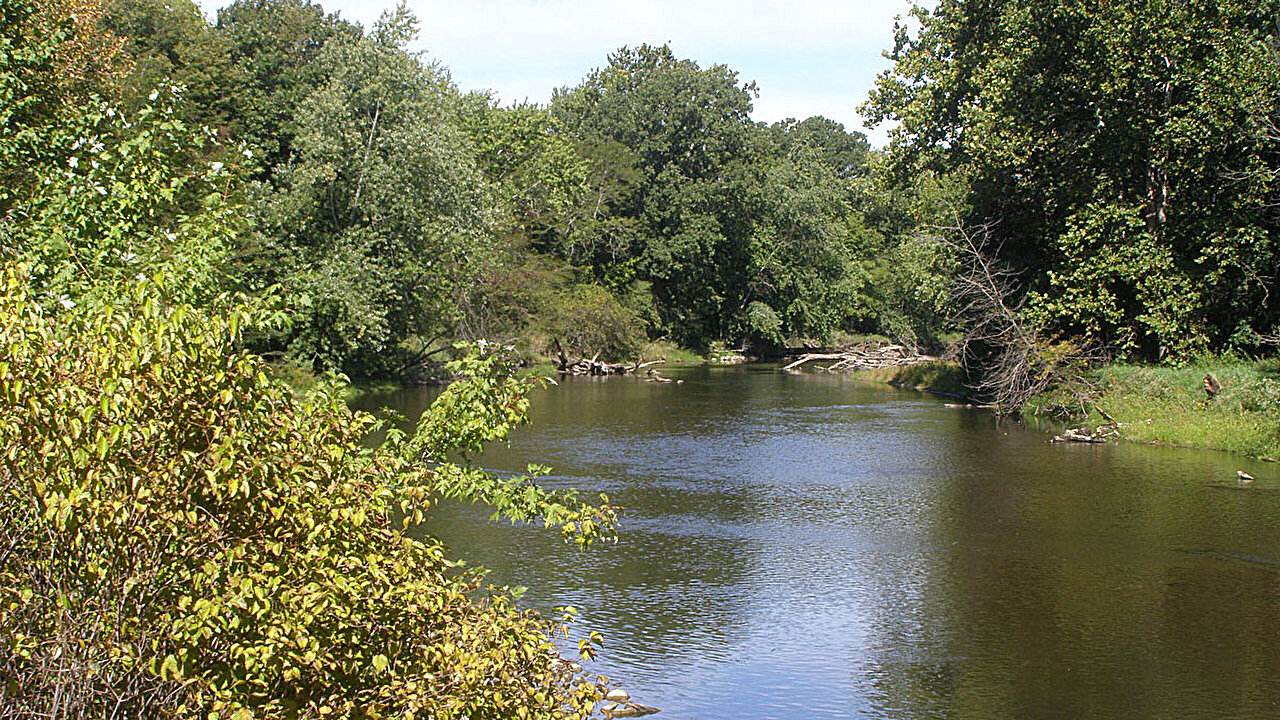
To answer this question, the researchers studied two connected waterways in Indiana: the Shatto Ditch, a small agricultural stream, and the Tippecanoe River, a much larger river that receives water from Shatto Ditch and other tributaries. Both systems drain agricultural land, making them ideal for studying nitrogen dynamics influenced by farming.
The team collected hourly water samples over continuous 36-hour periods during spring, summer, and fall. This intensive sampling allowed them to capture not only seasonal trends but also hour-to-hour changes that are often missed in shorter or less frequent sampling campaigns.
To estimate denitrification rates, the researchers used two advanced approaches. One was open-channel metabolism, a method that examines changes in dissolved gases along a stretch of river to infer biological processes. The second was a membrane inlet mass spectrometry–based model, which allows precise measurement of dissolved nitrogen gases in water. Together, these methods provided a detailed picture of how denitrification varied across space and time.
Streams Remove More Nitrogen Per Area, but Rivers Hold Their Own
One of the clearest findings of the study was that the stream consistently showed higher denitrification rates per square meter than the river, regardless of season. In simple terms, each square meter of the streambed was removing more nitrate than each square meter of the riverbed.
The researchers attribute this difference to several factors. The stream had higher nitrate concentrations, providing more fuel for denitrifying microbes. In addition, microbial activity on the streambed played a proportionally larger role in the stream than in the river, where deeper water and different flow conditions dilute the influence of the riverbed.
However, the story changes when denitrification is scaled up. When the researchers calculated denitrification rates per kilometer of channel length, the river matched or even exceeded the stream. Because rivers are wider and carry far more water, their overall nitrogen-removal capacity can rival or surpass that of smaller streams. This finding challenges the idea that streams are always the dominant sites of nitrogen removal in river networks.
Seasonal Patterns Differ Between Streams and Rivers
Seasonality turned out to be another key factor, and the patterns were not the same in the stream and the river.
In the stream, denitrification rates were highest in spring and lower in summer and fall. This pattern likely reflects agricultural activity. Spring is a time of fertilizer application and increased rainfall, which together deliver large pulses of nitrate into streams. Higher nitrate availability provides ideal conditions for denitrifying microbes to thrive.
In contrast, the river showed a different seasonal pattern. Denitrification rates were highest in the fall, followed by spring, and were very low in summer. The researchers suggest that higher rates of ecosystem respiration in the fall may stimulate microbial activity in the river, increasing denitrification. Warmer summer temperatures alone were not enough to drive high denitrification in the river, possibly due to lower nitrate availability or changes in flow and oxygen conditions.
These contrasting patterns highlight an important point: you cannot assume that streams and rivers respond to seasons in the same way, even when they are part of the same watershed.
Hourly Changes Help Explain Conflicting Past Studies
Another important observation was that nitrogen gas concentrations varied by the hour in both the stream and the river. This rapid variability suggests that denitrification can fluctuate significantly over short time scales, depending on factors like flow, temperature, and microbial activity.
This finding may help explain why previous studies have reported such a wide range of denitrification rates. Sampling at only one time of day or during a short window could easily miss periods of high or low activity, leading to inconsistent results.
Because of this, the authors recommend that future research combine open-channel methods with in situ chamber assays, allowing scientists to compare approaches and better capture the true range of denitrification rates. They also suggest that separating complete denitrification (which produces harmless N₂ gas) from incomplete denitrification (which produces nitrous oxide) could be valuable.
Why Nitrous Oxide Matters
Nitrous oxide (N₂O) is a potent greenhouse gas with a global warming potential far greater than carbon dioxide. While denitrification removes nitrate pollution, incomplete denitrification can unintentionally release N₂O into the atmosphere. Understanding when and where this happens is essential for evaluating the climate impacts of nitrogen cycling in aquatic systems.
By distinguishing between these pathways, future studies could better assess whether rivers and streams act as net climate benefits or risks under different conditions.
Understanding Denitrification in a Broader Context
Denitrification is one of the most important natural processes preventing excess nitrogen from accumulating in ecosystems. Without it, nitrate pollution would build up in rivers, lakes, and coastal waters, leading to widespread eutrophication, harmful algal blooms, and oxygen-depleted dead zones.
This study adds to a growing body of research showing that rivers are not just conduits, but active processors of nutrients. Their size, flow, and seasonal dynamics shape how effectively they remove nitrogen from the landscape. In heavily farmed regions, this role becomes even more critical.
Why This Research Matters
The findings have practical implications for water quality management and nutrient reduction strategies. Policies that focus only on streams may underestimate the contribution of rivers to nitrogen removal. At the same time, seasonal dynamics suggest that timing matters when evaluating nitrogen pollution and designing interventions.
By showing that denitrification behaves differently across waterway size and season, this research pushes scientists and policymakers to think more carefully about how nitrogen moves through river networks.
As agricultural pressures and climate variability continue to increase, understanding these processes in detail will be essential for protecting both freshwater and coastal ecosystems.
Research paper:
https://doi.org/10.1029/2025JG009044