Gene Editing Turns Goldenberry Into a Compact, Farm-Friendly Superfood Ready for Large-Scale Cultivation
Goldenberries have quietly been gaining popularity in grocery stores across the United States, and for good reason. These small, bright yellow-orange fruits have a flavor often described as a mix of pineapple and mango, along with an impressive nutritional profile that earns them a spot among so-called superfoods. However, despite rising consumer demand, goldenberries have faced a major obstacle on the farming side: the plants themselves grow tall, bushy, and unruly, making large-scale cultivation difficult and expensive.
That challenge may now be close to disappearing. Scientists at the Boyce Thompson Institute (BTI), working with collaborators, have successfully used CRISPR gene-editing technology to engineer compact goldenberry plants that are far better suited for commercial agriculture. The research demonstrates how modern plant science can rapidly transform underdeveloped crops into viable options for global food systems.
Goldenberry, scientifically known as Physalis peruviana, is native to the Andean region of South America. It has been consumed for centuries and is already an important crop in countries like Colombia, which produces more than 20,000 tons annually, with around 40% exported to international markets. Even so, the plant has undergone very little domestication compared to major crops like wheat, rice, or corn. As a result, farmers have been stuck dealing with plants that grow too tall, require extensive staking or trellising, and are difficult to manage during harvest.
The BTI research team focused on solving this exact problem by reshaping the plant’s physical structure. Using insights gained from better-studied relatives in the Solanaceae family—such as tomatoes and groundcherries—they targeted a gene known as ERECTA, which plays a key role in controlling stem length and plant height. This gene has already been shown to influence growth habits in other crops.
One of the complexities of goldenberry is that it is tetraploid, meaning it contains four sets of chromosomes instead of the usual two. This makes genetic modification more challenging, because multiple copies of a gene may need to be edited to see a clear effect. In this case, the researchers needed to precisely edit two separate copies of the ERECTA gene to achieve consistent results.
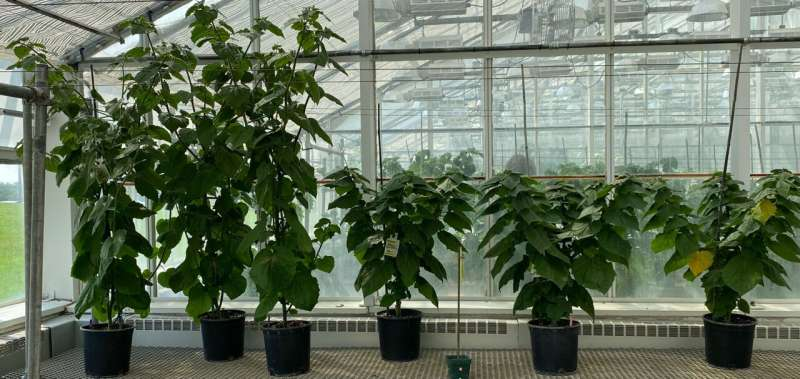
Using CRISPR and plant transformation techniques developed at BTI, the team successfully generated goldenberry plants with these targeted edits. The result was a new group of plants known as “Erecta” lines, which show a significantly more compact growth habit compared to wild-type plants. These edited goldenberries are about 35% shorter overall, with internodes— the spaces between leaves—reduced by roughly 50%.
Importantly, the compact growth does not come at the expense of fruit quality. The edited plants produce fruits that average 3.3 grams, which is only slightly smaller than goldenberries currently sold in U.S. markets. After the initial gene edits, the researchers crossed plants to select lines with preferred flavor profiles, ensuring that taste remained a priority alongside agricultural practicality.
From a farming perspective, the benefits are substantial. Shorter plants can be grown at higher densities, require less structural support, and are easier to maintain and harvest. This dramatically reduces labor and infrastructure costs, which have historically limited goldenberry production to small-scale or niche operations.
The regulatory outlook is also promising. The research team has already received USDA clearance, confirming that the edited plants do not fall under plant pest regulations. This determination is particularly important because the plants do not contain foreign DNA, placing them in a different regulatory category than traditional genetically modified organisms. The next step is seeking FDA approval, which would allow growers to move forward with commercial production and bring these improved goldenberries to market without delay.
Beyond goldenberries themselves, this research highlights a much larger issue in global agriculture. Today’s food system relies heavily on a small number of crops, creating vulnerability to climate change, pests, and disease. Meanwhile, hundreds of nutritious minor crops remain underutilized because they lack the breeding investment needed to make them commercially viable.
This study shows how gene editing can complement traditional plant breeding, especially for crops that have not benefited from decades of agricultural research. By borrowing genetic insights from well-studied species and applying precise edits, scientists can accelerate the domestication process in a matter of years rather than decades.
The BTI team is already looking ahead to further improvements in goldenberry cultivation. Potential next steps include increasing fruit size, removing sticky acylsugars that coat the fruit surface and complicate handling, and developing plants with synchronized ripening to allow for more efficient harvesting. These traits could further strengthen goldenberry’s position as a viable global crop.
The approach does not stop with goldenberries. Similar strategies could be applied to other underdeveloped but nutritionally valuable crops, including passion fruit, groundcherry, and additional members of the Solanaceae family. Each success expands dietary diversity and opens new opportunities for farmers, particularly in regions where these crops are already culturally and economically important.
Understanding CRISPR’s Role in Modern Crop Development
CRISPR technology has become one of the most powerful tools in modern biology because it allows scientists to make highly precise changes to an organism’s DNA. Unlike older genetic modification methods, CRISPR can target specific genes without introducing foreign genetic material. In agriculture, this precision makes it especially useful for fine-tuning traits such as plant height, disease resistance, and yield.
In the case of goldenberries, CRISPR acted as a shortcut for domestication. Traits that might have taken generations to achieve through selective breeding were introduced quickly and accurately. This does not replace traditional breeding but instead works alongside it, allowing researchers to combine genetic improvements with flavor, texture, and other desirable characteristics.
Why Compact Plants Matter for Farming
Plant architecture plays a huge role in determining whether a crop is economically viable. Compact plants allow for mechanized farming, efficient use of land, and reduced labor inputs. Crops like tomatoes underwent similar transformations during their domestication history, shifting from sprawling wild plants to compact varieties designed for modern agriculture.
By following a comparable path, goldenberries now have a realistic chance of transitioning from a specialty fruit to a mainstream agricultural product.
As global demand for nutritious, diverse foods continues to grow, innovations like this highlight how plant science-based solutions can strengthen food security while expanding consumer choices. Goldenberries may soon move from being a novelty item on store shelves to a widely grown crop, thanks to a few carefully edited genes.
Research paper: Engineering compact Physalis peruviana (goldenberry) to promote its potential as a global crop, PLANTS, PEOPLE, PLANET (2025). DOI: https://doi.org/10.1002/ppp3.70140