How Cowbirds Create Their Signature Watery Songs Using a Remarkably Complex Vocal System
Cowbirds may not be the first birds that come to mind when thinking about musical complexity, but new research shows they deserve serious attention. Among songbirds, cowbirds stand out for a very unusual reason: their songs sound liquid. To many listeners, the notes resemble water droplets hitting a surface, producing a sharp initial sound followed by a soft, fading ripple. Scientists have now uncovered how cowbirds manage to create this effect, and the answer turns out to be far more intricate than previously imagined.
Researchers led by Franz Goller, a biologist from the University of Utah, have shown that cowbirds rely on a rare combination of dual sound production, precise airflow control, and unusual breathing behavior to generate their signature watery timbre. The findings were published in Current Biology and provide new insight into how birds — and potentially humans — shape the texture of sound, not just its pitch.
What Makes Cowbird Songs Sound Like Water?
The defining feature of cowbird song is its timbre, a musical term that describes the quality or color of a sound rather than how high or low it is. Timbre is why two instruments can play the same note at the same volume and still sound completely different.
In cowbirds, timbre takes on a particularly striking form. Their songs often begin with a rapid, sharp burst of sound, followed milliseconds later by a longer, fading resonance. To human ears, this closely mimics the sound of a droplet striking water, followed by ripples spreading outward.
Scientists had noticed this watery quality for years, but understanding how it was produced required a deeper look at the bird’s vocal anatomy and motor control.
The Syrinx: A Double Voice Box
Unlike humans, birds do not produce sound with a larynx. Instead, they use a specialized vocal organ called the syrinx, located where the trachea splits into the lungs. One of the most remarkable features of the syrinx is that it has two independent sound sources — one on the left and one on the right.
Many songbirds use both sides of the syrinx, but cowbirds take this ability to an extreme. The research team discovered that cowbirds rapidly alternate between the left and right sides of the syrinx while singing. Each side produces slightly different frequencies, and switching between them creates subtle acoustic variations that our brains interpret as liquid-like sound.
Adding to this complexity is the fact that the left and right vocal folds are not the same size. The left pair is significantly larger than the right, which means each side naturally produces different sound characteristics. The watery notes heard at the beginning of cowbird songs are made up of precise alternations between these two sides.
Breathing in a Way Most Birds Don’t
The syrinx alone does not explain everything. One of the most surprising discoveries in the study involved how cowbirds breathe while singing.
Most birds produce sound continuously as they exhale. Cowbirds, however, sometimes do something very unusual: they hold their breath while building up air pressure in the syrinx without producing any sound at all. This behavior is considered highly atypical among birds.
Once sufficient pressure is built, the cowbird briefly closes the syrinx, then releases the air in a sudden burst. This creates what scientists call a rapid attack, meaning the sound starts extremely quickly and forcefully. That fast onset is what mimics the moment a water droplet hits the surface.
After the initial burst, airflow and sound decay more slowly, creating the auditory equivalent of a ripple spreading across water.
Two Sounds, One Liquid Illusion
The watery effect actually unfolds in two distinct stages, much like real water droplets. First comes the sharp impact sound, followed about 50 milliseconds later by a secondary sound that resembles the implosion of an air bubble underwater. In nature, droplets of different sizes produce different tones when they hit water. Cowbirds recreate this effect by alternating between their two sound sources, each generating slightly different frequencies.
The result is a highly convincing acoustic illusion that sounds organic and fluid, even though it is produced entirely through motor control and anatomy, not environmental interaction.
Testing Vocal Learning in Other Birds
To confirm that this vocal behavior was learned and not purely anatomical, the researchers conducted an experiment involving European starlings. These starlings were raised in captivity alongside cowbirds and exposed to their songs from a young age.
The results were striking. The starlings didn’t just imitate the sound of cowbird songs — they also learned the same breathing patterns and syrinx control used to create the watery timbre. This demonstrated that the effect is not exclusive to cowbird anatomy but can be learned through auditory experience.
This finding reinforces the idea that birds are highly sophisticated vocal learners, similar in many ways to humans learning speech.
Why Timbre Matters More Than We Thought
Much of what scientists know about sound production has focused on pitch and volume. Timbre, especially how it is generated at the sound source itself, has received far less attention.
This study shows that timbre can be shaped by complex interactions between respiration, muscle control, and multiple sound generators. In cowbirds, the watery quality is not produced by filtering sound after it is made, but by carefully shaping how the sound is created in the first place.
This insight has broader implications for understanding human speech, musical expression, and even artificial sound synthesis. If animals can finely tune timbre through motor control, similar principles may apply to human vocal communication in ways scientists are only beginning to understand.
A Closer Look at Brown-Headed Cowbirds
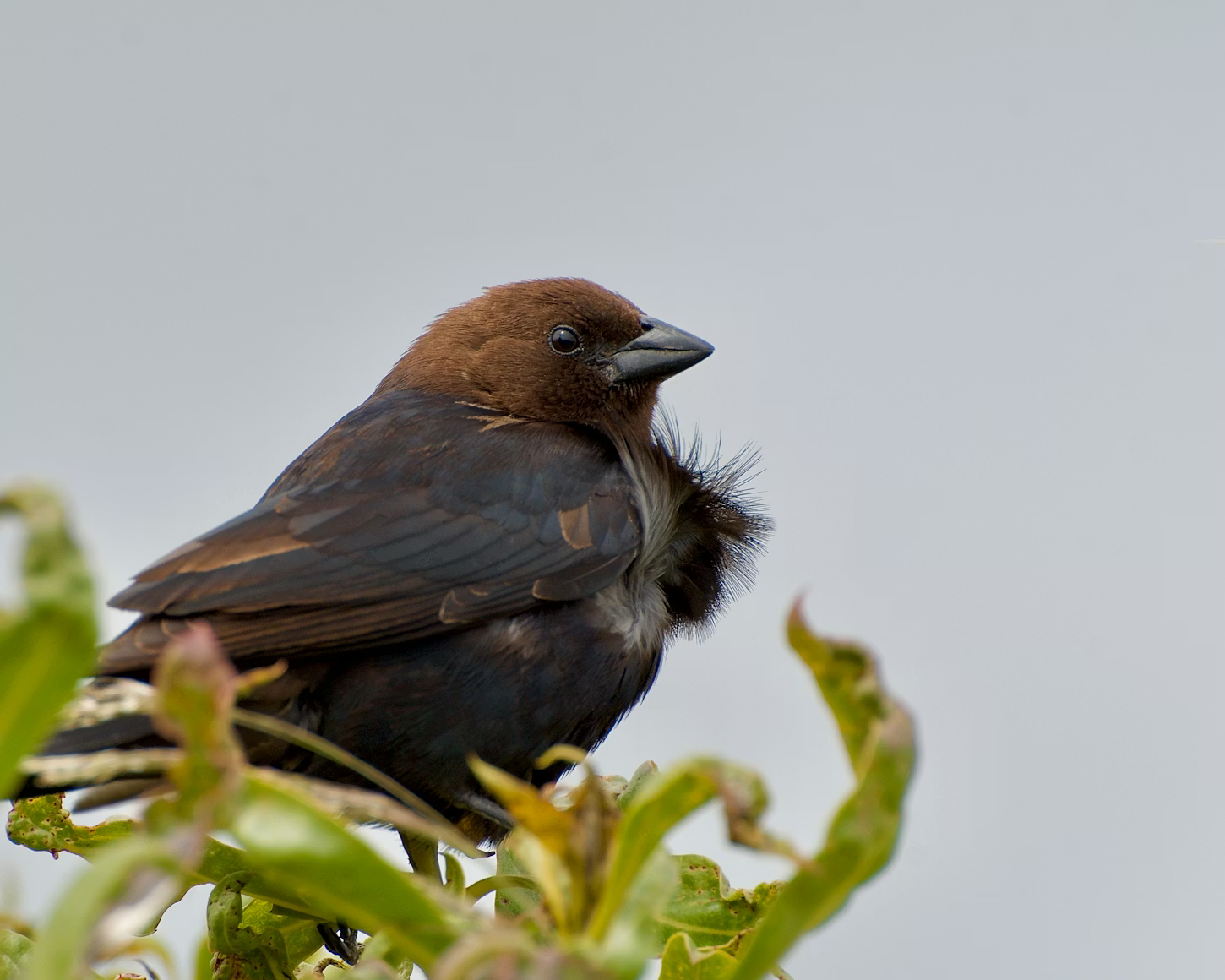
The research focused primarily on brown-headed cowbirds (Molothrus ater), one of six species in the cowbird genus and the species most commonly found in Utah. Cowbirds belong to the Icteridae family, which also includes blackbirds and grackles — several of which are known for producing unusual and complex vocal sounds.
Cowbirds are already famous for their brood parasitism, laying eggs in the nests of other species. This study adds another layer to their reputation, revealing them as some of the most technically advanced sound producers in the bird world.
Why This Research Is Important
Beyond explaining a curious sound, this research highlights how animals use fine motor control to shape acoustic signals. It challenges the idea that vocal complexity is limited by anatomy alone and shows that learning, coordination, and timing play crucial roles.
Birds, it turns out, are not just singing — they are engineering sound with remarkable precision.
As scientists continue to study vocal systems across species, cowbirds now stand as a powerful example of how nature can achieve extraordinary effects using surprisingly small and delicate biological tools.
Research paper:
https://www.sciencedirect.com/science/article/pii/S0960982225013922