How Scientists Captured RNA Polymerase II’s Real-Time Movements and Uncovered Its Gear-Like Control System
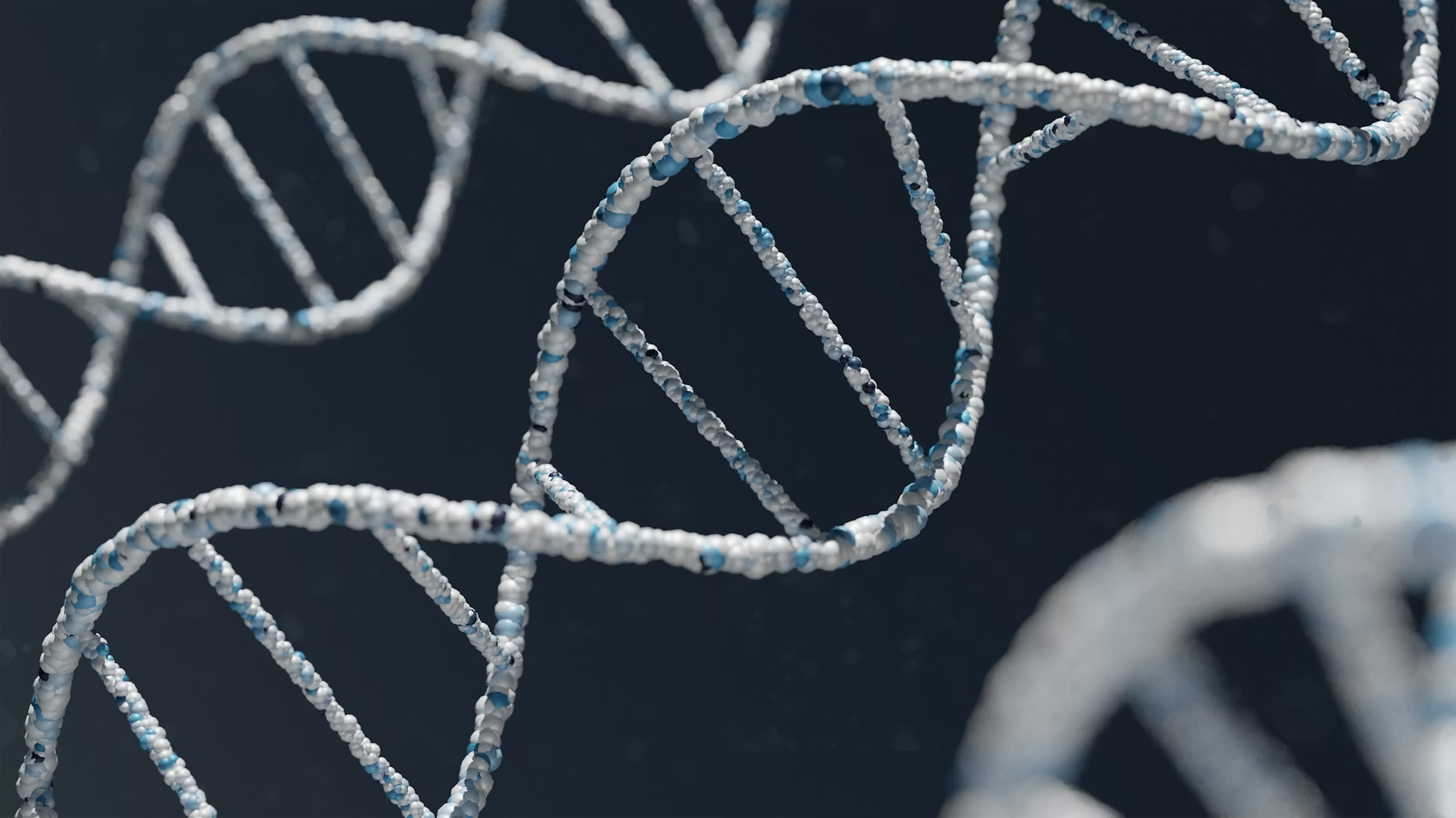
DNA carries the instructions for life, but it’s RNA polymerase II, often shortened to Pol II, that actually reads those instructions and converts them into RNA inside eukaryotic cells. That RNA eventually becomes proteins, making Pol II one of the most essential enzymes in biology. For years, researchers knew that Pol II does not simply glide smoothly along DNA. Instead, it slows down, pauses, speeds up, and shifts modes, and any disruptions in that behavior have been associated with cancer, aging, and other serious conditions.
The problem was that scientists had never been able to observe Pol II in mammals with enough precision to understand how it moves and what controls each change in speed. Previous tools either averaged data from many molecules together—blurring crucial details—or worked only in simple organisms like yeast, which do not have the same regulatory complexity as mammals.
A new study finally closes that gap. A research team built a fully reconstituted mammalian transcription system using purified proteins and paired it with advanced single-molecule imaging and computational modeling. For the first time, they could watch individual Pol II enzymes transcribing DNA in real time and track every pause, acceleration, and regulatory interaction. The results give one of the clearest pictures ever of how mammalian transcription actually works.
The Core Discovery: Pol II Operates Like a Multi-Gear Machine
The researchers found that Pol II behaves almost like a small engine with distinct gears, each controlled by different regulatory proteins. Instead of moving at one steady pace, it transitions between modes depending on which molecules attach to it at various stages of transcription.
One of the main regulatory proteins, P-TEFb, acts as a master switch. It modifies Pol II and a partner protein called DSIF through phosphorylation, enabling Pol II to leave its initial paused state near the start of a gene. This early pausing step is extremely important in human cells, and improper control at this stage has been linked to diseases including cancer.
DSIF turned out to be more complex than scientists previously understood. Depending on how it is modified, DSIF can either help Pol II move forward or hold it in place. This dual functionality was not fully appreciated before and represents one of the study’s key insights.
Next, the researchers identified PAF1C as Pol II’s main accelerator. When this protein complex binds, Pol II transitions into rapid transcription. But acceleration alone isn’t enough—SPT6 attaches to stabilize the interaction and ensure the system doesn’t fall apart mid-transcription.
A final factor, RTF1, binds after PAF1C and provides the push needed to shift Pol II into high gear. Notably, this step depends strictly on PAF1C but does not require DSIF, revealing a functional relationship among these factors in mammals that hasn’t been observed in yeast. This difference highlights the evolutionary complexity of transcription regulation in higher organisms.
Through real-time visualization, the scientists were able to measure not just movement, but binding kinetics—how long each regulatory protein stayed attached and when they joined or detached from the transcription complex.
Why the Study Matters for Human Health
When Pol II moves too quickly, RNA molecules may not fold correctly or connect with the right processing factors. When it moves too slowly, critical cellular timing falls apart. In both cases, cells can begin to malfunction. These disruptions have been associated with aging, but also with tumor formation, because transcription plays a central role in controlling cell growth and identity.
One of the regulatory proteins highlighted in the study, P-TEFb, is already of major interest to cancer researchers. It has been explored as a drug target for leukemia and certain solid tumors, but creating effective inhibitors has been challenging due to side effects. By showing exactly how P-TEFb activates Pol II and interacts with DSIF, the study provides clearer information that could support the development of more precise, less toxic therapies.
More broadly, having a detailed, molecular-level understanding of Pol II’s kinetics may help scientists interpret various diseases that involve disrupted gene expression, even those not directly tied to transcription errors. Many medical conditions stem from misregulated proteins, and transcription is the starting point for the production of every protein in the body.
Why Single-Molecule Visualization Is Such a Breakthrough
Until now, researchers studying mammalian transcription had to rely on two imperfect tools:
- Bulk biochemical assays, which average behavior across thousands of enzymes.
- Single-molecule studies in yeast, which cannot capture the complexity of mammalian regulatory networks.
This new platform bypasses both issues by literally watching each Pol II molecule in motion. By reconstructing the whole system from purified mammalian proteins, the team ensured they were observing interactions that closely mirror what happens inside actual human cells.
The computational component is equally important. It allowed the researchers to map exactly when Pol II changed gears and how those changes correlated with the binding or unbinding of regulatory proteins. This level of integration—biochemistry, imaging, and computational modeling—has not been achieved in previous transcription studies.
The Platform Itself May Shape Future Research
Perhaps the most exciting aspect is that the researchers now have a tool that can be extended further. They have already begun working on integrating nucleosomes, the structural protein units that package DNA in eukaryotic cells. In real cells, Pol II must navigate tightly wrapped DNA, and seeing how it handles that obstacle is one of the next big challenges.
The software developed for tracking Pol II movements could also have applications well beyond transcription. Anything involving motion through space, varying speeds, and dynamic binding of regulatory factors could, in theory, use similar computational methods.
The project itself was built through extensive collaboration across research groups and even countries, showing how cross-disciplinary teamwork can push scientific tools to new levels.
Additional Background: How Transcription Works in Cells
To place this study in context, it helps to understand the three main stages of transcription:
1. Initiation
Pol II binds to DNA at the promoter region. In mammals, Pol II typically pauses shortly after starting, waiting for activation signals.
2. Elongation
Once released from the paused state, Pol II moves along the gene and synthesizes RNA. This is the phase where the new study provides unprecedented insights, especially into how speed and stability are regulated.
3. Termination
As Pol II reaches the end of a gene, it slows again and releases the completed RNA molecule. Improper termination can also lead to cellular problems.
Transcription isn’t just about copying DNA—it’s about doing it with the right timing, speed, and coordination. That’s what makes kinetic studies like this so valuable.
Additional Background: Why Mammalian Systems Are Much More Complex Than Yeast
Yeast are incredibly useful research organisms, but mammals have evolved more elaborate layers of transcription control. These include:
- More regulatory proteins, many of which interact in combinatorial ways.
- Longer genes, making timing and speed control more important.
- Tighter chromatin packaging, requiring Pol II to navigate obstacles.
This study directly demonstrates that mammalian transcription uses regulatory relationships not present in yeast, strengthening the argument that human gene expression needs specialized tools for proper study.
Research Paper Reference
Kinetic control of mammalian transcription elongation
https://www.nature.com/articles/s41594-025-01707-1