How Tracking Fishing Fleets Is Helping Scientists Detect Shifts in Marine Ecosystems
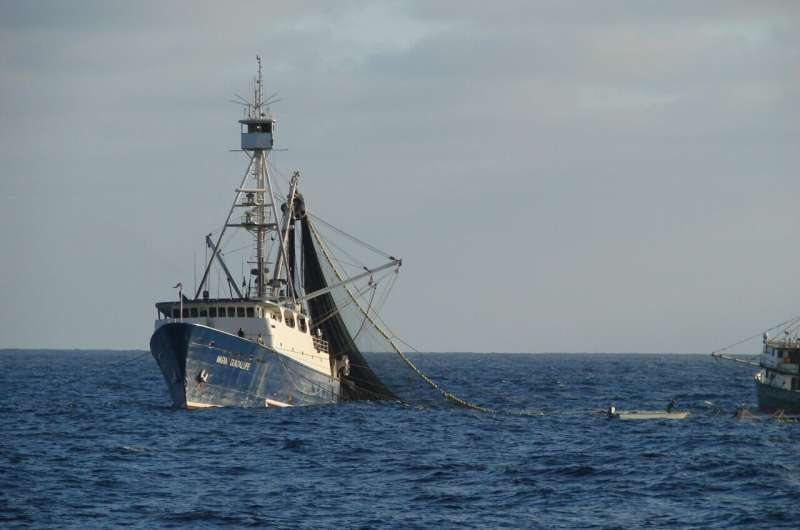
Researchers are finding an unexpected but powerful way to understand what’s happening beneath the ocean surface: by watching where fishing boats go. A new study led by scientists at the University of California, Santa Cruz shows that the movement of commercial fishing fleets can reveal major changes in marine ecosystems, especially those driven by climate change and marine heat waves.
This research highlights how data that already exists for regulatory and surveillance purposes could also serve as a real-time window into ocean health, potentially helping scientists and policymakers respond faster to environmental disruptions that affect both marine life and fishing communities.
Fishing Boats as Unlikely Ecosystem Sensors
Commercial fishing vessels are constantly tracked using satellite-based systems such as the Vessel Monitoring System (VMS). These systems were originally designed to enforce fishing regulations, monitor compliance, and reduce illegal fishing. But scientists are now realizing that these massive datasets hold much deeper ecological value.
Fishing crews are highly sensitive to changes in fish behavior and distribution because those changes directly affect their livelihoods. When fish move, fishermen move too. According to the UC Santa Cruz research team, this makes fishing fleets uniquely suited to act as ecosystem sentinels—human indicators that reflect changes happening in hard-to-observe marine environments.
Unlike traditional ecological monitoring tools, fishing vessels naturally cover vast areas of the ocean. Their movements, when analyzed carefully, can provide insight into where fish populations are thriving, declining, or shifting in response to environmental stress.
The Role of Marine Heat Waves
A central focus of the study is the impact of marine heat waves, which are periods of unusually warm ocean temperatures that can last for months or even years. These heat waves are becoming more frequent and intense due to long-term ocean warming linked to climate change.
Marine heat waves can disrupt food webs, alter fish migration routes, and change where and when species are available to fisheries. Yet detecting these impacts early has always been difficult, especially in open-ocean environments where direct observation is limited.
The researchers examined fishing fleet movements during several recent heat wave events, including those in 2014–2016, 2019, and 2023, focusing specifically on highly migratory tuna species.
Albacore Tuna and the 2023 Fishing Crisis
The year 2023 played a crucial role in this research. During that year, unusually warm ocean temperatures in the North Pacific caused albacore tuna to disperse over a much wider area than normal. This dispersion made the fish harder and more expensive to target, leading to dramatically reduced catches for West Coast fishermen.
Fishing fleet tracking data clearly reflected this shift. Vessels traveled farther and showed patterns consistent with low albacore availability rather than poor fishing effort or skill. This decline was severe enough that, in 2024, state governors requested a federal fisheries disaster declaration to provide economic assistance to the affected fishing communities.
What stands out is timing. That disaster request came more than a year after the 2023 season ended. The study suggests that if VMS data had been analyzed in near real time as an ecological signal, the severity of the situation could have been recognized much earlier.
Why Fleet Movement Outperformed Traditional Ocean Metrics
One of the most striking findings from the study is that fishing fleet movement was six times better at predicting shifts in tuna distribution than sea-surface temperature anomalies, a metric commonly used by scientists to assess environmental change.
Sea-surface temperature is an important indicator, but it doesn’t always capture how marine species actually respond. Fish behavior is influenced by many factors, including prey availability, oxygen levels, and complex biological interactions. As climate change disrupts long-established relationships between environmental conditions and ecosystem responses, relying on temperature alone can miss the bigger picture.
Fleet movement data, on the other hand, reflects where fish are actually being found—or not found—on the water. This makes it a powerful complement to traditional oceanographic measurements.
Fishing Fleets as Human Ecosystem Sentinels
The idea of using sentinels to monitor ecosystems isn’t new. Scientists have long studied animals such as birds, whales, and elephant seals to detect environmental changes. At UC Santa Cruz, elephant seals from Año Nuevo have been used as indicators of ocean conditions for years.
What’s new here is the idea of humans as sentinels, specifically fishermen. Their wide-ranging movements allow them to sample large sections of the ocean, and their actions are already documented through multiple data streams, including satellite tracking and landing records.
Because fishermen quickly adapt to changes in fish distribution, their collective behavior can signal ecological shifts faster than many scientific surveys.
Lessons From Past Fishery Disruptions
The study places its findings within a broader historical context of fishery disruptions caused by warming oceans. One example is the 2012 marine heat wave in the Gulf of Maine, which pushed lobsters into shallower waters. The result was a record-breaking catch that overwhelmed processing facilities and flooded the market, causing lobster prices to collapse to about 70% below normal.
Another case involved Gulf of Maine cod, where a failure to recognize the biological impact of long-term warming led to catch quotas that were too high. This miscalculation contributed to overfishing and long-term damage to the stock.
These examples show how delayed or incomplete understanding of ecosystem change can create cascading economic and ecological consequences.
Species Behavior Reflected in Fleet Patterns
The study focused heavily on albacore and bluefin tuna, migratory temperate species that are seasonally targeted by West Coast fisheries. These fish are known to shift northward and closer to shore during warm-water conditions.
The researchers found that fishing fleets mirrored these movements almost exactly. During the 2014–2016 heat wave, both tuna and fishing vessels shifted north. In contrast, during later heat waves in 2019 and 2023, the distributions remained closer to their historical patterns, reflecting different biological responses despite similar temperature anomalies.
This highlights why direct observation of fishing behavior can provide context that environmental data alone may miss.
Challenges and Responsible Use of the Data
The researchers are careful to point out that fishing fleet data is not a perfect signal. Fishery management actions, such as seasonal closures, quota changes, or regulatory shifts, can influence where boats operate and may introduce noise into the data.
However, the presence of noise does not negate the value of the information. Instead, it underscores the need for careful interpretation and collaboration between scientists, managers, and fishing communities to ensure the data is used responsibly and accurately.
A New Tool for a Changing Ocean
As climate change continues to reshape marine ecosystems in unpredictable ways, the need for real-time ecosystem monitoring is becoming increasingly urgent. This study suggests that fishing fleets—already tracked, already active, and deeply connected to ocean conditions—could play a key role in meeting that need.
By recognizing fishing vessels as ecosystem sentinels, scientists and policymakers may gain earlier warnings of ecological disruption, reduce economic harm, and improve the resilience of both marine species and the communities that depend on them.
Research paper:
https://doi.org/10.1073/pnas.2516308122