Hurricanes Are Quietly Shaping the Evolution of Lizards in the Southeastern United States
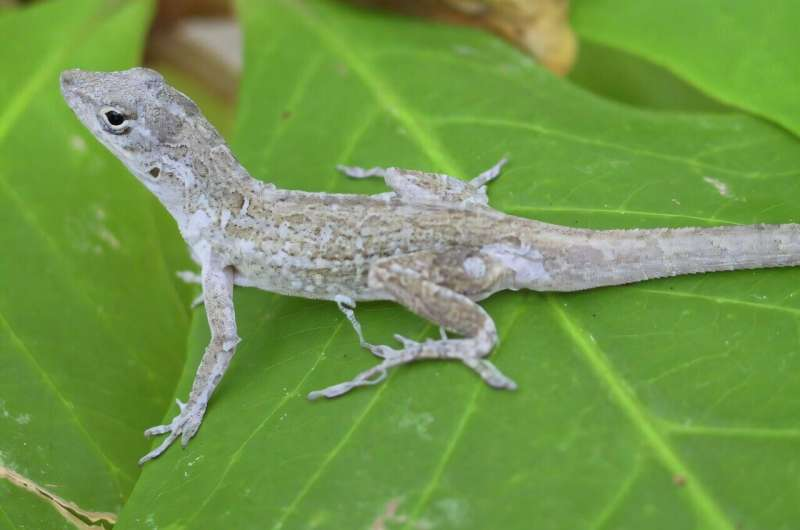
A growing body of research is showing that extreme weather does more than just disrupt ecosystems in the short term. A new scientific study now demonstrates that hurricanes can actively shape the course of evolution. Focusing on Anolis lizards in the southeastern United States, researchers have found that repeated exposure to hurricanes has driven measurable, long-lasting evolutionary changes in the bodies and genes of these animals.
The study was led by Jason Kolbe, an evolutionary ecologist and chair of the Department of Biological Sciences at the University of Rhode Island, and was published in the prestigious journal Proceedings of the National Academy of Sciences (PNAS) in 2025. It provides some of the strongest evidence yet that intermittent extreme events, such as hurricanes, can act as powerful forces of natural selection.
How Hurricanes Become Agents of Natural Selection
Natural selection often brings to mind slow, gradual changes driven by everyday pressures like predators, competition, or food availability. Hurricanes, however, are different. They are episodic, intense, and unpredictable, yet when they strike, they can instantly determine who survives and who does not.
The researchers proposed a straightforward idea: if survival during hurricanes depends on specific physical traits, then storms should favor individuals that possess those traits. Over time, populations repeatedly exposed to hurricanes should evolve in noticeable ways.
With hurricanes in the North Atlantic expected to increase in strength and possibly frequency due to climate change, understanding how species respond evolutionarily is becoming increasingly important—especially for organisms living in coastal regions and islands, where storms hit hardest.
Why Anolis Lizards Are the Perfect Study Species
The study focuses on Anolis sagrei, commonly known as the brown anole, a small lizard species native to the Caribbean. The brown anole is not native to the southeastern United States. Instead, it was introduced accidentally and intentionally beginning in the late 19th century.
The species first appeared in the Florida Keys around 1887, likely arriving through shipping routes or the pet trade. It reached the Florida peninsula roughly 50 years later and eventually spread into Georgia. Because scientists can reconstruct when and where these populations became established, the invasion acts as a natural timeline for evolution.
Since the arrival of Anolis sagrei in the region, more than 100 hurricanes have struck Florida alone, creating a rare opportunity to study how repeated storms influence evolution over about a century.
A Research Question Rooted in a Career-Long Interest
Kolbe’s interest in this question goes back to the very beginning of his scientific career. For over 25 years, he has studied the ecology and evolution of Anolis lizards, including their invasion histories. During his Ph.D. work, he examined anole populations on islands in the Bahamas, where he used genetic markers to trace how populations spread and evolved.
In 2012, Hurricane Sandy devastated one of his long-term study sites. Instead of abandoning the project, Kolbe recognized a rare opportunity: he could directly compare lizards before and after a major hurricane. This experience laid the groundwork for the much broader study now reported in PNAS.
Reconstructing the Invasion and Hurricane History
To carry out the study, Kolbe and his colleagues reconstructed a detailed chronology of the brown anole’s spread across Florida and Georgia. They relied on museum specimen records, published field observations, and historical documentation.
The team also examined hurricane records dating back to 1851, allowing them to estimate how many hurricanes affected each lizard population since its establishment. This level of detail made it possible to test whether populations exposed to more hurricanes showed consistent evolutionary patterns.
Importantly, the researchers found that brown anoles in the southeastern U.S. originated from at least eight genetically distinct source populations, mostly from Cuba. Despite this genetic diversity, hurricane-related trends were still clear.
The Traits That Help Lizards Survive Hurricanes
The results revealed a striking pattern. Populations that experienced more hurricanes consistently evolved longer limbs and larger toepads.
These traits are not random. Longer limbs and larger toepads improve a lizard’s clinging ability, allowing it to hold onto tree trunks, branches, and other surfaces during high winds. During a hurricane, the ability to cling tightly can mean the difference between survival and being blown away.
Earlier, smaller-scale studies had already suggested that lizards with better clinging performance survive storms at higher rates. This new research confirms that hurricanes do not just select survivors in the short term—they leave a lasting evolutionary imprint.
Evidence Written Into the Genome
One of the most important contributions of the study is its genomic analysis. The researchers identified specific regions of the genome associated with limb length and toepad size that also correlated with hurricane exposure.
This means the effects of hurricanes are not just visible in outward appearance. They are embedded in the genetic makeup of populations, persisting long after individual storms have passed.
Notably, traits unrelated to clinging performance did not show the same associations with hurricane frequency. This strengthens the conclusion that hurricanes drive targeted, functional selection, rather than causing random changes.
Hurricanes as Evolutionary Forces in a Changing Climate
The study highlights hurricanes as a major, yet often overlooked, driver of evolutionary change. Unlike constant environmental pressures, hurricanes deliver short but intense bursts of selection that can reshape populations across generations.
As climate change alters historical storm patterns, these episodic selection events may become even more influential. Species that cannot adapt quickly may struggle, while others—like the adaptable brown anole—may continue to thrive.
Kolbe emphasizes that lizards are likely just one example. Many other animals, from insects to birds, may also be experiencing hurricane-driven selection, but have not yet been studied in this way.
Why Biological Invasions Matter for Evolutionary Studies
Biological invasions, though often harmful ecologically, provide valuable scientific insight. Invasive species like Anolis sagrei spread rapidly, reach high population densities, and experience strong environmental pressures, making them ideal for studying rapid evolution.
Although the ecological impacts of brown anoles are still not fully understood, their success highlights how quickly species can adapt when faced with repeated challenges.
What This Research Tells Us About Evolution Today
This study reinforces a powerful idea: evolution is not always slow and gradual. Sometimes, it is driven by rare but extreme events that leave deep and lasting marks on life.
By combining historical records, field measurements, and genomic data, Kolbe and his team have shown that hurricanes are not just destructive forces—they are also agents of natural selection, actively shaping the future of species in storm-prone regions.
Research Paper:
Morphological and genomic responses to hurricanes arise and persist during a biological invasion – Proceedings of the National Academy of Sciences (2025)
https://doi.org/10.1073/pnas.2517322122