Island-Wide Research Reveals How Land Use and Rainfall Shape Lagoon Water Quality in Mo‘orea
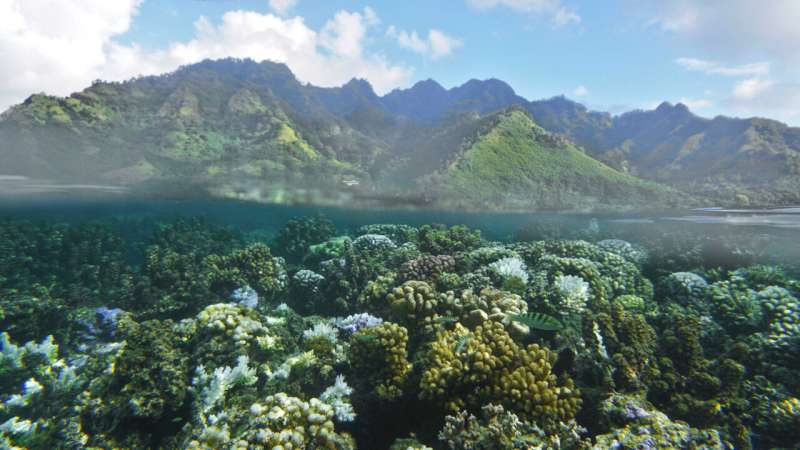
A major multi-year scientific expedition across the island of Mo‘orea, located in French Polynesia, has produced some of the clearest evidence yet that what happens on land strongly affects the health and chemistry of the surrounding coral reef lagoons. Led by researchers from the University of California, Santa Barbara, and supported by collaborators from the University of Hawai‘i at Mānoa and several other institutions, this project mapped out nearly 200 sampling sites around the island and repeated measurements over several years to understand how nutrients, microbes, and rainfall interact across land and sea.
The study focused on a long-standing concern among scientists: when human activity increases nutrient runoff from land into reefs, coral communities may decline while algae and microbes transform the underwater environment. This phenomenon is known as a phase shift, and while researchers have documented it in many tropical regions, the exact pathways connecting land use to reef condition have often been difficult to measure at large scales. This expedition attempted to fill that gap with island-wide, repeated sampling and a multi-disciplinary team of experts.
The research team measured nutrient concentrations in lagoon waters, analyzed microbial community composition, and examined algal tissue nutrients, especially from the macroalga Turbinaria ornata, which is known for absorbing excess nitrogen. They found that nutrient concentrations were highest closer to shore, where terrestrial influence is strongest, and lowest farther offshore, where the effect of land diminishes. These patterns held consistently over time, clearly indicating that nutrients in the lagoons originate partly from the island itself.
One of the strongest findings was the link between human-impacted watersheds and elevated nutrient levels. Sites located downstream from heavily developed or modified areas showed higher nutrient concentrations and distinct patterns of microbial activity. This reinforces the understanding that activities such as construction, agriculture, and poor soil management can directly influence lagoon water quality.
The team also discovered that rainfall is a major mediator of these land–sea connections. When rain falls on exposed or disturbed land, it increases the flow of nutrients and sediments into the lagoon. As a result, wetter periods tend to intensify nutrient delivery to the reef system, while drier periods reduce it. This creates a dynamic relationship where local weather interacts with human land use. The implications are significant because climate change is altering rainfall patterns in many tropical regions. More extreme or irregular rainfall could change how frequently and intensely nutrients flush into reefs, which may affect coral ecosystem health in the long term.
A key component of the study was the validation of macroalgae, especially Turbinaria ornata, as a reliable bioindicator of nutrient conditions. The nutrient content of the algae consistently matched the chemistry of the water and the degree of land-based influence. This confirms a widely used but not always scientifically validated approach: using algal tissue composition as a proxy for long-term nutrient exposure. Since algal tissues accumulate nutrients over time, they often provide a more stable measurement than water samples alone.
The study’s results also provided insights into microbial communities within the lagoon waters. Certain microbial signatures correlated strongly with nutrient levels and land-derived inputs, suggesting that microbes respond predictably to changes in nutrient conditions. Shifts in these microbial communities can influence overall ecosystem health, since microbes play key roles in nutrient cycling and water chemistry.
These findings collectively reinforce the idea that land management decisions are inseparable from marine conservation efforts. Because gravity naturally drives water from mountainsides and soils toward the ocean, everything that happens on land eventually reaches the reef. This principle mirrors traditional land-division and stewardship systems such as the Hawaiian ahupua‘a, which connect upper watersheds (mauka) to the ocean (makai) and emphasize management of the entire watershed as a single ecological unit.
Across Pacific Island regions, watershed-based conservation is increasingly important as human populations grow and climate patterns shift. This study supports strategies such as reducing polluted runoff, creating buffer zones along rivers and streams, managing soil disturbance at construction sites, and protecting vegetation in watershed areas. Small changes in land management can significantly improve water quality, benefiting corals, fish populations, and the many species that depend on healthy reef ecosystems.
Because Mo‘orea hosts a diverse and vibrant reef ecosystem that supports subsistence fishing, tourism, and scientific research, understanding these land–sea connections is crucial. Coral reefs worldwide are declining due to stressors such as warming oceans, pollution, and overfishing, and nutrient enrichment from land is one factor that can accelerate degradation. By identifying how nutrients move from land to sea and which watersheds contribute most to lagoon pollution, local communities and conservationists can make more informed decisions.
Beyond the specific findings of this study, the research contributes to a broader understanding of reef ecology. Nutrient enrichment is a major driver of ecological imbalance. Excess nitrogen and phosphorus can stimulate rapid algal growth, smother corals, and alter microbial processes. In ecosystems already stressed by warming waters and acidification, nutrient pollution can push reefs past their ability to recover.
Additionally, the use of macroalgae as nutrient indicators is part of a growing movement toward using biological tools to understand ecosystem conditions. Since macroalgae respond to long-term exposure rather than momentary fluctuations, they serve as an integrated measure of environmental change. This makes them useful for monitoring not only nutrient pollution but also shifts in watershed management practices over time.
Mo‘orea itself is a particularly valuable study site because it has been the focus of long-term ecological research for decades. Its reefs have experienced disturbances such as crown-of-thorns starfish outbreaks, cyclones, and bleaching events, followed by periods of recovery. Understanding how land-based factors influence the reef adds another layer to ongoing monitoring and helps scientists predict how the ecosystem may respond to future environmental pressures.
The study also highlights the importance of interdisciplinary research. By combining ecology, oceanography, microbiology, and land-use science, the team was able to uncover patterns that would have been impossible to detect from a single perspective. Large-scale, repeated sampling is rare in tropical reef research, which makes this project particularly valuable for improving our understanding of coastal ecosystems.
Overall, the Mo‘orea expedition underscores the need for integrated land–sea management and demonstrates that protecting coral reefs involves more than just marine policies—it requires careful stewardship of the land itself.
Research Paper:
Terrigenous Inputs Link Nutrient Dynamics to Microbial Communities in a Tropical Lagoon – https://doi.org/10.1002/lno.70240