Microalgae Could Fuel Hawaiʻi’s Renewable Future
Tiny, sun-powered organisms living quietly in freshwater pools may soon play a big role in shaping Hawaiʻi’s renewable energy and sustainability goals. Researchers at the University of Hawaiʻi at Mānoa are exploring how microalgae can be transformed into a powerful local resource for biofuels, medicine, and nutrition, using some of the most advanced tools in modern biotechnology. Their findings, published in the Plant Biotechnology Journal, outline how these microscopic organisms could become a form of “green gold” for Hawaiʻi and beyond.
At the center of this research is the idea that microalgae are exceptionally good at one crucial task: capturing carbon dioxide and turning it into valuable compounds. Through photosynthesis, microalgae convert sunlight and CO₂ into substances such as lipids (oils) and terpenoids, which are essential building blocks for products ranging from renewable jet fuel to pharmaceutical drugs and nutritional supplements. Unlike many land-based crops used for biofuel production, microalgae do not compete directly with food crops for fertile soil or freshwater, making them especially attractive from a sustainability perspective.
Why Microalgae Matter So Much
Microalgae have long been recognized for their potential, but turning that potential into real-world production has been challenging. These organisms grow rapidly, thrive in diverse environments, and can produce high concentrations of energy-rich oils. However, scaling up production in a way that is economically competitive with petroleum-based fuels has proven difficult. One major issue has been the trade-off between growth and productivity: when algae are pushed to make more oil, their growth often slows down.
The UH Mānoa research team is tackling this problem head-on using synthetic biology and metabolic engineering. Instead of relying on natural biological limits, the scientists are redesigning internal cellular pathways to make microalgae more efficient producers of targeted compounds without sacrificing growth rates. This approach allows the algae to function more like custom-built biological factories rather than wild organisms with unpredictable outputs.
Reprogramming Algae from the Inside
A key focus of the study is the use of CRISPR/Cas9 gene-editing technology, a tool that allows scientists to make precise changes to an organism’s DNA. By editing genes that control how carbon flows through the cell, researchers can redirect energy toward the production of specific lipids and terpenoids. These compounds are particularly valuable because lipids are essential for biofuel production, while terpenoids are widely used in medicine, cosmetics, and industrial chemistry.
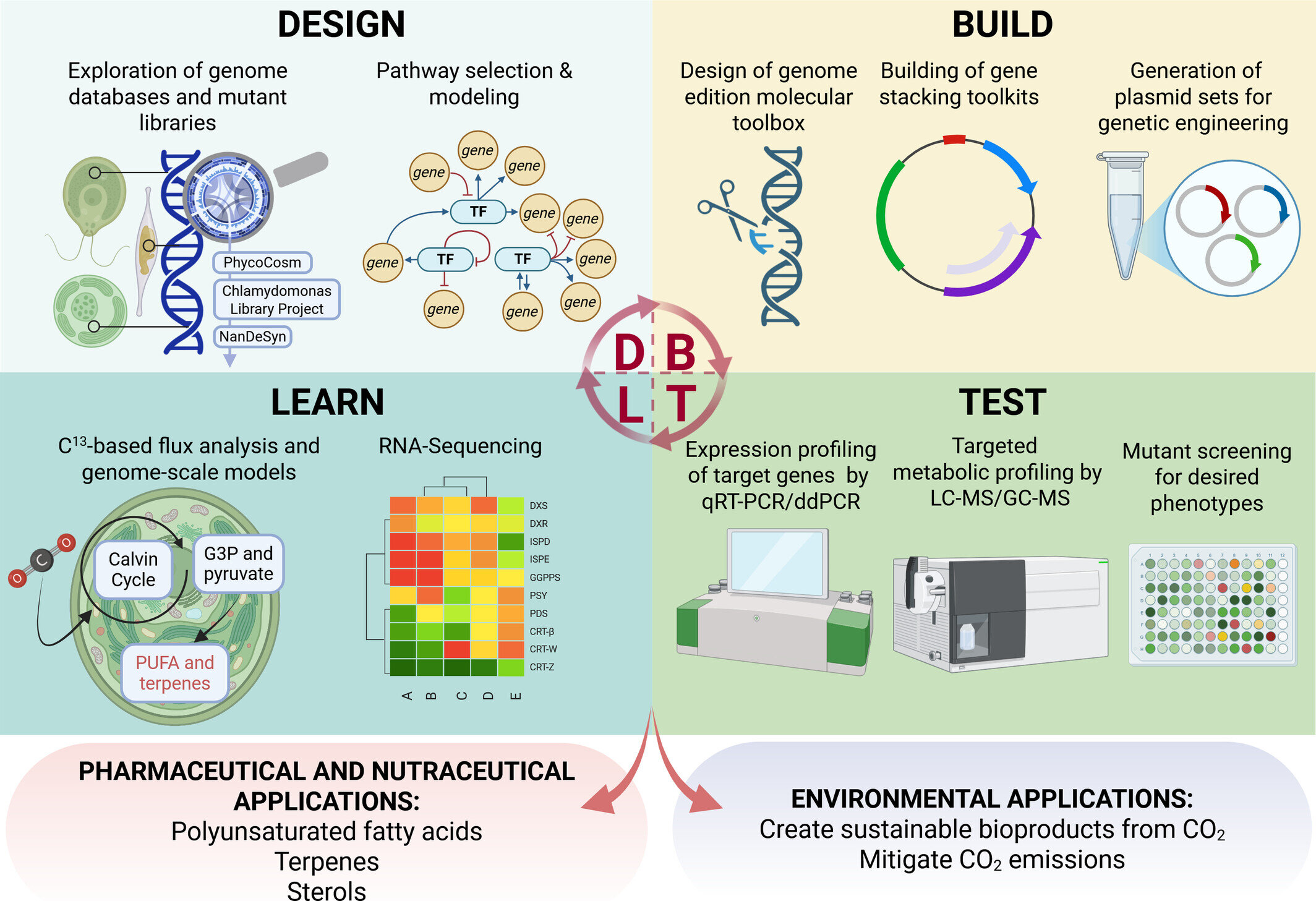
The research follows a Design-Build-Test-Learn (DBTL) cycle, a systematic approach common in synthetic biology. Scientists design genetic modifications, build them into the organism, test the results, and then learn from the outcomes to improve the next round of designs. This iterative process speeds up discovery and reduces the guesswork traditionally associated with biological research.
The team behind the study includes faculty members and graduate researchers from the College of Tropical Agriculture and Human Resilience (CTAHR). The lead author, Zhi-Yan (Rock) Du, is an associate professor in the Department of Molecular Biosciences and Bioengineering. Graduate researcher Ty Shitanaka, working alongside professor Samir Kumar Khanal, also played a central role in examining how genetic tools can optimize microalgal metabolism.
A Strong Fit for Hawaiʻi’s Environment
Hawaiʻi’s natural conditions make it an ideal testing ground for microalgae-based production systems. The state enjoys year-round sunlight, a warm climate, and ready access to coastal and freshwater resources. These factors reduce the energy inputs needed to cultivate algae and increase the feasibility of maintaining consistent production throughout the year.
Beyond climate, the researchers emphasize the importance of integrating microalgae cultivation with existing systems, such as wastewater treatment plants or agricultural byproduct recycling. Microalgae can grow on nutrients found in wastewater, helping to clean the water while simultaneously producing valuable biomass. This kind of closed-loop system has the potential to lower costs, reduce environmental impact, and improve overall efficiency.
From an economic perspective, this approach could support energy independence for Hawaiʻi, a state that currently relies heavily on imported fossil fuels. Locally produced biofuels derived from microalgae could strengthen resilience against global energy price fluctuations while creating new opportunities for research, jobs, and innovation.
Beyond Biofuels: Medical and Nutritional Uses
While renewable fuel is a major driver of this research, it is far from the only application. Microalgae are already known to produce compounds with antioxidant, anti-inflammatory, and antimicrobial properties. Terpenoids, in particular, are a diverse class of molecules used in treatments for conditions ranging from infections to cancer, as well as in fragrances and food additives.
By engineering algae to produce higher yields of specific terpenoids, researchers open the door to sustainable pharmaceutical manufacturing that does not depend on slow-growing plants or petroleum-derived chemicals. Similarly, algae-derived lipids can be tailored for use in nutritional supplements, including omega fatty acids that are important for heart and brain health.
The Bigger Picture of Algae-Based Sustainability
Microalgae research is gaining momentum worldwide as scientists search for solutions to climate change and resource scarcity. Algae-based systems offer a rare combination of benefits: carbon capture, renewable energy production, wastewater treatment, and high-value biochemical manufacturing. However, significant hurdles remain, including production costs, harvesting efficiency, and large-scale infrastructure development.
The UH Mānoa study contributes to this global effort by providing an updated perspective on how genome-scale modeling, organelle-targeted biosynthesis, and synthetic biology tools can overcome longstanding bottlenecks. Rather than focusing on a single species or product, the research highlights flexible strategies that can be adapted across different microalgal strains and industrial goals.
What Comes Next
The findings do not claim that microalgae will replace fossil fuels overnight. Instead, they present a realistic and scientifically grounded roadmap for making algae-based production more efficient, scalable, and economically viable. Continued collaboration between biologists, engineers, policymakers, and industry partners will be essential to move these ideas from the lab to real-world applications.
For Hawaiʻi, the promise is particularly compelling. Microalgae could support a future where clean energy, environmental stewardship, and economic resilience are closely linked. As research progresses, these tiny organisms may prove to be one of the state’s most valuable renewable resources.
Research paper: https://doi.org/10.1111/pbi.70405