New Breakthrough Makes Transgene-Free Gene Editing More Powerful and Practical for Crop Improvement
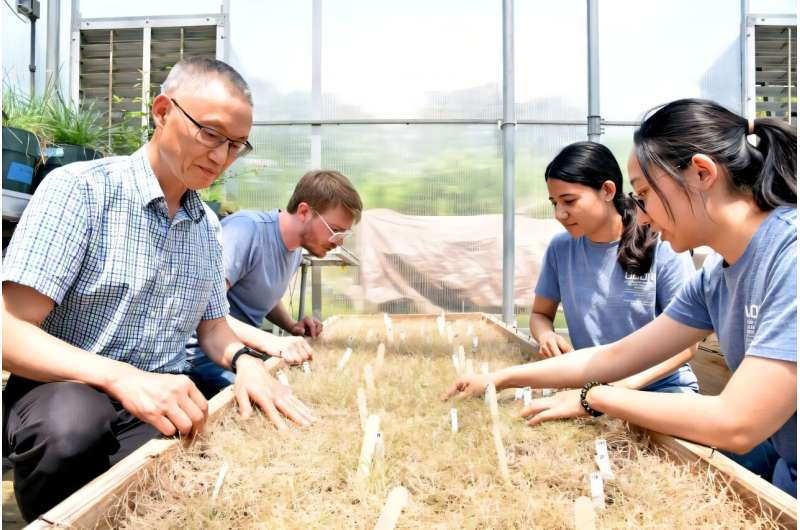
A new and much more efficient method for transgene-free genome editing in plants has been developed by researchers at the University of Connecticut, offering a major step forward for creating improved crops without the controversy or regulatory barriers tied to traditional genetically modified organisms (GMOs). The technique, refined by Yi Li and his team at the College of Agriculture, Health and Natural Resources, enhances a previously developed method from 2018 and could transform how scientists edit crops—especially those that are difficult to breed or propagate.
The Problem With Traditional Genetic Modification
For decades, scientists have used genetic modification to improve crops, making them more resistant to drought, heat, and disease. While these methods have brought undeniable benefits, they often involve introducing foreign DNA—genes from other species—into the plant. This creates what we know as GMOs. Because of the involvement of external genes, these modified plants are heavily regulated or outright banned in many countries.
Even gene-editing tools like CRISPR-Cas9, which allow precise edits to a plant’s own genes, still require foreign DNA to deliver the editing machinery into the cells. This means that even though the final result could simply be an edited version of the plant’s original gene, the process still classifies the plant as a GMO because foreign genetic material—such as the CRISPR-related Cas9 protein—is temporarily inserted during editing.
This classification can make it extremely difficult for companies and farmers to bring these plants to market. Regulatory approval is expensive, time-consuming, and often discourages smaller organizations or public institutions from pursuing innovation in gene-edited crops.
Yi Li’s Transgene-Free Editing Solution
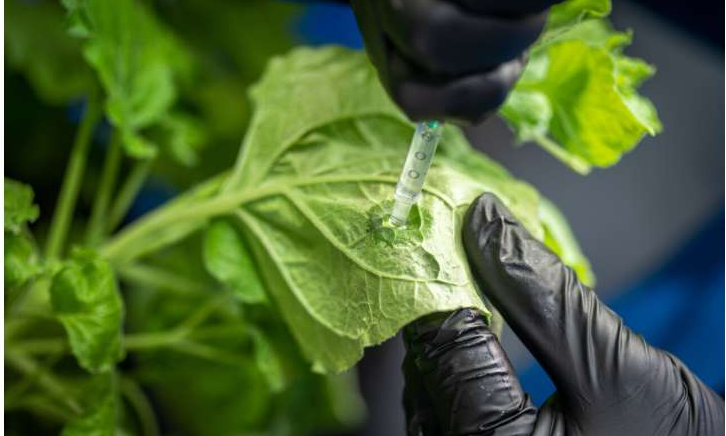
Back in 2018, Yi Li’s group proposed a simpler method to perform gene editing without leaving any trace of foreign DNA in the plant. The approach relied on a process called Agrobacterium-mediated transient expression, where the bacterium Agrobacterium tumefaciens is used to introduce the editing genes into plant cells temporarily. Because these genes don’t integrate into the plant’s DNA, the resulting plants can be transgene-free—meaning they don’t carry any foreign genetic material once the process is done.
The 2018 method was an important breakthrough, but it still faced challenges. It wasn’t as efficient as researchers hoped, and achieving high rates of successful gene editing without integration remained difficult. So Yi Li and his team went back to the drawing board.
Their latest improvement, published in Horticulture Research (2025), uses a clever chemical trick to significantly increase the success rate of this process—making it 17 times more efficient than the original version.
How the New Method Works
In their improved approach, the researchers introduced a short-term chemical selection step using a substance called kanamycin, an antibiotic commonly used in plant biotechnology. Here’s how it works:
- When the plant cells are infected with Agrobacterium, only some of them successfully receive and express the CRISPR-Cas9 genes.
- To ensure that only these “edited” cells survive and continue to grow, the researchers treated the cells with kanamycin for just three to four days.
- Because resistance to kanamycin is directly linked to whether a cell is expressing the CRISPR genes, this short treatment effectively weeds out cells that didn’t take up the editing machinery.
- The surviving, successfully infected cells then regenerate into full plants that are edited but do not contain any foreign DNA, since the CRISPR components never integrated into the genome.
The result is a much more efficient production of non-GMO, genome-edited plants. This short-term chemical selection not only prevents the growth of unedited cells but also gives the edited cells space and resources to regenerate properly, boosting the overall success rate.
Why Citrus Was Chosen for the Study
The team demonstrated this enhanced system using citrus plants as a model. This choice was strategic: the U.S. citrus industry is currently battling Huanglongbing (HLB), also known as citrus greening disease, which has destroyed about 70% of citrus trees in Florida. Developing disease-resistant citrus varieties is an urgent goal, but traditional genetic modification has been slowed by strict regulations and public hesitation around GMOs.
Citrus plants are also perennial and vegetatively propagated, which makes them especially hard to breed or cross to remove transgenes. That’s why having a truly transgene-free editing technique is such a big deal—it allows scientists to directly modify the plant’s natural DNA to introduce desirable traits like disease resistance or stress tolerance without foreign gene integration.
The Results: 17 Times More Efficient
The study showed that adding the short kanamycin treatment increased the efficiency of generating transgene-free, genome-edited citrus plants by about 17 times compared to the 2018 method. In numbers, the success rate improved from around 0.017% to about 0.291% of total regenerated plants. While that might sound small, in the world of plant biotechnology, this improvement is significant—it means researchers can now get far more edited plants from the same number of experiments.
Yi Li described the approach as simple, effective, and broadly applicable across plant species. This new method could easily be adapted for other crops, making it one of the most practical routes toward widespread, transgene-free genome editing.
Why This Matters Beyond Citrus
The potential impact of this method extends far beyond citrus orchards. Many other important crops—like bananas, potatoes, apples, and grapes—are perennial or propagated by cuttings or grafts rather than seeds. Because they don’t go through sexual reproduction, scientists can’t simply cross them to remove foreign DNA. That’s why transgene-free gene editing is especially valuable for these species.
From an industry standpoint, the method could help small companies and academic labs participate in crop improvement research without facing enormous regulatory costs. In many countries, plants that have been edited but contain no foreign DNA are treated differently from GMOs, opening up possibilities for faster approval and wider adoption.
It’s also a step toward improving public perception of gene-edited crops. Consumers are often wary of GMOs, largely because they involve genes from unrelated species. A transgene-free approach, by contrast, modifies only the plant’s own genome—making it a cleaner, more natural-feeling innovation.
Where This Fits in the Future of Agriculture
This breakthrough doesn’t eliminate every challenge in plant genome editing. The efficiency, while improved, still leaves room for progress, and scientists will need to confirm that the edits are stable, precise, and safe over time. But this method offers a solid foundation for a new generation of non-GMO crop engineering.
Looking ahead, researchers could combine this approach with other tools, such as ribonucleoprotein (RNP) delivery systems or base editors, to further streamline the process and boost success rates. These tools can make even more subtle changes in plant DNA without leaving any molecular footprint.
If methods like Yi Li’s become widespread, we could soon see disease-resistant oranges, drought-tolerant wheat, or heat-resistant rice that are not technically GMOs under existing definitions. This could transform how agriculture adapts to climate change and growing food demands—without the same regulatory and social barriers that have slowed progress in the past.
The Bottom Line
Yi Li’s new gene-editing method represents an elegant balance of simplicity and innovation. By using a short chemical selection window and avoiding foreign DNA integration, his team has created a faster, cleaner, and more practical way to edit plant genomes. The approach holds promise for countless crop species and could mark the beginning of a new era in sustainable, non-GMO agriculture.