New Genome Study Reveals How the Northern Root-Knot Nematode Infects an Exceptionally Wide Range of Plants
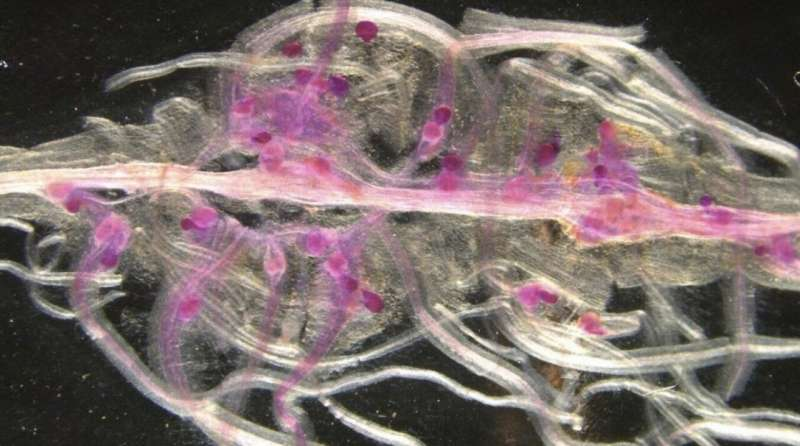
The Northern root-knot nematode, scientifically known as Meloidogyne hapla, has long been a major pest in agriculture, damaging crops across many plant families. What has made this tiny worm particularly frustrating for researchers and farmers is its ability to infect an unusually broad spectrum of hosts — monocots, dicots, annual crops, woody plants, vegetables, fruit trees, even wine grapes in certain regions. A new large-scale international study, led by scientists at the University of California, Davis, finally offers a detailed explanation of how this nematode manages such remarkable host flexibility.
This study is significant because the research team has produced the most complete and contiguous genome assembly ever created for a plant-parasitic nematode. Their work not only maps the nematode’s genome at high resolution, but also uncovers features that appear to give this species its remarkable adaptability. The study was conducted by a 15-member team of nematologists and biotechnologists from UC Davis and several countries, including The Netherlands, France, Indonesia, Australia, and Croatia.
Below is a straightforward breakdown of all the essential findings — plus some additional context on root-knot nematodes and why this discovery matters.
The First Fully Resolved Genome of a Plant-Parasitic Nematode
Understanding the biology of Meloidogyne hapla has been difficult for decades, partly because nematodes are extremely small and technically challenging to sequence. Until recently, even advanced sequencing attempts produced incomplete or fragmented genetic assemblies.
But in this study, researchers used a combination of PacBio HiFi, Oxford Nanopore, Illumina sequencing, and Hi-C chromosome scaffolding, enabling them to assemble what they describe as a complete DNA sequence of the nematode’s full-length chromosomes. This is a major milestone because earlier attempts lacked the clarity needed to interpret the structural organization of the genome.
The new genome is not only high-quality, but also unusually detailed. It revealed several features never seen before in plant-parasitic nematodes — and some not commonly seen in animals or plants at all.
An Unexpected Finding: The Nematode Uses Non-Canonical Telomere Repeats
In most animals and plants, chromosome ends are protected by structures called telomeres, which are usually formed by a repeating DNA sequence such as TTAGGG (in humans) or TTTAGGG (in many plants).
Surprisingly, Meloidogyne hapla does not use any of the typical telomere repeats.
Instead, the team discovered that its chromosome ends contain a unique 16-nucleotide repeating sequence, completely different from what is expected.
This suggests that the nematode may use a previously unknown method of maintaining and protecting chromosome ends, something not documented in other nematode species so far. This is a significant biological insight because telomere structure is one of the most conserved aspects of chromosomes across living organisms. Finding a new pattern in a major plant parasite opens up new research avenues in telomere biology and genome evolution.
Recombination Hotspots Linked to Effector Genes
Another key finding concerns how the nematode evolves and adapts to new hosts. Inside its genome, the researchers identified hotspots of unusually high recombination — areas where the DNA frequently undergoes rearrangements. These hotspots were not random:
they were enriched with effector genes, which are genes the nematode uses to invade and manipulate plant tissues.
Effector proteins help the nematode:
- penetrate plant roots,
- suppress plant defenses,
- redirect plant nutrients,
- and induce the formation of root galls — swollen, knot-like structures characteristic of root-knot nematode infection.
Because the genome reshuffles these effector regions so frequently, the nematode can rapidly generate variations in these key genes. This likely explains why Meloidogyne hapla can infect so many different plant species, and why different populations (called isolates) show differing host preferences.
In simpler terms:
its genome is built to experiment, making the nematode extremely adaptable.
Genome Flexibility Between Different Nematode Isolates
The research team did not stop at sequencing just one nematode. They compared the genomes of multiple isolates and found that their chromosome structures differed substantially. Some chromosomes showed breaks, rejoining, fusion, or recombination between isolates.
This structural flexibility — essentially a genome capable of naturally reorganizing itself — may further explain why M. hapla can quickly adjust to different crops or environmental conditions.
The Agricultural Impact of Meloidogyne hapla
Root-knot nematodes as a group cause billions of dollars in crop damage each year. Among them, M. hapla is especially harmful in cooler climates. Its infection leads to:
- root galls,
- stunted growth,
- lower yields,
- wilting,
- nutrient deficiency,
- and in severe cases, complete crop failure.
In crops like carrots, root galls make the produce “unmarketable” even when the plant survives. Young plants are particularly vulnerable and can be destroyed entirely.
M. hapla infects:
- vegetables (carrots, lettuce, beans, potatoes),
- ornamentals,
- fruit trees,
- berries,
- and vineyard grapes.
Because this nematode survives in soil and can infect such a wide host range, controlling it has been a major challenge for decades.
Why This Genome Breakthrough Matters
Having a complete genome gives scientists a detailed map of the nematode’s biology. This has several major implications:
1. Identifying effector genes more precisely
Researchers can now pinpoint which genes are responsible for parasitism, host specificity, and manipulation of plant tissues.
2. Breeding more resistant crops
Plant breeders can potentially target the exact nematode genes responsible for infection, enabling more precise development of resistant plant varieties.
3. Improving nematode control strategies
With a clearer genetic picture, new approaches may be developed — including RNA-based controls or molecular tools that disrupt nematode infection pathways.
4. Studying related species
Because other root-knot nematodes share similar biology, this complete genome provides a reference framework for future work on other damaging species.
This is especially important because root-knot nematodes are considered among the most destructive plant parasites on Earth, and traditional chemical controls are increasingly restricted due to environmental regulations.
Additional Context: What Makes Root-Knot Nematodes Such Successful Parasites?
This study focuses on one species, but root-knot nematodes in general have several biological advantages:
They manipulate plant development.
Using effector proteins, they cause root cells to enlarge and divide uncontrollably, forming galls that feed the nematode.
They hijack plant nutrient pathways.
Nematode-induced feeding sites become nutrient sinks, redirecting plant energy to the pest.
They reproduce rapidly.
Some species reproduce asexually, allowing fast population growth.
They thrive in many environments.
They can survive cold winters, warm climates, and varied soil types.
They infect thousands of plant species.
This makes rotation cropping — a common pest control method — largely ineffective.
Understanding their genome is therefore a crucial step toward sustainable long-term management.
Research Reference
High-Resolution Genome Assembly and Linkage Mapping in Meloidogyne hapla Reveal Non-Canonical Telomere Repeats and Recombination Hotspots Associated with Effector Proteins
https://journals.plos.org/plospathogens/article?id=10.1371/journal.ppat.1013706