New Microbial Insights Point to Climate-Smart Cows With Dramatically Lower Methane Emissions
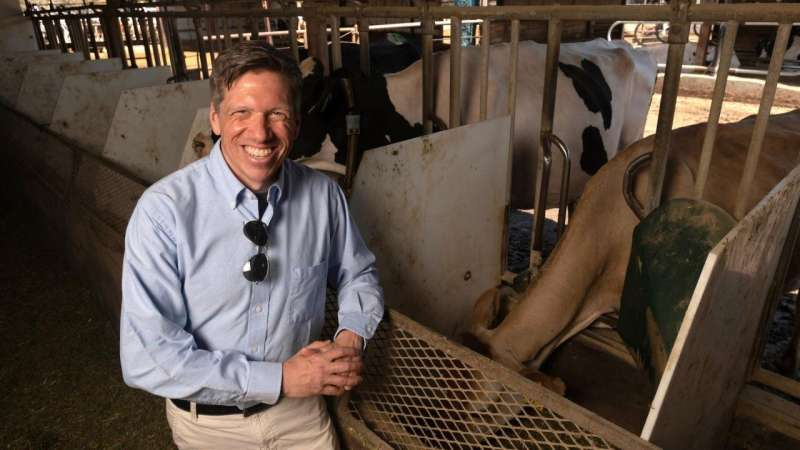
Researchers from UC Davis, UC Berkeley, and the Innovative Genomics Institute (IGI) have taken a major step toward understanding how certain microbes inside a cow’s rumen can be steered to drastically cut methane emissions. Their latest study uncovers how red seaweed transforms the microbial ecosystem of the cow gut and identifies a promising bacterium that could form the foundation of long-term, engineered low-methane cattle. This work goes far beyond the widely publicized seaweed-feeding trials and digs into the underlying biology, mapping out which microbial genes switch on and off when cows eat red seaweed and how this shift leads to lower methane.
Methane is a powerful greenhouse gas—27 times more effective at trapping heat than carbon dioxide—and a single cow can emit around 200 pounds of methane every year. Because cattle are raised globally and are an integral part of agriculture, scientists have spent decades trying to cut methane emissions without compromising animal health or productivity. Red seaweed supplements have shown dramatic effects, but until now, the deeper biological mechanisms remained unclear.
This new study brings clarity. It doesn’t just confirm that methane drops—it explains why it drops, which microbes change, and how those microbes could potentially be engineered for a future where methane-reducing cattle no longer rely on seaweed additives.
What Red Seaweed Does Inside the Cow Rumen
Past work showed that red seaweed from the genus Asparagopsis disrupts a key enzyme used by methane-producing microbes (methanogens). The new research reveals that seaweed also causes major shifts in microbial gene expression. In other words, certain genes involved in methane production get switched off, while genes used by alternate microbial pathways get switched on.
In this controlled study, researchers examined rumen samples from eight cows:
• Four cows ate a regular diet
• Four cows received a red seaweed supplement for 14 days
The results were substantial:
- Methane emissions dropped by about 60% in cows fed seaweed.
- Hydrogen production increased by 367%, because methanogens—which normally consume hydrogen to make methane—were suppressed.
- Feed efficiency increased by up to 74%, meaning the animals used more of their food for growth instead of producing waste gases.
These changes show how strongly seaweed can reshape rumen metabolism.
A Key Discovery: The Role of Hydrogen in Methane Reduction
Methanogens rely on hydrogen (H₂) as their fuel. When seaweed blocks methanogenesis, hydrogen accumulates quickly. Too much hydrogen, however, can be dangerous—it risks causing acidosis, which can harm the animal and destabilize rumen function.
That means hydrogen must go somewhere else.
The study uncovered that seaweed supplementation activated alternative microbial pathways that use hydrogen. This is where one bacterium in particular became central.
Duodenibacillus: A Newly Identified Hydrogen-Consuming Bacterium
One of the most important findings of the study is the identification of a rumen bacterium belonging to the genus Duodenibacillus. This species has never been grown in a lab before and is known only through genomic reconstruction. But based on its genetic blueprint, researchers discovered key traits:
- It can consume hydrogen, preventing harmful buildup.
- It converts hydrogen into succinate, a compound the cow can use to build protein.
- It may outcompete methanogens for hydrogen when methanogenesis is suppressed.
- It carries gene markers associated with hydrogenotrophic metabolism, indicating a natural advantage in low-methane conditions.
This bacterium appears to thrive specifically when seaweed shuts down methane production, meaning it could play an important role in future methane-reduction strategies.
Researchers reconstructed the full genome of this Duodenibacillus organism using metagenomic methods. This allowed them to map its metabolic pathways and compare them with other hydrogen-utilizing microbes. The genome suggests it is particularly well-positioned to use hydrogen efficiently, potentially helping stabilize the rumen when methane pathways are blocked.
Current efforts are underway to isolate this microbe in the lab for direct testing.
Why This Matters for the Future of Livestock
Seaweed works, but long-term solutions must be scalable. Farming and distributing red seaweed on a global level is expensive and not always feasible. The true breakthrough here is that scientists now understand how methane drops and which microbes make it possible.
Instead of relying on feed supplements indefinitely, researchers envision:
- Engineering rumen microbes to permanently reduce methane
- Selecting for microbial communities that naturally produce less methane
- Developing probiotics containing desirable hydrogen-consuming bacteria
- Designing feed strategies that favor low-methane microbial populations
This is not about genetically modifying cows. It’s about shaping the microbial communities inside them—communities that already exist but can be nudged toward more climate-friendly behavior.
Background: Why Cows Produce Methane in the First Place
To give readers a better understanding, here’s how methane production normally works:
- Cows digest food using a fermentation chamber called the rumen, home to thousands of microbial species.
- When microbes ferment plant matter, they produce hydrogen and carbon dioxide.
- Methanogenic archaea convert these gases into methane, which the cow expels mostly through belching.
Methane production is a natural part of rumen fermentation. Eliminating it entirely is not realistic—but reducing it significantly is.
Seaweed works because it contains compounds (like bromoform) that disrupt a key enzyme called methyl-CoM reductase, used by methanogens. However, bromoform raises environmental and safety questions when used at scale. This is why microbial engineering is so promising—it avoids reliance on chemical inhibitors and focuses on natural rumen biology.
The Bigger Climate Picture
Livestock—especially cattle—are responsible for nearly 30% of global anthropogenic methane emissions. Because methane is short-lived but extremely potent, reducing it is one of the fastest ways to slow climate warming.
This research supports a broader goal: lowering agricultural methane without sacrificing food production. Climate-smart cows could become a vital part of sustainable farming, especially as global demand for meat and dairy continues to grow.
Challenges That Still Need Solving
The research is promising, but some challenges remain:
- Duodenibacillus has not been isolated yet, so its behavior is still inferred from genomic data.
- It’s unclear whether a low-methane microbiome can remain stable without continuous seaweed supplementation.
- Large-scale seaweed production could strain marine ecosystems unless cultivated responsibly.
- Long-term effects on animal health require further study.
Still, understanding microbial mechanisms is the most important step toward reliable, scalable solutions.
Research Reference
Red seaweed supplementation suppresses methanogenesis in the rumen, revealing potentially advantageous traits among hydrogenotrophic bacteria
https://link.springer.com/article/10.1186/s40168-025-02251-2