New Research Maps How Gray and Harbor Seals Move Across Northwest Europe’s Seas
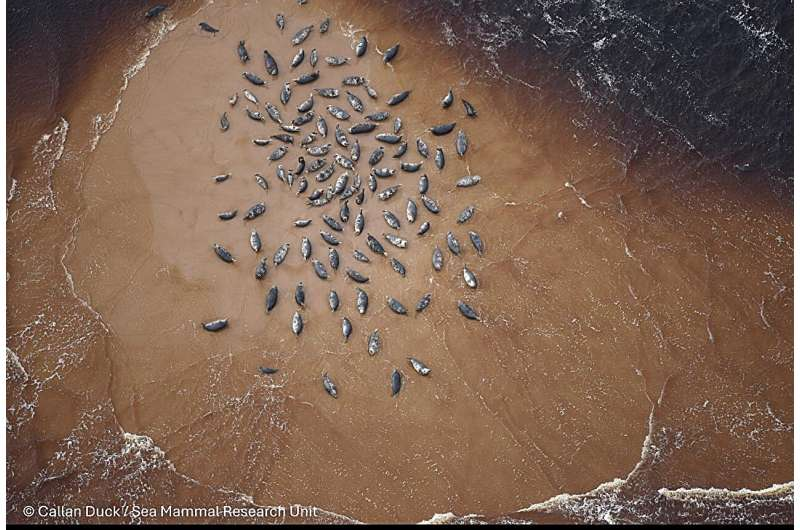
New research led by the University of St Andrews has delivered the most detailed picture yet of how gray seals and harbor seals use the waters of Northwest Europe, and the findings have major implications for offshore development, conservation, and international marine management.
Published on 16 December 2025 in the Journal of Applied Ecology, the study brings together an unprecedented amount of data to show where seals are likely to be found at sea, how densely they occur in different areas, and how frequently they cross national borders while foraging. The work addresses a long-standing gap in marine ecology: understanding seal distribution not just within individual countries, but across the entire continental shelf where human activities are rapidly increasing.
A Large-Scale Effort Spanning Seven Countries
The research was led by the Sea Mammal Research Unit (SMRU) at the University of St Andrews, working with scientists from nine institutions across Europe. Together, the team analyzed data from more than 840 individual seals, making this one of the largest coordinated seal-tracking efforts ever conducted in the region.
The study focused on two species:
- Gray seals (Halichoerus grypus)
- Harbor seals (Phoca vitulina)
Researchers combined GPS tracking data collected from seals tagged in the waters of the UK, Ireland, France, Belgium, the Netherlands, Germany, and Denmark with detailed counts of seals hauled out on land. By merging these two data sources, the team was able to generate at-sea density maps showing not only where seals travel, but how many are likely to be present in specific marine areas at any given time.
This approach goes far beyond traditional distribution maps, which often rely on limited tracking datasets or national-level surveys that stop at political boundaries.
Why Seal Movement Matters More Than Ever
Seals are protected species under both UK and European Union law. Any offshore activity—such as wind farm construction, cable laying, or other marine infrastructure projects—requires developers to assess potential impacts on seal populations and on protected conservation sites.
Until now, most environmental impact assessments have relied on country-specific distribution maps. The new research shows that this approach can be seriously misleading.
One of the study’s most important findings is that seals routinely cross international borders while foraging at sea. A seal counted as part of one nation’s population may spend a significant amount of time feeding in another country’s waters. When these transboundary movements are ignored, seal numbers in certain areas can be underestimated by as much as a factor of ten.
This underrepresentation has real-world consequences. If planners believe only a small number of seals use a particular offshore area, they may approve activities that carry far greater ecological risk than anticipated.
What the New Maps Actually Show
The maps produced by the research team are among the most comprehensive ever created for marine mammals in Europe. They cover the entire Northwest European Shelf, encompassing the majority of seal populations living on the continental shelf.
Key features of the new mapping resources include:
- At-sea density estimates for both gray and harbor seals
- The ability to attribute seal presence to different countries
- For the UK, detailed breakdowns by constituent nations and dependencies
- Links to Seal Monitoring Units and Special Areas of Conservation
These resources allow users to quantify how many seals are likely to be using a specific marine area and to understand where those seals are likely to originate from. This is particularly valuable for offshore energy developers, regulators, and conservation managers who need clear, defensible data to support planning decisions.
The maps are freely available online, making them accessible to researchers, policymakers, and industry professionals alike.
Connecting At-Sea Behavior With On-Land Populations
Another major contribution of the study is its ability to link at-sea seal distribution with population trends observed on land. Seal populations are typically monitored using haul-out counts, where animals are counted while resting on beaches or rocky shores. While these surveys are essential, they offer only a partial view of seal ecology.
By integrating haul-out data with GPS tracking, the new maps help explain how changes observed on land may relate to pressures or disturbances occurring offshore. This integrated perspective is crucial for designing effective long-term conservation strategies and for evaluating whether offshore developments are contributing to population declines or shifts.
A Resource Representing a Significant Share of the World’s Seals
The scale of the dataset is striking. According to the researchers, the maps represent:
- Over one-third of the world’s gray seal population
- The majority of Europe’s harbor seals
The data compilation was made possible through extensive collaboration among research groups that track seals and through the efforts of numerous organizations and individuals who have monitored seal numbers along approximately 40,000 kilometers of coastline.
This level of cooperation highlights how large-scale ecological questions increasingly require international data sharing and coordinated scientific effort.
Why Transboundary Conservation Is Essential
Marine ecosystems do not follow political borders, and this study reinforces that reality. Seals move freely across national jurisdictions, responding to prey availability, seasonal conditions, and oceanographic features rather than human-defined boundaries.
The findings strongly support the need for transboundary conservation and management approaches, especially as offshore development expands. Wind energy, in particular, is growing rapidly across the North Sea and adjacent waters, making accurate, cross-border ecological data more important than ever.
By providing a shared evidence base, the new maps help align conservation goals across countries and reduce the risk of fragmented decision-making that fails to reflect how marine species actually behave.
Extra Context: Why Gray and Harbor Seals Are Key Indicator Species
Gray and harbor seals are often described as sentinel species for marine ecosystems. As top predators, they reflect changes in fish populations, ocean health, and human pressures such as fishing, pollution, and noise.
- Gray seals are among the largest seal species in the region and are known for wide-ranging foraging trips.
- Harbor seals tend to stay closer to shore but still exhibit substantial movement across coastal and offshore habitats.
Because both species rely on healthy marine food webs, changes in their distribution or abundance can signal broader ecological shifts. High-quality distribution data therefore benefits not only seal conservation, but also the wider understanding of marine ecosystem health.
A Foundation for Future Marine Planning
This research sets a new benchmark for how marine mammal distribution can be mapped at regional scales. The methods developed in the study could be applied to other wide-ranging marine predators, helping to improve conservation planning for species that face similar challenges from offshore development.
As human use of the ocean continues to intensify, having accurate, transparent, and internationally consistent data will be essential. The new seal distribution maps from the University of St Andrews and its partners provide exactly that: a practical, science-based tool for balancing energy development, biodiversity protection, and sustainable marine management.
Research paper:
https://doi.org/10.1111/1365-2664.70236