New Study Reveals Sargassum Seaweed Is Costing U.S. Coastal Economies Millions Each Year
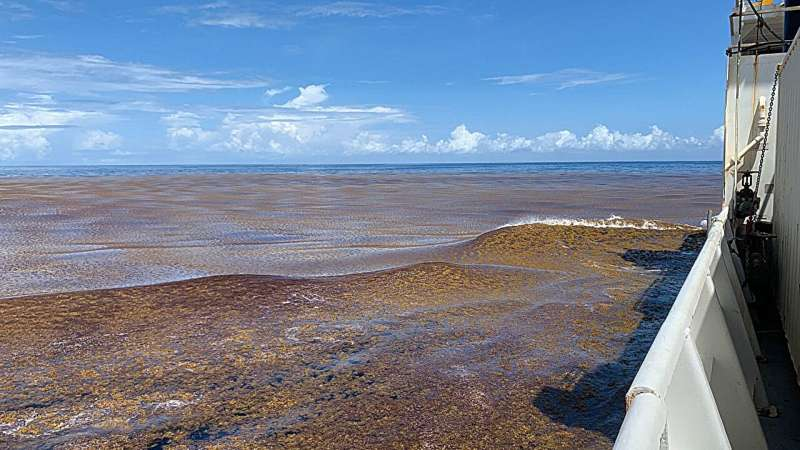
A new scientific study has taken a deep dive into a problem that many coastal communities already feel every summer but have struggled to quantify: the growing economic damage caused by massive sargassum seaweed inundations. Led by researchers from the Woods Hole Oceanographic Institution (WHOI) and the University of Rhode Island (URI), the research provides the most detailed economic assessment so far of how recurring sargassum events are hurting U.S. coastal regions.
Published in the peer-reviewed journal Harmful Algae, the study focuses on Puerto Rico, the U.S. Virgin Islands (USVI), and Florida’s Atlantic coast, areas that have become increasingly vulnerable to large-scale sargassum landings. The findings reveal that these events are no longer isolated nuisances but persistent disruptions causing multi-million-dollar annual losses, with some regions potentially facing billion-dollar impacts as sargassum seasons grow longer and more intense.
What Is Sargassum and Why It’s Becoming a Problem
Sargassum is a floating brown seaweed that naturally exists in the open ocean, where it plays an important ecological role by providing habitat for fish, turtles, and other marine life. Offshore, it is considered beneficial. However, when large quantities drift toward coastlines and pile up on beaches, the situation changes dramatically.
Over the past decade, the Atlantic Ocean has seen the emergence of what scientists now call the Great Atlantic Sargassum Belt, a massive accumulation of seaweed stretching thousands of miles from West Africa across the Caribbean, the Gulf of Mexico, and up to the U.S. Atlantic coastline. This phenomenon appears to have originated around 2009–2010, driven by unusual wind patterns and ocean circulation, and has since been fueled by high nutrient levels in the tropical Atlantic.
As these blooms have grown larger and more persistent, coastal communities have been forced to deal with the consequences.
Why This Study Matters
While the ecological and public health impacts of sargassum have been widely discussed, its economic costs had not been fully quantified before this research. That gap made it difficult for governments and coastal managers to justify investments in monitoring, forecasting, and cleanup efforts.
This study changes that.
By translating environmental disruption into clear economic figures, the research provides decision-makers with evidence they can actually use. The goal is not just to document damage but to help guide smarter planning, preparedness, and long-term mitigation strategies.
How the Researchers Measured Economic Damage
The research team used a multi-sector and data-driven approach to estimate losses across three key areas that form the backbone of many coastal economies:
- Tourism
- Recreation
- Fisheries
To do this, they integrated several major data sources, including:
- National income and employment statistics for marine and coastal industries
- NOAA’s Sargassum Inundation Reports
- Field observations from the Sargassum Watch database
- Long-term satellite monitoring of sargassum blooms
- Tourism data, such as hotel cancellations and reduced visitor spending
- Commercial and recreational fisheries landings data
By combining environmental observations with economic modeling, the researchers were able to estimate both direct and indirect financial losses linked to sargassum inundation events.
The Economic Impact by Region
The findings paint a concerning picture for U.S. coastal regions already grappling with climate and environmental stressors.
Puerto Rico and the U.S. Virgin Islands
These regions are already experiencing multi-million-dollar annual losses. Tourism suffers when beaches become covered in rotting seaweed, producing foul odors and deterring visitors. Fishing operations are disrupted as sargassum clogs nearshore waters, damages equipment, and reduces access to fishing grounds. Governments also bear rising cleanup costs to keep beaches usable.
Florida’s Atlantic Coast
The study suggests that Florida faces the most extreme financial risk. With its massive tourism economy and long stretches of vulnerable coastline, losses here could potentially reach billion-dollar levels in severe sargassum years. Beach closures, reduced visitor spending, and strain on coastal infrastructure all contribute to these staggering projections.
Longer Seasons, Bigger Losses
One of the most important findings is that sargassum seasons are starting earlier and lasting longer across the Caribbean and western Atlantic. Instead of short, seasonal events, many regions are now dealing with prolonged periods of repeated inundation.
This shift significantly increases economic pressure. More frequent cleanups, longer disruptions to tourism, and extended impacts on fisheries all add up over time, making sargassum a chronic problem rather than a temporary inconvenience.
Tourism, Fisheries, and Infrastructure at Risk
Sargassum affects coastal economies in multiple interconnected ways:
- Tourism and recreation take a hit when beaches are covered in seaweed, water quality declines, and hydrogen sulfide gas from decomposing sargassum creates unpleasant and sometimes unhealthy conditions.
- Fisheries suffer as boats struggle to navigate through dense mats of seaweed, fishing gear becomes fouled, and fish behavior changes in affected areas.
- Coastal infrastructure faces damage as sargassum piles up around marinas, seawalls, and drainage systems, increasing maintenance and repair costs.
Together, these impacts ripple through local economies, affecting jobs, small businesses, and public finances.
The Role of Monitoring and Forecasting
Despite the growing challenge, the study offers some encouraging news. Existing sargassum forecasting tools, many of which rely on satellite observations and long-term monitoring, are performing well. These tools can help communities anticipate sargassum arrivals, plan cleanup operations, and reduce economic losses.
The researchers emphasize that continued investment in monitoring, forecasting, and response infrastructure is essential. Without proactive management, the financial burden on coastal communities is likely to keep escalating.
A Bigger Picture of Ocean Change
Beyond economics, the study highlights how sargassum blooms are a visible symptom of broader changes in the Atlantic Ocean system. Shifts in circulation patterns, nutrient inputs, and climate conditions are directly linking offshore processes to coastal vulnerability.
In other words, what happens far out in the ocean is now having very real consequences for coastal livelihoods, tourism economies, and regional resilience.
Why This Research Is a Wake-Up Call
By putting real numbers on the problem, this study makes it clear that sargassum is no longer just an environmental curiosity or seasonal annoyance. It is a serious economic issue with long-term implications for some of the most tourism-dependent regions in the United States.
The findings give policymakers, coastal managers, and local governments the evidence they need to prioritize early warning systems, cleanup strategies, and long-term adaptation plans. As sargassum events continue to intensify, the cost of inaction may far exceed the cost of prevention.
Research Paper Reference
Di Jin et al., Economic impacts of sargassum events in Puerto Rico, USVI, and coastal Florida, Harmful Algae (2025)
https://doi.org/10.1016/j.hal.2025.102996