Orange Pigments in Birds and Red-Haired Humans May Protect Cells From Damage, New Study Finds
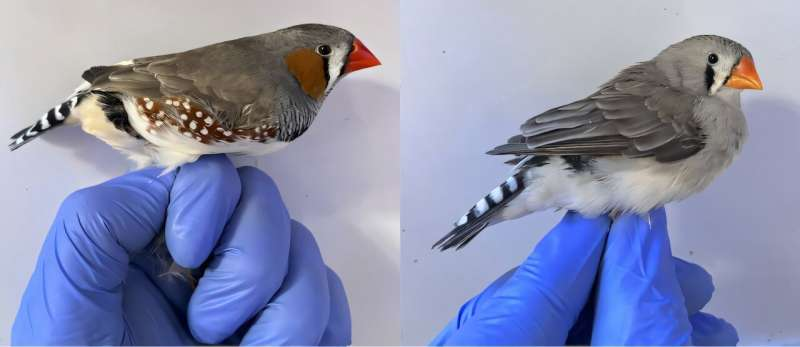
Orange and red colors in nature are often admired purely for how they look, but new research suggests these pigments may be doing something far more important behind the scenes. A recent study published in PNAS Nexus reveals that pheomelanin, the pigment responsible for orange feathers in birds and red hair and fair skin in humans, may help protect cells from damage by safely removing excess levels of a potentially harmful amino acid.
This discovery adds a surprising new layer to our understanding of pigmentation, evolution, and even human health.
What Is Pheomelanin and Why It Matters
Pheomelanin is one of the two main types of melanin found in animals. While eumelanin produces darker brown and black colors and is well known for protecting skin against ultraviolet radiation, pheomelanin produces orange, red, and yellowish tones. In humans, it is most abundant in people with red hair and fair skin, and in birds, it often appears as bright orange or reddish feathers.
For years, pheomelanin has carried a bit of a bad reputation. Numerous studies have linked it to an increased risk of melanoma, especially in individuals with certain genetic variants of the MC1R gene, which influences melanin production. This raised a long-standing evolutionary question: why would natural selection preserve genetic traits associated with higher cancer risk?
The new study offers a compelling possible answer.
The Hidden Problem of Excess Cysteine
The research focuses on cysteine, a sulfur-containing amino acid that plays a vital role in many cellular processes. Cysteine is essential for building proteins and maintaining antioxidant defenses, but like many good things in biology, too much of it can be harmful.
Excess cysteine in cells can promote oxidative stress, leading to cellular damage, especially when the body’s antioxidant systems are overwhelmed. Until now, scientists did not fully understand how organisms might safely deal with surplus cysteine under certain dietary or physiological conditions.
This is where pheomelanin enters the picture.
Studying Zebra Finches to Unlock the Answer
To explore this question, researchers led by Ismael Galván conducted experiments on 65 adult zebra finches, a species commonly used in biological research due to its well-studied pigmentation and physiology.
The birds were divided into control and treatment groups, with specific attention given to differences between males and females. Male zebra finches naturally produce pheomelanin in their orange feathers, while females do not, making them ideal for comparison.
Some of the male birds were given extra dietary cysteine, while others received cysteine along with a compound called ML349, a drug that blocks pheomelanin synthesis by interfering with key molecular pathways related to pigment production.
What Happened When Pigment Production Was Blocked
The results were striking. Male zebra finches that received both extra cysteine and ML349 showed significantly higher levels of oxidative damage in their blood plasma compared to males that received cysteine alone.
Importantly, the researchers controlled for overall antioxidant regulation in melanocytes, ensuring the effect was specifically tied to pheomelanin production rather than general antioxidant activity.
In simpler terms, when male birds were prevented from turning excess cysteine into pheomelanin, their cells suffered more damage.
Female finches provided another crucial piece of evidence. Because females do not naturally produce pheomelanin, those given extra cysteine showed a tendency toward increased oxidative damage compared to untreated females. Blocking pheomelanin synthesis had no additional effect on them, confirming that the protective benefit observed in males was indeed linked to pheomelanin itself.
Pheomelanin as a Cellular “Safety Valve”
Based on these findings, the researchers propose that pheomelanin synthesis helps maintain cysteine balance in the body. By incorporating excess cysteine into pigment molecules, cells effectively convert a potentially toxic surplus into an inert and biologically safe form.
This process may act as a kind of biochemical safety valve, reducing oxidative stress and protecting tissues from damage under conditions where cysteine levels rise too high.
While pheomelanin may increase vulnerability to UV-related damage, especially in humans, it appears to provide an entirely different kind of protection at the cellular level.
Implications for Human Redheads
The findings may help explain why red hair–associated genetic variants have persisted throughout evolution, despite their known drawbacks. In environments or diets where cysteine intake fluctuated or reached high levels, the ability to safely neutralize excess cysteine could have offered a meaningful survival advantage.
For humans with red hair and fair skin, pheomelanin may therefore represent a trade-off rather than a flaw: reduced UV protection on one hand, but improved metabolic balance on the other.
This does not change existing medical advice regarding sun exposure or skin cancer risk, but it does highlight that pigmentation traits are often far more complex than they appear.
Why This Study Matters Beyond Color
This research reshapes how scientists think about pigmentation. Instead of being viewed solely as a cosmetic or signaling trait, pigments like pheomelanin may have important physiological functions unrelated to appearance.
The study also underscores the idea that evolutionary traits are rarely “good” or “bad” in isolation. Many persist because they offer context-dependent benefits, even if they come with certain risks.
Understanding these hidden roles could influence future research in evolutionary biology, dermatology, nutrition, and metabolic health.
A Broader Look at Melanin Types
To put this discovery in context, it helps to understand the two main melanin pathways:
- Eumelanin: Dark brown or black pigment, highly effective at absorbing UV radiation and protecting DNA from damage.
- Pheomelanin: Red-to-orange pigment, less protective against UV radiation but now shown to play a role in cysteine detoxification.
Most humans and animals produce both pigments in varying ratios. The balance between them shapes not only appearance but, as this study suggests, internal biochemical processes as well.
What Comes Next
While the study was conducted in birds, the biochemical pathways involved are shared across many species, including humans. Further research will be needed to determine how strongly this protective mechanism operates in people, and whether it influences disease risk beyond what is already known.
Still, the findings open the door to new questions about how diet, genetics, and pigmentation interact at the cellular level.
Sometimes, nature’s brightest colors turn out to be doing some of the most serious work.
Research paper:
https://academic.oup.com/pnasnexus/article/5/1/pgaf391/8414159