Plants Use Bacterial-Like Genes to Produce Alkaloids, Opening a New Path Toward Sustainable Medicines
Plants have been making powerful chemicals for millions of years, long before humans ever learned to refine or synthesize medicines. Many of these compounds, known as alkaloids, play a crucial role in plant survival by deterring herbivores, fighting infections, or coping with environmental stress. Humans, in turn, have learned to harness these same chemicals for pain relief, disease treatment, stimulants, and even everyday products like caffeine and nicotine.
A recent study from the University of York has now revealed something unexpected about how plants make some of these important substances. The research shows that certain plants rely on a bacterial-like gene—rather than a typical plant gene—to produce alkaloids. This surprising discovery could change how scientists search for, study, and manufacture medicinal compounds in the future, potentially leading to cheaper, faster, and more environmentally friendly drug production.
A Closer Look at Alkaloids and Why They Matter
Alkaloids are a diverse group of nitrogen-containing natural compounds. They are often biologically active, which makes them especially useful—and sometimes dangerous. Well-known alkaloids include morphine, quinine, caffeine, nicotine, and vincristine, many of which are essential in modern medicine. Because of their potency, alkaloids must be carefully controlled when used in drugs, but their effectiveness is also what makes them so valuable.
Traditionally, alkaloids are either extracted from plants grown over long periods or produced through complex industrial chemical processes. Both approaches can be expensive, resource-intensive, and environmentally damaging. That is why understanding how plants naturally produce alkaloids has become a major focus of modern biological and pharmaceutical research.
The Plant at the Center of the Discovery
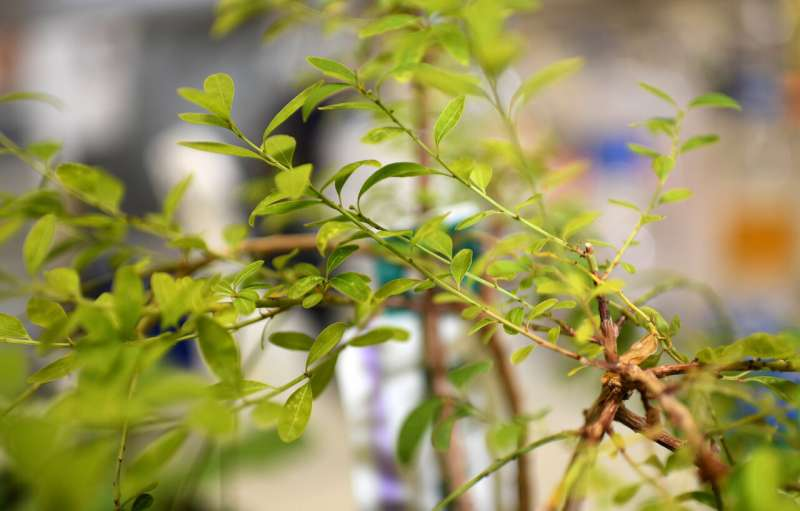
The University of York team focused their study on a lesser-known plant called Flueggea suffruticosa, a shrub found in parts of Asia and used in traditional medicine. This plant produces a particularly strong alkaloid known as securinine, which has notable effects on the nervous system and has been studied for potential therapeutic uses.
While investigating how Flueggea suffruticosa makes securinine, researchers expected to find a standard plant biosynthetic pathway. Instead, they uncovered something far more unusual. A key step in the production of securinine is driven by a gene that closely resembles genes typically found in bacteria, not plants.
A Bacterial-Like Gene Doing Plant Work
Plants and bacteria are fundamentally different forms of life, with distinct evolutionary histories and cellular machinery. Because of this, discovering a bacterial-like gene playing a central role in plant chemistry was entirely unexpected. The gene in question codes for an enzyme similar to microbial decarboxylases, proteins that bacteria use to modify amino acids and other small molecules.
In this plant, the enzyme helps convert the amino acid lysine into a crucial building block for securinine. What makes this especially interesting is that the pathway used to make securinine is completely different from the pathways used by plants to make most other well-known alkaloids. This suggests that plants are capable of far more biochemical creativity than previously thought.
An Evolutionary Shortcut with Big Consequences
Rather than evolving an entirely new set of enzymes from scratch, it appears that plants have taken an evolutionary shortcut. By reusing molecular tools that resemble those found in microbes, plants may have expanded their chemical capabilities more quickly and efficiently. Researchers describe this as a form of parallel evolution, where similar solutions arise independently in different branches of life.
This finding also helps explain why certain alkaloids appear sporadically across unrelated plant species. If plants can “borrow” or adapt microbial-style enzymes, it opens the door to a much wider chemical repertoire than scientists previously recognized.
Finding Hidden Chemistry Across the Plant Kingdom
Once the researchers understood this unusual biosynthetic process, they began searching plant genomes more broadly. They discovered that similar bacterial-like genes are hidden in the DNA of many other plants. This means that securinine may be just one example of a much larger group of natural compounds produced using this unconventional strategy.
For scientists, this is a powerful new tool. Instead of searching randomly for useful chemicals, researchers can now scan plant genomes for these specific gene signatures, dramatically speeding up the discovery of new natural products with potential medical value.
Implications for Sustainable Medicine
One of the most exciting outcomes of this discovery lies in its potential applications. By understanding exactly how plants produce alkaloids, scientists can begin to recreate these pathways in laboratory systems, such as yeast or bacteria. This approach, known as synthetic biology, allows valuable compounds to be produced without relying on large-scale plant cultivation or chemical synthesis.
Such methods could:
- Reduce the environmental impact of drug production
- Lower manufacturing costs
- Ensure a stable supply of important medicines
- Prevent overharvesting of rare or slow-growing plants
In addition, because alkaloids can be toxic, deeper knowledge of their biosynthesis could help scientists modify or fine-tune these compounds, making them safer and more effective for medical use.
Benefits Beyond Medicine
The implications extend beyond pharmaceuticals. Alkaloids play a role in plant defense, so understanding how they are made could help researchers develop hardier crops or reduce toxicity in edible plants. This could lead to agricultural improvements, better food safety, and more resilient farming systems.
The research also highlights how much remains to be discovered in basic plant science. Even well-studied organisms can still surprise scientists with entirely new biochemical strategies.
Expanding Our Understanding of Nature’s Chemistry
This study is a reminder that nature often solves problems in ways that defy our expectations. The idea that plants use microbe-like genetic tools to produce complex chemicals reshapes how scientists think about evolution, metabolism, and the boundaries between different forms of life.
More importantly, it shows that basic scientific research—simply trying to understand how living systems work—can lead to breakthroughs with wide-ranging benefits for medicine, agriculture, and environmental sustainability.
As researchers continue to explore plant genomes with this new perspective, it is likely that many more hidden chemical pathways will come to light, offering fresh opportunities to develop safer, greener, and more effective medicines.
Research paper: https://doi.org/10.1111/nph.70884