Scientists Discover a Whale-Headed Termite Species in the Rainforests of South America
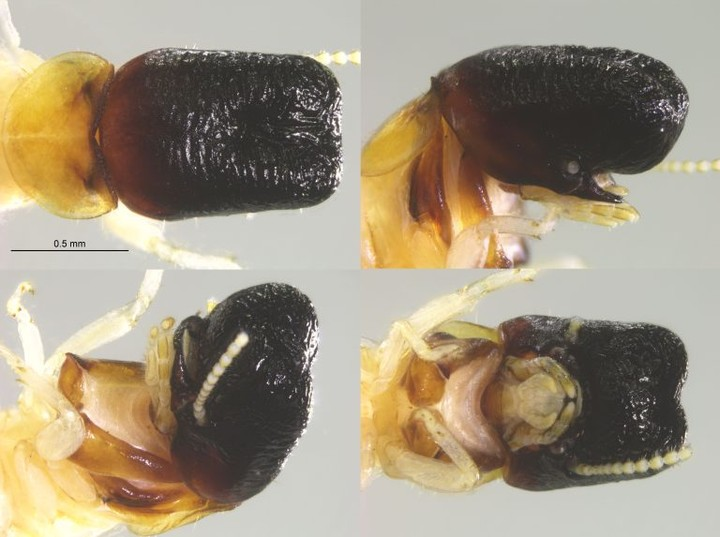
A team of international scientists has identified a striking new termite species in the rainforests of South America, and its appearance is unlike anything previously seen in the termite world. Named Cryptotermes mobydicki, this tiny insect stands out because its head closely resembles that of a sperm whale, drawing an unexpected connection between one of the largest animals on Earth and one of its smallest.
The discovery was led by entomologist Rudolf Scheffrahn from the University of Florida’s Institute of Food and Agricultural Sciences (UF/IFAS), along with collaborators from multiple countries. The species was formally described in the peer-reviewed journal ZooKeys in 2025, marking a significant addition to the scientific understanding of termite diversity and evolution.
A Termite That Looks Like a Whale
The most remarkable feature of Cryptotermes mobydicki is its elongated head with a prominent frontal structure, which closely mirrors the blunt, rounded head shape of a sperm whale. In this termite’s soldier caste—the defensive members of the colony—the mandibles are largely hidden beneath the head, making them barely visible when viewed from above. This unusual configuration is extremely rare among termites and immediately caught the attention of researchers.
The resemblance goes beyond a general shape. The scientists noted that the position of the termite’s antennal socket aligns with where a sperm whale’s eye would be, strengthening the visual comparison. It was this clear anatomical similarity that inspired the species name, a playful reference to Herman Melville’s Moby Dick. The researchers viewed the name as fitting and lighthearted, comparable to other whimsical species names like the Dumbo octopus or the ghost orchid.
Why This Discovery Stood Out
At first glance, the termite was so distinctive that scientists suspected it might belong to an entirely new genus, rather than an already known group. Further analysis revealed that it belongs to the genus Cryptotermes, a group of drywood termites found around the world. Even within this genus, however, Cryptotermes mobydicki is exceptional.
This newly identified species becomes the 16th known Cryptotermes species in South America, expanding the regional diversity of the group. Genetic analysis placed it close to other Neotropical species found in areas such as Colombia, Trinidad, and the Dominican Republic, helping scientists better understand how these termites evolved and dispersed across tropical regions.
Where the Termite Was Found
The termite colony was discovered in French Guiana, deep within a South American rainforest. Researchers located the colony inside a dead but standing tree, approximately eight meters above the forest floor, in the canopy. This detail highlights an important point: even well-studied ecosystems like tropical rainforests still hold many undiscovered species, often hidden high above ground or in hard-to-reach environments.
The habitat itself is crucial to understanding the species. As a drywood termite, Cryptotermes mobydicki lives entirely within wood and does not require contact with soil. Its rainforest environment, combined with its specialized anatomy, suggests a highly adapted species that evolved in isolation over long periods.
What This Means for Biodiversity Science
The discovery of Cryptotermes mobydicki underscores how much remains unknown about life on Earth. Termites may be small and often overlooked, but they play major ecological roles, especially in tropical ecosystems. They help decompose dead wood, recycle nutrients, and shape forest structure.
Globally, scientists estimate there are around 3,000 termite species, a relatively small number compared to other insect groups. Each new species adds valuable data to the study of evolution, ecology, and biodiversity. In this case, the unusual head shape of Cryptotermes mobydicki raises new questions about how defensive strategies evolve in termites and what selective pressures led to such a dramatic form.
Good News for Homeowners
Despite belonging to a genus that includes some well-known structural pests, Cryptotermes mobydicki poses no threat to homes or trade. Some relatives, such as Cryptotermes brevis, are notorious for damaging wooden structures and spreading through human activity. This newly discovered species, however, is restricted to its rainforest habitat and has not been associated with buildings, furniture, or shipping materials.
For homeowners, especially in places like Florida where invasive termites are a concern, this discovery is purely scientific and ecological, not a cause for alarm.
A Closer Look at Its Scientific Description
From a technical standpoint, the species description focuses primarily on the soldier caste, as the winged reproductive form, known as the imago, has not yet been observed. The soldier termites display a long, narrow head capsule, a smooth frontal prominence, and 11-segmented antennae. Unlike many related species, they lack pronounced horns or flanges on the head.
The type locality for the species is near the Sinnamary River, close to Petit Saut, in French Guiana. Detailed measurements, photographs, and genetic data were included in the ZooKeys publication to formally establish the species within scientific records.
Why Naming Species Still Matters
Beyond the anatomy and genetics, the naming of Cryptotermes mobydicki highlights the human side of scientific discovery. Memorable names can make species more approachable, spark curiosity, and help communicate science to a wider audience. In this case, the whale-inspired name has already drawn public attention to a tiny insect that might otherwise have gone unnoticed.
The Bigger Picture of Hidden Life
This discovery serves as a reminder that Earth’s biodiversity is far from fully cataloged. Tropical forests, in particular, continue to reveal new species across all groups of life, from plants and fungi to insects and vertebrates. Even within familiar genera, evolution can produce forms that challenge expectations and expand scientific understanding.
As researchers continue to explore remote habitats and apply modern genetic tools, discoveries like Cryptotermes mobydicki are likely to become more common, each one adding another piece to the puzzle of life’s diversity.
Research paper:
https://zookeys.pensoft.net/article/166021/