Scientists Discover That Colorful Warblers Borrow Color Genes From Other Species
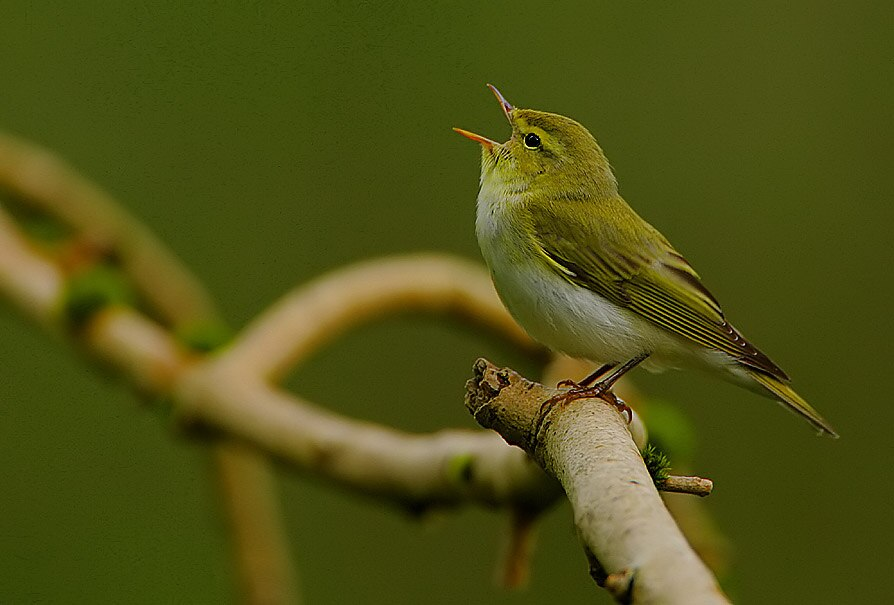
Wood warblers, often called New World warblers, are among the most visually striking birds found in North America. With more than a hundred species displaying shades of yellow, orange, red, blue, green, pink, black, and white, they have long fascinated birdwatchers and evolutionary biologists alike. Now, a new scientific study reveals that part of this stunning color diversity did not arise entirely on its own. Instead, many warblers appear to have borrowed color-related genes from other warbler species, including some that are not closely related.
The research, led by scientists at Pennsylvania State University and published on December 11 in the journal PLOS Biology, uncovers multiple instances of gene sharing across the warbler family. These findings shed new light on how warblers evolved such dramatic plumage differences in a relatively short evolutionary timeframe.
How Warblers Get Their Colors
Bird plumage color is influenced by more than one biological process. In wood warblers, two major pigment systems are involved. The first is melanin, which produces darker colors such as black and brown. The second, which plays a major role in the vivid yellows, oranges, and reds seen in many species, involves carotenoid pigments.
Carotenoids are not produced by birds themselves. Instead, they are obtained through diet and then chemically processed by the body before being deposited into feathers. This processing is controlled by specific genes, and changes in those genes can lead to dramatic shifts in feather coloration.
The Penn State research team focused on three key genes known to influence carotenoid-based coloration: BCO2, BDH1L, and CYP2J19.
A Massive Genomic Comparison
To understand how these color genes evolved, researchers collected DNA samples from around 400 individual warblers, covering 100 species and six subspecies. This dataset represents one of the most comprehensive genetic surveys ever conducted on wood warblers.
The team first constructed an evolutionary family tree using entire genomes. This tree shows how warbler species are related overall. Then, they built separate evolutionary trees for each of the three carotenoid-related genes.
If genes had been passed down only through direct ancestry, the gene trees would closely match the species tree. But they didn’t.
Instead, the researchers found clear mismatches between the overall evolutionary relationships and the histories of individual color genes. These discrepancies pointed to a process known as introgression, where genes move from one species to another through hybridization.
What Is Introgression and Why It Matters
Introgression occurs when two different species mate and produce hybrids. If those hybrids later breed with individuals from one of the parent species, genes from the other species can become embedded in the population. Over many generations, this borrowed genetic material can become permanently established.
The study found strong evidence that introgression played a major role in shaping warbler coloration, especially through the gene BCO2.
The BCO2 gene controls how yellow carotenoids are broken down in the body. When BCO2 is active, yellow pigments are degraded, leading to whiter or grayer feathers. When it is inactive or altered, yellow pigments accumulate, resulting in brighter yellow plumage.
A Gene That Traveled Across Genera
One of the most striking discoveries was that a specific version of the BCO2 gene had moved not just between species, but across entire genera.
Researchers found that this gene variant was transferred from species in the genus Leiothlypis to multiple species in Setophaga and Cardellina. Additional gene exchanges were detected between Vermivora and Geothlypis species.
These transfers likely occurred between 500,000 and 2 million years ago, long after the donor and recipient species had already diverged from each other. Even more remarkable, the borrowed gene has remained intact and functional through millions of years of subsequent evolution.
This suggests that the gene provided some kind of selective advantage, possibly by influencing feather color in ways that affected mate choice.
Color, Mate Choice, and Evolutionary Success
In many bird species, color plays a crucial role in sexual selection. Brighter or more distinctive plumage can influence who gets chosen as a mate, which in turn affects which genes are passed on to the next generation.
The researchers believe the introgressed version of BCO2 subtly alters the protein it produces, affecting how carotenoids are processed. Even small biochemical changes can lead to noticeable visual differences, giving birds with the borrowed gene an edge in mating success.
One particularly interesting case involves the red-faced warbler. Not all individuals in this species carry the introgressed BCO2 gene, suggesting that gene transfer may still be ongoing today. Scientists are now sampling birds across a wider geographic range to track how far the gene has spread and what ecological effects it may have.
Red Feathers and Rare Color Genes
The study also examined two genes involved in producing red plumage, a rare trait among wood warblers. Out of more than a hundred species, only five are predominantly red.
The genes BDH1L and CYP2J19 work together to convert yellow carotenoids into red pigments. Researchers found evidence that BDH1L moved from a red species in the genus Cardellina into two red species in Myioborus. CYP2J19 was also exchanged between Myioborus species.
One Myioborus species has both red and yellow populations, and introgression was detected only in the red population. This strongly suggests that gene sharing directly caused the color difference.
These findings raise the possibility that red plumage in wood warblers may have evolved once and then spread through introgression, rather than evolving independently multiple times.
Why This Study Changes How We Think About Evolution
In total, the researchers identified at least nine introgression events involving BCO2, along with additional exchanges involving BDH1L and CYP2J19. This level of gene sharing across species and genera is rarely documented in vertebrates.
Traditionally, evolution has been viewed as a slow process driven mainly by random mutations. This study shows that borrowing useful genes from neighbors can be a faster and more efficient way to evolve new traits.
For wood warblers, introgression may help explain how they diversified so rapidly into such a wide range of species, each with its own distinct look.
The Bigger Picture of Gene Sharing in Nature
Warblers are not alone in using introgression as an evolutionary shortcut. Similar processes have been observed in butterflies, fish, and even humans, where genes from extinct relatives like Neanderthals still influence modern populations.
What makes this study stand out is the scale and clarity of the evidence, made possible by modern high-throughput DNA sequencing. Without these tools, the complex genetic history of warblers would have remained hidden.
As researchers continue to analyze large genomic datasets, more examples of hidden gene sharing are likely to emerge, reshaping our understanding of how biodiversity evolves.
Research Paper Reference
A colorful legacy of hybridization in wood-warblers includes frequent sharing of carotenoid genes among species and genera
https://journals.plos.org/plosbiology/article?id=10.1371/journal.pbio.3003501