Scientists Have Found a Molecular Clock in Maggots That Could Transform How Time of Death Is Estimated
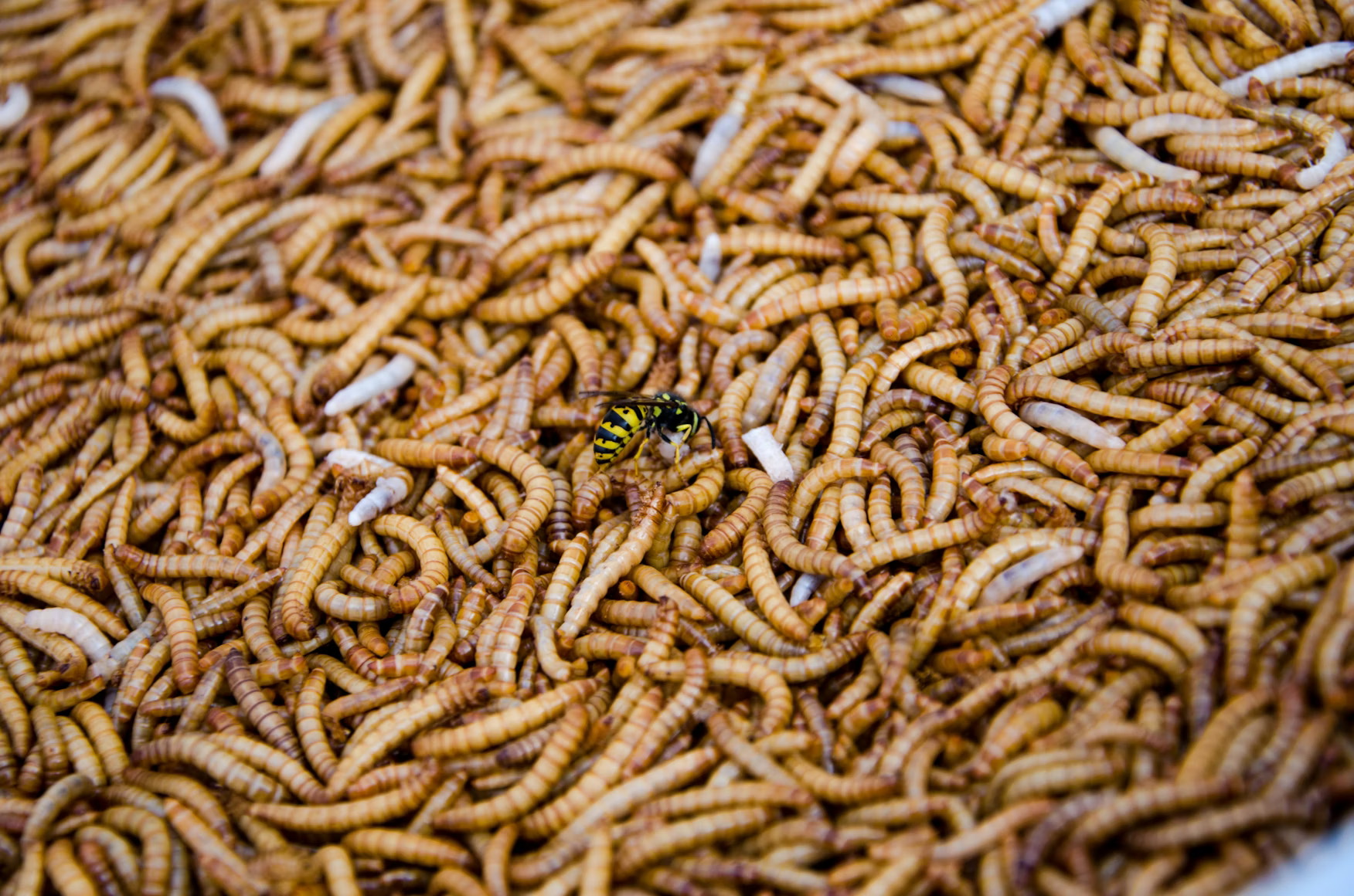
Forensic science may soon gain a powerful new tool, thanks to a discovery that looks beyond what the human eye can see. Researchers at Florida International University (FIU) have uncovered a way to estimate the time since death by studying changes inside maggots at the molecular level. This approach could significantly improve the accuracy of death investigations, especially in cases where traditional methods struggle.
For decades, forensic investigators have relied heavily on insects—particularly blow flies and their larvae—to estimate when a person died. Blow flies are among the first insects to colonize a body after death, laying eggs that hatch into maggots within hours. By examining the presence of eggs, the size of larvae, and their developmental stage, investigators can approximate how long a body has been exposed.
However, this method has a known weakness. At certain points in a maggot’s life, especially during late-stage larval development, the insect changes very little on the outside. During this period, which can last anywhere from hours to several days depending on temperature, physical traits such as size, shape, and weight become unreliable. This creates a frustrating gap in precision when investigators need it most.
The FIU research team believes they have found a way to close that gap.
Moving Beyond What Maggots Look Like
Instead of focusing on a maggot’s outward appearance, the researchers turned their attention inward—to gene expression and metabolism. Even when a maggot looks the same on the outside, its internal biological processes continue to change. Those changes, the researchers discovered, can act like a molecular clock.
The study was led by FIU biologist Matthew DeGennaro, a prominent insect researcher, and Jeffrey Wells, whose work is closely tied to forensic entomology. A key contributor to the project was doctoral student Sheng-Hao Lin, who played a major role in identifying genetic patterns linked to maggot age.
Their research focused on the blow fly species Phormia regina, a species commonly used in forensic investigations due to its predictable life cycle and frequent presence at crime scenes.
By analyzing maggots at different stages of development, the team discovered that while physical changes slow down in late-stage larvae, gene activity does not. Certain genes turn on or off at precise times, creating measurable patterns that can be used to estimate age far more accurately than visual inspection alone.
The Nine Genes That Tell Time
Through detailed genetic analysis, the researchers successfully identified nine specific genes that serve as reliable indicators of a maggot’s age during the problematic late larval stage. These genes show consistent and measurable changes in expression over time, even when the maggot’s body appears unchanged.
By tracking how strongly these genes are expressed, the team was able to determine the age of late-stage maggots with much greater precision. This effectively fills in the blind spot that has long challenged forensic investigators.
To support this work, the researchers also created a chromosome-scale, annotated genome for Phormia regina. This genomic resource allowed them to accurately map gene expression patterns and confirm which genes were most useful as molecular markers.
The result is a proof-of-concept molecular clock that can estimate maggot age during a stage when traditional methods fall short.
Why Late-Stage Maggots Are a Big Problem
In forensic entomology, timing is everything. Insects are cold-blooded, meaning their development depends heavily on environmental temperature as well as time. Investigators must combine insect growth data with temperature records to estimate the post-mortem interval.
Early in a maggot’s life, this works well. Eggs hatch, larvae grow, and body size changes rapidly. But as maggots reach the later stages of larval development, growth slows. They may remain in roughly the same size and shape for a long time, even though important biological processes are still happening internally.
During this period, weight can fluctuate unpredictably, and behavior becomes unreliable as an age indicator. This uncertainty can lead to wide time windows in death estimates, which is far from ideal in criminal investigations.
The molecular clock approach directly targets this problem by using internal biological changes rather than external traits.
How This Could Change Death Investigations
If validated in real-world conditions, this technique could significantly sharpen time-of-death estimates. Instead of relying solely on what maggots look like, forensic scientists could analyze gene expression to determine exactly how old the larvae are, even during the most ambiguous developmental stages.
This does not mean traditional forensic entomology will be replaced. Instead, the molecular clock would act as a complementary tool, strengthening existing methods and reducing uncertainty.
The researchers emphasize that their work is still in its early stages. So far, the molecular clock has been tested under controlled laboratory conditions. The next step is to see how well it performs in real-world environments, where temperature fluctuations, humidity, habitat, and other factors come into play.
The Broader Role of Insects in Forensic Science
Forensic entomology has long been an essential part of death investigations, especially when bodies are discovered days or weeks after death. Insects often arrive faster than medical examiners and can provide valuable clues even when decomposition is advanced.
Beyond estimating time since death, insect evidence can also suggest whether a body was moved, whether wounds were present before death, or whether drugs or toxins were involved. The addition of molecular tools like gene-expression analysis represents a natural evolution of the field, blending classical observation with modern biology.
This research also aligns with a broader trend in forensic science, where molecular and genetic approaches—such as microbial clocks and post-mortem gene activity—are increasingly being explored to improve accuracy.
Why This Discovery Matters
What makes this discovery especially important is its practicality. Maggots are already routinely collected at crime scenes. Adding a genetic analysis step could dramatically improve the usefulness of samples that investigators are already trained to gather.
By identifying a small, specific set of genes that reliably track age, the researchers have made the approach more feasible for future forensic applications. As laboratory techniques become faster and more accessible, molecular tools like this could one day become standard practice.
For now, the study represents a promising step forward—one that shows how much information can be hidden beneath the surface of even the smallest organisms.
What Comes Next
The FIU team plans to test the molecular clock under a wider range of conditions to see how robust it is outside the lab. Factors such as varying temperatures, different environments, and potential species differences will need careful evaluation.
Only after extensive validation can the method be confidently applied to real forensic cases. Still, the foundation has been laid, and the implications for death investigations worldwide are significant.
Sometimes, solving big mysteries comes down to paying attention to very small details—and in this case, to the genes of a maggot.
Research Reference:
https://journals.plos.org/plosgenetics/article?id=10.1371/journal.pgen.1011948