Scientists Identify a Phosphorus-Responsive Switch That Determines When Plants Flower
Researchers have uncovered a detailed molecular mechanism that shows how plants decide when to flower when phosphorus levels in the soil are low. This discovery not only fills a major gap in plant biology but also opens up possibilities for creating nutrient-efficient crops that can thrive even in phosphorus-poor soils. Since phosphorus is an essential nutrient that global agriculture heavily depends on—and one that is becoming increasingly scarce—understanding how plants naturally cope with phosphorus deficiency is crucial for long-term food security.
How Phosphorus Shapes a Plant’s Development
Phosphorus is central to plant life. It forms part of DNA, cell membranes, and energy-carrying molecules like ATP. Without enough phosphorus, plants struggle to grow, reproduce, and complete their life cycle. Much of the phosphorus applied to agricultural fields ends up washing away or becoming chemically locked in soil, making it unusable to plants. Because the world’s phosphorus reserves are finite and heavily concentrated in a few regions, finding ways to help crops use phosphorus more efficiently is becoming a global scientific priority.
Plants, however, have been dealing with nutrient scarcity for millions of years. One of the most visible responses to low phosphorus availability is delayed flowering. Plants slow down reproduction until conditions improve, allowing them to survive longer and conserve resources. What scientists didn’t understand until now was how plants sensed phosphorus deficiency and converted that signal into a developmental decision.
The Research That Cracked the Mystery
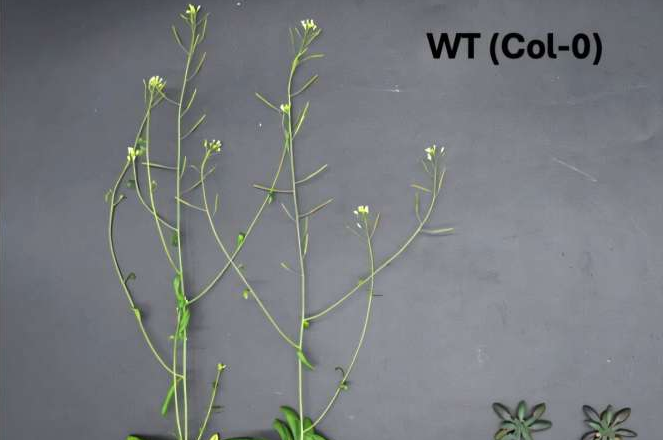
A team at Michigan State University’s Plant Resilience Institute, led by postdoctoral researcher Hui-Kyong Cho and senior author Hatem Rouached, investigated why plants flower late under phosphorus-poor conditions. Using genome-wide association mapping in the model plant Arabidopsis thaliana, the researchers identified a key protein called bGLUCOSIDASE 25, or bGLU25, that unexpectedly acts as a signaling molecule.
bGLU25 normally belongs to a family of enzymes known for breaking down carbohydrates, but in this study, researchers discovered that bGLU25 is catalytically inactive. Instead of performing chemical reactions, it functions as a messenger that helps the plant interpret its nutrient environment.
How the Phosphorus-Responsive Switch Works
Under phosphorus-rich conditions, bGLU25 stays in the endoplasmic reticulum, the part of the cell that manages and processes proteins. It remains inactive there. But when phosphorus levels drop, the plant activates another protein called SCPL50. This protein cuts bGLU25, releasing it from the endoplasmic reticulum and allowing it to move into the cytosol, which is the fluid that fills the cell interior.
This movement from one part of the cell to another acts like a molecular switch.
Once inside the cytosol, bGLU25 binds to a second protein named AtJAC1. Together, they trap a third protein, GRP7, and prevent it from entering the nucleus. GRP7 normally regulates the important flowering-time gene FLOWERING LOCUS C, commonly known as FLC. FLC is a master regulator that keeps plants from flowering prematurely.
When GRP7 is trapped in the cytosol, it can no longer regulate FLC. As a result, FLC activity increases, and the plant delays flowering until nutrient conditions improve. In other words, the plant prioritizes survival over reproduction when phosphorus is scarce, using this protein-movement mechanism as its internal monitoring system.
Why This Discovery Matters for Global Agriculture
This breakthrough explains a direct link between nutrient availability, protein movement inside cells, and developmental timing. It also provides a potential blueprint for developing nutrient-smart crops that can grow well in low-fertility soils and require less fertilizer.
Because phosphorus supplies are limited and costly, crops that can regulate flowering more effectively under low-phosphorus conditions could help maintain yields while reducing environmental impacts such as fertilizer runoff.
Importantly, the researchers note that this mechanism is not unique to Arabidopsis. Early evidence suggests that similar pathways exist in rice and other major crop species, making this discovery relevant to global agriculture, not just plant biology research.
The Larger Picture: Nutrient Signaling in Plants
Although scientists have long studied how plants respond to daylight, temperature, and seasonal changes, nutrient-driven developmental control is less explored. This study highlights how nutrients like phosphorus are not just raw materials but also signals that plants use to make developmental decisions.
Understanding these nutrient-responsive pathways is becoming increasingly important as climate change and soil degradation limit the availability of essential resources. With phosphorus depletion on the horizon, breakthroughs like this are pivotal for guiding future strategies in sustainable farming.
Extra Insight: Why Phosphorus Is Becoming Scarce
Phosphorus used in fertilizer primarily comes from phosphate rock, a non-renewable resource. Around 70% of the world’s known reserves are located in Morocco and Western Sahara, which concentrates supply in one geopolitical region. As demand for food increases, so does the need for phosphorus. However, mining, processing, and transporting phosphorus-based fertilizers come with environmental and economic costs.
Moreover, once phosphorus enters soil, plants can only absorb a fraction of it. The rest becomes fixed in forms that are inaccessible or is lost to waterways, contributing to pollution issues like algal blooms. These challenges make it essential to develop crops that can better sense, acquire, and utilize phosphorus.
Extra Insight: How Flowering Time Affects Crop Yields
Flowering time is one of the most important traits in agriculture. It determines the length of the growing season, influences resistance to stress, and affects overall yield. Crops that flower too early may be stunted, while those that flower too late may not finish developing before weather turns unfavorable.
By identifying the molecular components that control flowering under nutrient stress, scientists get new tools to fine-tune flowering time—not just for phosphorus stress, but potentially for other environmental challenges as well.
Extra Insight: Why Arabidopsis Is the Go-To Plant for Research
Arabidopsis thaliana is the most widely used model organism in plant biology. It has a small genome, short life cycle, and is easy to grow, making it ideal for genetic studies. Many discoveries made in Arabidopsis, including this phosphorus-responsive flowering mechanism, later prove relevant in crop species such as rice, wheat, and maize. This allows researchers to test concepts quickly in Arabidopsis before applying them to crops on a larger scale.
Closing Thoughts
This discovery of a phosphorus-responsive flowering switch marks an important milestone in understanding how plants integrate environmental cues into developmental decisions. It reveals a complex but efficient strategy that allows plants to survive nutrient stress and gives scientists a new foundation for designing future crops that are resilient, resource-efficient, and better suited for the agricultural challenges ahead.
Research Paper:
Phosphorus availability controls flowering time through subcellular reprogramming of bGLU25 and GRP7 in Arabidopsis