Small Chimps, Big Risks What Chimpanzee Behavior Reveals About Human Risk-Taking
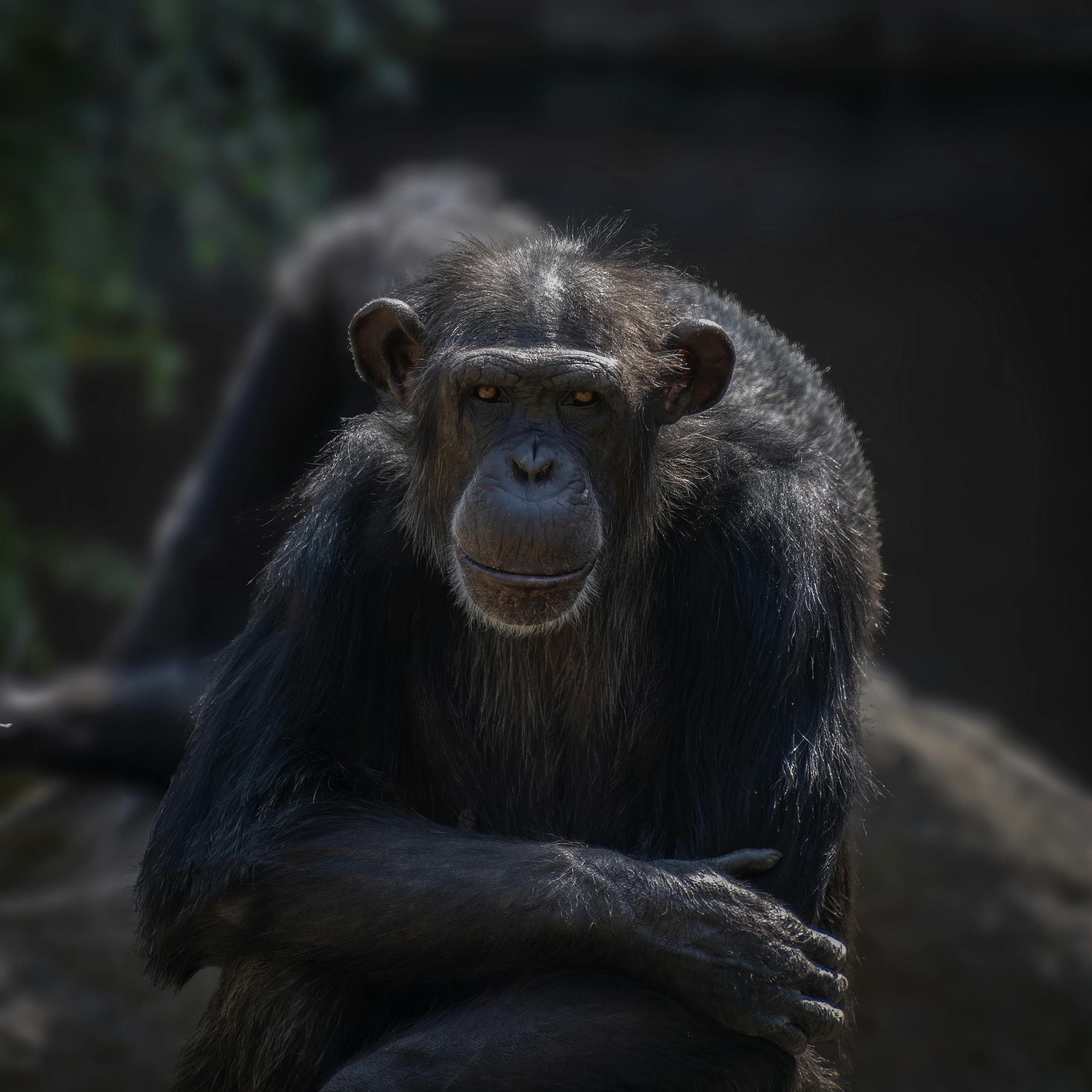
Researchers have long known that risk-taking in humans peaks during adolescence, a phase marked by experimentation, thrill-seeking, and a greater likelihood of injury. But a new study looking at our close evolutionary relatives, chimpanzees, turns this assumption on its head. Instead of finding a similar adolescent spike, scientists discovered that chimpanzees are at their riskiest much earlier in life, when they are still infants.
The research, conducted by scientists from the University of Michigan and James Madison University, was published in the journal iScience. By carefully analyzing how wild chimpanzees move, play, and take physical risks, the team uncovered striking differences between chimpanzee and human development—differences that may say as much about human parenting and supervision as they do about biology.
Risk-Taking Peaks Early in Chimpanzees
The central finding of the study is clear and somewhat surprising: chimpanzee infants take the greatest physical risks, and risk-taking steadily declines as they grow older. This pattern is the opposite of what researchers typically observe in humans.
In people, many risky behaviors—such as dangerous play, substance use, or reckless decision-making—tend to peak during adolescence, especially among boys. Researchers initially expected chimpanzees to show a similar trajectory. Instead, they found that infant chimpanzees were the most daring age group of all.
Using video footage from the Ngogo Chimpanzee Project in Kibale National Park, Uganda, the team analyzed hours of movement data from 119 wild chimpanzees. These animals ranged in age from infancy through adulthood, allowing researchers to examine how risk-taking behavior changes across the lifespan.
Chimpanzees in the study were grouped into three main developmental stages:
- Infants: up to about 5 years old
- Juveniles: roughly 5 to 10 years old
- Adolescents: approximately 10 to 15 years old
Adults served as the baseline comparison.
What Counts as Risky Behavior?
To study risk objectively, the researchers focused on risky locomotion, a type of physical behavior that is both measurable and consistent across chimpanzee ages. Specifically, they looked at actions such as:
- Free flight, where a chimp intentionally drops from a branch without holding on
- Leaping from one branch to another while completely letting go of support
For arboreal animals like chimpanzees, these behaviors can be dangerous. A fall from a tree can result in serious injury or death, especially at higher canopy levels.
Yet the data showed that infant chimps engaged in these risky movements far more often than older individuals. Compared with adults:
- Infants were three times more likely to take these risks
- Juveniles were about 2.5 times more likely
- Adolescents were about 2.1 times more likely
Risk-taking didn’t suddenly drop at adolescence—it declined gradually with age, starting from infancy.
No Difference Between Males and Females
Another notable result was what the researchers didn’t find. In humans, males often show higher rates of physical risk-taking than females, particularly during adolescence. But among chimpanzees, sex made no difference.
Male and female chimpanzees were equally likely to engage in risky locomotion. Risk-taking was also not tied to height, meaning chimps were just as likely to take risks whether they were higher or lower in the trees.
This suggests that chimpanzee risk-taking is a general developmental behavior, not something driven by sex-specific strategies or simple environmental exposure.
Why Are Young Chimps So Risky?
Chimpanzees spend much of their lives in trees, searching for food and moving through the forest canopy. For young chimps, risky movement appears to be closely linked to play and physical learning.
One explanation offered by the researchers is that early risk-taking helps chimpanzees:
- Develop confidence in their movement
- Practice complex locomotor skills
- Learn the limits of their bodies and environment
There may also be physical advantages to taking risks early. Young chimpanzees are lighter in body weight and have more flexible, “spongier” bones, which could reduce the likelihood of serious injury if they fall. In this sense, infancy may be a safer time to experiment, even if the behavior itself looks dangerous.
The Role of Mothers and Supervision
A key insight from the study involves parental supervision. Chimpanzee mothers can only control their offspring’s behavior when the infant is within arm’s reach. Once young chimps begin moving independently through the trees, mothers have limited ability to stop risky play.
Humans, by contrast, are exceptionally good at restricting infant behavior. Babies and toddlers are closely watched, physically protected, and often prevented from engaging in dangerous activities. According to the researchers, this difference in supervision may help explain why human risk-taking is delayed until adolescence.
If young humans were left to their own devices, the researchers suggest, they might show much higher levels of risky physical play earlier in life, similar to chimpanzees.
Rethinking Human Adolescence
This research challenges the idea that adolescence is naturally the most risk-prone period of life. Instead, it suggests that social structure and caregiving practices play a major role in shaping when risky behavior appears.
In many human societies, children are closely supervised not only by parents but also by siblings, extended family members, and other caregivers. This kind of alloparental supervision—care provided by individuals other than the biological parents—is widespread across cultures, not just in industrialized or “Global North” societies.
As children grow older and supervision decreases, opportunities for risk increase. In this light, adolescent risk-taking may reflect greater freedom rather than a biological spike in recklessness.
Why Chimps Are a Useful Comparison
Studying risky behavior in humans poses ethical challenges. Researchers cannot ask people to intentionally put themselves in danger under controlled laboratory conditions. Surveys and observational studies help, but they often involve behaviors that vary widely across ages, cultures, and legal contexts.
Chimpanzees offer a unique solution. Their arboreal lifestyle provides a consistent, naturally risky behavior—tree locomotion—that occurs across all ages. This makes it possible to compare developmental patterns in a way that is difficult to do with humans.
By examining chimpanzees, researchers can isolate how biology, environment, and caregiving interact over time.
Broader Implications
The findings highlight how deeply human behavior is shaped by social systems, especially caregiving and supervision. Risk-taking may not simply emerge from brain development or hormones, but from how much freedom individuals are given at different life stages.
For chimpanzees, risky play in infancy may be essential preparation for adulthood. For humans, close supervision early in life may push similar behaviors later, into adolescence.
Rather than seeing adolescent risk-taking as a flaw, this research invites a more nuanced view—one that recognizes the role of culture, parenting, and shared responsibility in shaping how and when we take risks.
Research paper:
https://www.cell.com/iscience/fulltext/S2589-0042(25)02713-0