Soil-Based Method Can Stop Locust Swarms From Destroying Crops
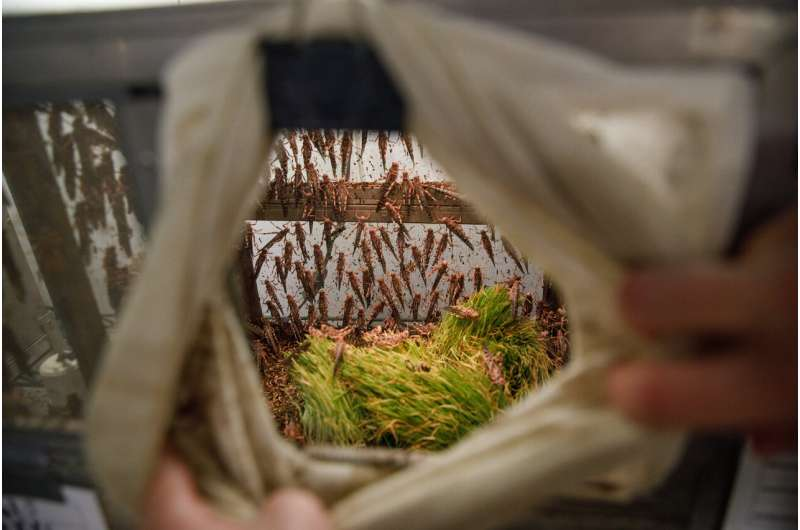
Locust swarms have haunted human agriculture for thousands of years, wiping out crops, destabilizing food supplies, and threatening livelihoods across entire regions. Despite modern technology, controlling these migratory pests remains one of the most difficult challenges in farming. Now, scientists have identified a simple soil-based approach that can significantly reduce locust damage while simultaneously increasing crop yields — and it works under real farming conditions.
This breakthrough comes from researchers at Arizona State University’s Global Locust Initiative, led by sustainability scientist Arianne Cease, and tested directly with farmers in Senegal. The findings suggest that improving soil nutrients may be one of the most effective, affordable, and environmentally friendly ways to manage locust outbreaks.
Understanding What Makes a Locust a Locust
To understand why this discovery matters, it helps to clarify what locusts actually are. All locusts are grasshoppers, but only a small fraction of grasshopper species can become locusts. Out of roughly 6,800 known short-horned grasshopper species, only 19 are classified as locusts.
What makes locusts unique is their ability to switch between two distinct phases:
- In the solitarious phase, they behave like ordinary grasshoppers — shy, green, and spread out across the landscape.
- In the gregarious phase, triggered by environmental conditions, they become brightly colored, highly social, and capable of forming massive swarms that migrate long distances in search of food.
It is this gregarious phase that causes devastation. Locust swarms can cover hundreds of square miles, consume enormous amounts of vegetation in a single day, and destroy crops that entire communities depend on for survival.
Why Locusts Target Certain Crops
After more than 15 years of studying locust biology and behavior, Cease and her colleagues identified a critical pattern: nutrient-poor soils encourage locust outbreaks.
Plants grown in poor soils tend to be high in carbohydrates and low in protein. This nutritional profile turns out to be ideal for locusts. The carbohydrates provide the energy needed for long-distance migration, much like carb-loading in endurance athletes.
In contrast, plants grown in nitrogen-rich soil contain more protein and fewer carbohydrates. These plants are far less suitable for locusts. Their bodies struggle to process the excess protein, and they do not get enough energy to sustain swarming behavior.
This insight led to a key question: Could improving soil nutrients reduce locust damage without using pesticides?
The Senegal Field Experiment
To answer that question, researchers partnered with 100 farmers from two villages in Senegal, regions that regularly suffer from outbreaks of the Senegalese grasshopper. While this species does not form the massive swarms seen in desert locusts, its frequent outbreaks can be just as destructive to local farmers.
Each participating farmer planted two plots of millet:
- One plot was treated with nitrogen fertilizer
- The other plot was left untreated as a control
The study was conducted under real farming conditions, not in controlled laboratory settings. Researchers monitored the plots throughout the growing season, measuring locust presence, leaf damage, and final crop yields.
Clear and Measurable Results
The differences between treated and untreated plots were striking.
Compared to the untreated fields, plots with nitrogen-enriched soil showed:
- Significantly fewer locusts
- Much lower levels of crop damage
- Roughly double the millet yield at harvest
Equally important, researchers found no evidence that nitrogen enrichment attracted other pests or created new agricultural problems.
This marked the first real-world confirmation that changing plant nutrition through soil management can suppress migratory pest populations while improving food production.
Why This Approach Is Different From Pesticides
Traditional locust control relies heavily on chemical pesticides, which can be expensive, harmful to human health, and damaging to ecosystems. Pesticides also require large-scale coordination and rapid deployment, which is often unrealistic for rural farming communities.
In contrast, soil-based methods:
- Work at the local, farm level
- Improve long-term soil health
- Reduce dependence on toxic chemicals
- Enhance crop yields, even in years without locust outbreaks
This makes the approach particularly valuable for smallholder farmers, who are often the most vulnerable to locust damage.
Composting as a Long-Term Solution
While nitrogen fertilizer was used during the study, researchers recognized that it is not a sustainable long-term option for many communities due to cost and availability.
As a result, ongoing research has shifted toward compost-based soil enrichment. Early results suggest that compost provides similar benefits, improving soil nitrogen levels while remaining affordable and environmentally friendly.
Farmers involved in the project reported a major shift in their practices. Instead of burning crop residues after harvest, they now compost plant material to fertilize their fields. This change alone appears to be helping reduce grasshopper infestations while improving soil quality.
Even after project funding was canceled in early 2025, farmers continued using composting techniques on their own — a strong sign that the method is practical and effective.
Broader Implications Beyond Africa
Although the United States currently has no native locust species, researchers believe this may not remain true forever. Climate models suggest that regions such as Texas could become suitable for locust populations within the next 10 to 15 years.
Even without locusts, the U.S. already faces challenges from 12 major rangeland grasshopper species, sometimes referred to as the “Dirty Dozen.” These insects can swarm and compete with livestock for grass, creating major problems for ranchers.
The Global Locust Initiative is exploring whether soil-based management strategies could offer safer alternatives to chemical control for these pests as well.
Why Soil Health Matters More Than Ever
This research highlights a larger truth in agriculture: soil health influences far more than crop growth. Nutrient balance affects pest behavior, ecosystem stability, and long-term sustainability.
By improving soil quality, farmers are not just growing healthier plants — they are changing the entire food web, making it harder for destructive pests to thrive.
As climate change increases the frequency of extreme weather and pest outbreaks, strategies that combine ecology, agriculture, and community-based solutions may become essential tools for global food security.
Research Reference
Soil amendments suppress migratory pests and enhance yields
Scientific Reports (2026)
https://www.nature.com/articles/s41598-025-27884-z